A key contributor to this effort is Woodknowledge Wales (WKW), whose deep commitment to building a sustainable, low-carbon future has shaped both the content and direction of this Yearbook. Led by Sarah Lawton, an editor and communicator working to connect the timber industry with the wider climate, land-use and design agenda, the WKW team has played a central role in curating the insights, case studies, and technical contributions you'll find in these pages.
Maria Sanchez examines how timber yards and production facilities can improve safety, efficiency and use of space through specialist material handling systems designed for long and bulky timber loads.
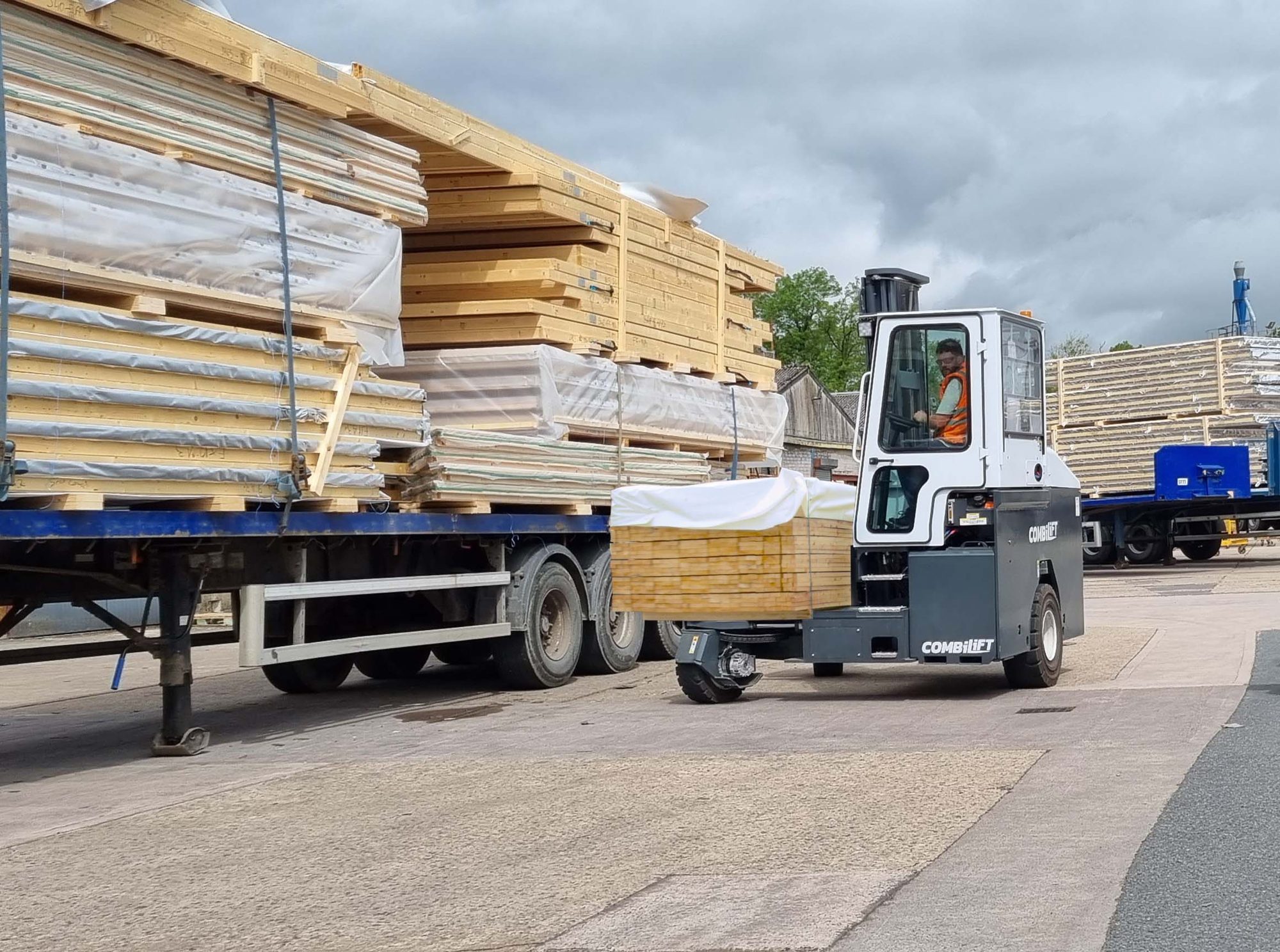
Components such as timber panels, trusses, and timber frames vary significantly in size, shape and weight. Their bulk, heaviness, and lengths often exceeding 14 metres — make them particularly challenging to handle efficiently and safely throughout timber yards and production facilities. From raw material reception to final dispatch, these high-value loads must move seamlessly through multiple operational stages — from raw material reception in the yard to final dispatch station.
Traditional forklifts often struggle when handling such long and bulky loads. Wide turning circles limit their manoeuvrability, leading to lost time and inefficient space utilisation. To navigate tight corners or narrow aisles, operators may need to reposition the load, which increases the risk of damage to these valuable loads and potential collisions. This also adds valuable handling time.
These handling challenges highlight the importance of selecting material handling equipment that not only improves efficiency and space utilisation, but also prioritises operator and site safety.
When selecting the right material handling equipment for your facility, it’s essential to make a well-considered decision. Efficiency, cost and sustainability all play a role — but safety should always be the top priority. Choosing the right equipment not only protects your workforce but also reinforces long-term operational success.
A safety-first design philosophy
At Combilift, safety is embedded at every stage of product development. Our design philosophy focuses on delivering solutions that maximise space and productivity while actively reducing risk and preventing accidents.
With nearly three decades of industry experience, the company continues to invest 7% of its annual revenue in innovation through a dedicated R&D team. An ongoing commitment to innovation is reflected in a wide product portfolio and patented technologies developed to meet the evolving needs of timber and materials handling environments. This commitment continues to drive safer, more space-efficient handling solutions for timber operations.
Multidirectional forklifts for long loads
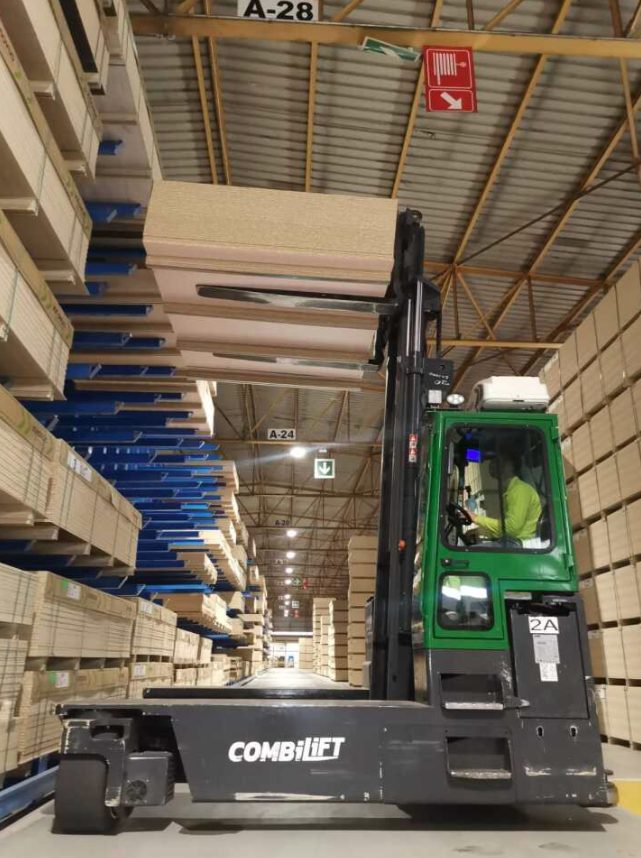
Handling long and bulky materials such as timber panels presents unique challenges. Multidirectional forklifts, including the C-Series and CB range, are specifically engineered to address these demands.
These models can travel sideways, allowing operators to manoeuvre long loads through narrow aisles without the need for overhead carrying. This reduces the risk of accidents and damage while improving workflow efficiency.
A low centre of gravity further enhances stability by keeping loads close to the ground during transport. Additionally, models with features such as an integrated platform provide a secure resting point for loads and improving overall handling safety.
Enhanced visibility for safer operation
Clear visibility is critical in busy timber yards and warehouses. Operators must maintain a constant line of sight to the load, forks, and surrounding environment to ensure the safety of nearby personnel.
An elevated cab position, combined with expansive glazing, ensures that even when transporting large loads, the operator’s view remains unobstructed. This design feature greatly reduces blind spots and enhances situational awareness.
Pedestrian range: innovative tiller arm
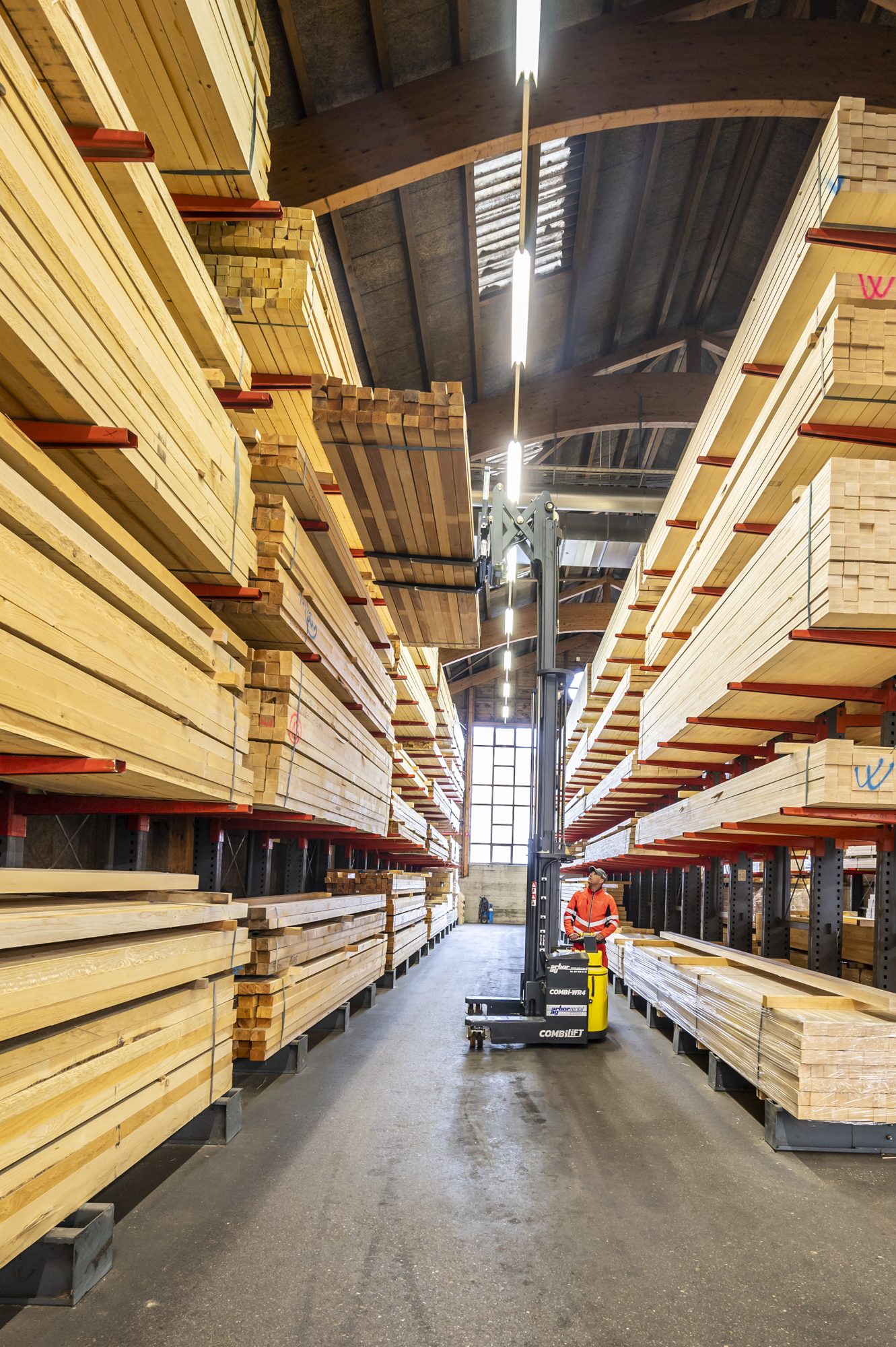
Pedestrian-operated stacker trucks offer a practical and safer alternative to ride-on equipment. Operating at lower speeds, these machines naturally improve operator awareness and control.
Because the operator remains physically close to both the load and the machine — and always faces the direction of travel — there is greater visibility and responsiveness in confined or high-traffic areas.
The incorporation of a unique patented tiller arm significantly improves safety in narrow aisles. The tiller arm can be rotated left or right, allowing the rear wheel to pivot parallel to the chassis at the touch of a button. This enables operators to work from the side of the truck rather than the rear, reducing the risk of becoming trapped between the machine and racking. It also ensures clear visibility of both the load and surrounding workspace at all times.
Maximising space, efficiency and safety
In timber operations, maximising space while maintaining safe and efficient handling is essential. By selecting machines that deliver innovative design with a strong safety focus, businesses can optimise their existing footprint while enhancing operational efficiency and safety.
To provide the best experiences, we use technologies like cookies to store and/or access device information. Consenting to these technologies will allow us to process data such as browsing behavior or unique IDs on this site. Not consenting or withdrawing consent, may adversely affect certain features and functions.
Functional
Always active
The technical storage or access is strictly necessary for the legitimate purpose of enabling the use of a specific service explicitly requested by the subscriber or user, or for the sole purpose of carrying out the transmission of a communication over an electronic communications network.
Preferences
The technical storage or access is necessary for the legitimate purpose of storing preferences that are not requested by the subscriber or user.
Statistics
The technical storage or access that is used exclusively for statistical purposes.The technical storage or access that is used exclusively for anonymous statistical purposes. Without a subpoena, voluntary compliance on the part of your Internet Service Provider, or additional records from a third party, information stored or retrieved for this purpose alone cannot usually be used to identify you.
Marketing
The technical storage or access is required to create user profiles to send advertising, or to track the user on a website or across several websites for similar marketing purposes.