A key contributor to this effort is Woodknowledge Wales (WKW), whose deep commitment to building a sustainable, low-carbon future has shaped both the content and direction of this Yearbook. Led by Sarah Lawton, an editor and communicator working to connect the timber industry with the wider climate, land-use and design agenda, the WKW team has played a central role in curating the insights, case studies, and technical contributions you'll find in these pages.
As engineered timber systems become more widely used, understanding moisture movement is increasingly important. Andy Pitman examines why moisture management remains fundamental to structural durability, robustness and building physics.
Timber structures are designed to perform for decades. Achieving that performance depends on many factors, including design, specification, workmanship and maintenance. Among these, moisture remains one of the most significant influences on durability and service life.
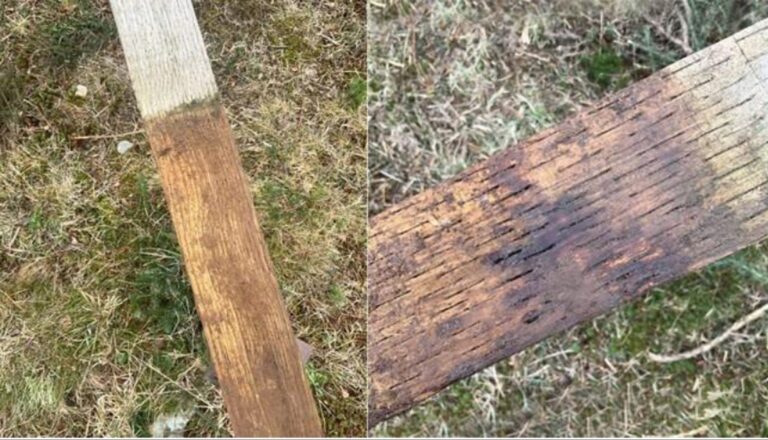
Discussions around moisture often focus on visible issues such as mould growth, staining or delays caused by wetting of wood products during construction. While these concerns are important, moisture can also have less visible effects on timber structures. Excessive wetting may influence dimensional stability, affect connections and fixings, alter the performance of engineered timber products and increase the risk of biological degradation if elevated moisture levels persist.
Understanding how moisture enters, moves through and leaves a building therefore remains essential when designing and constructing durable timber buildings.
Moisture, durability and structural performance
Timber is a hygroscopic material, meaning it absorbs and releases moisture in response to changes in environmental conditions.[1] This characteristic is entirely normal and forms part of timber’s behaviour in service. Problems arise when moisture levels remain elevated for extended periods or when drying opportunities are restricted.
For solid timber products, changes in moisture content can result in shrinkage or swelling. These dimensional changes may influence the performance of cladding, flooring, joinery and structural elements if they are not anticipated during design and installation.
In engineered timber products, moisture management is equally important. Products such as cross-laminated timber (CLT), glued laminated timber (glulam), laminated veneer lumber (LVL) and timber I-joists offer predictable structural performance and efficient use of material. However, they must be manufactured, stored, installed and operated within moisture conditions appropriate to their intended use.
Construction-stage wetting can be particularly challenging. Timber components may become exposed to rainfall before the building envelope is complete. Where large sections, concealed interfaces or multiple layers of material are involved, drying can take considerably longer than expected. In some cases, trapped moisture may remain within assemblies long after visible surfaces appear dry.
The consequences can range from cosmetic defects and programme delays to more significant concerns relating to durability and long-term performance.
Building physics and moisture movement
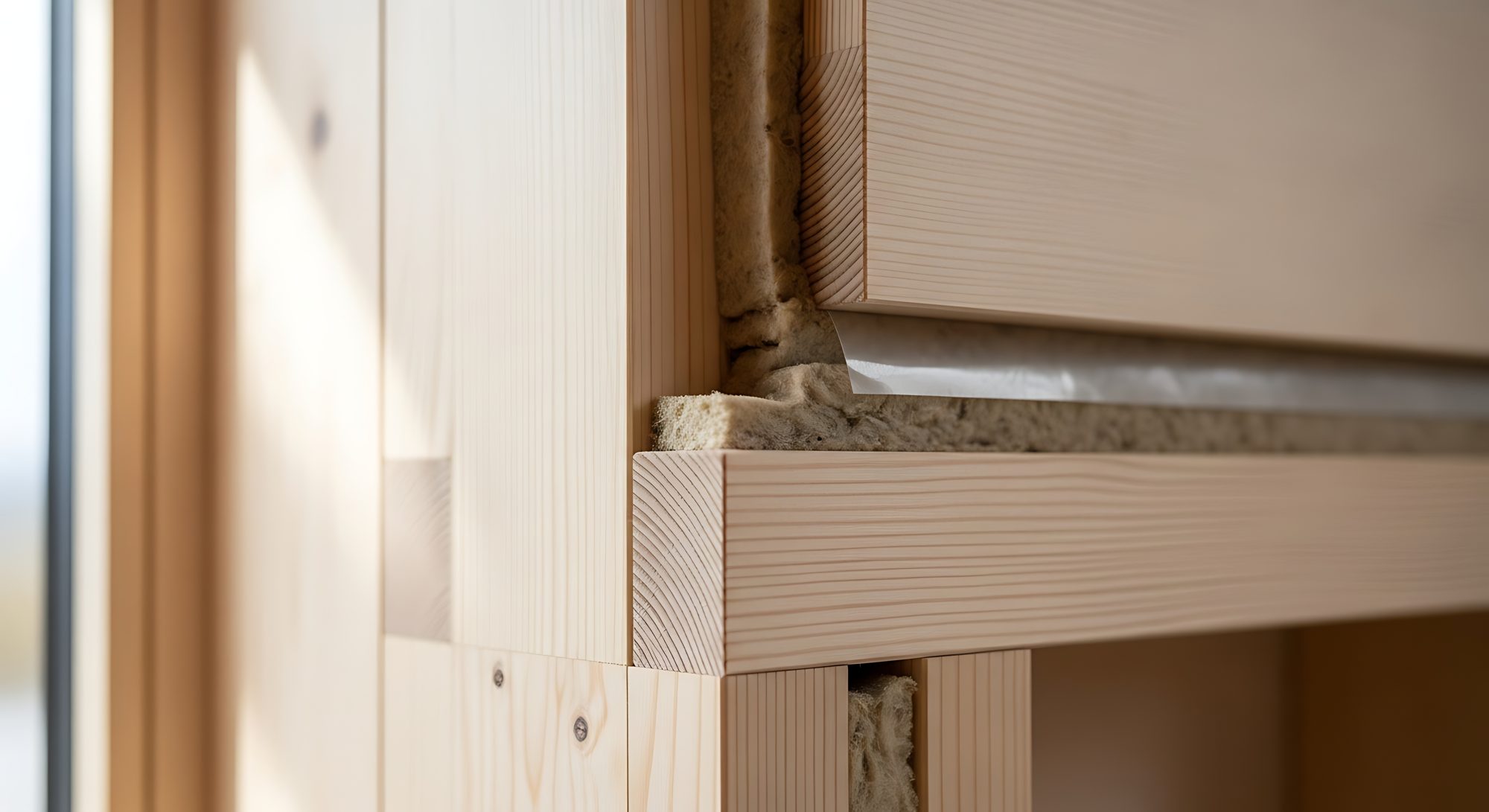
Moisture management is closely linked to building physics. Modern timber buildings typically incorporate multiple layers of insulation, membranes, sheathing materials, service zones and structural elements. These layers perform important functions, including thermal insulation, airtightness and weather protection. However, they also influence the movement of moisture through the building fabric.
External moisture may enter through defects in weatherproofing, poorly detailed interfaces or construction-stage exposure. Internal moisture is generated through normal building use, including cooking, washing, bathing and occupancy.
Managing this moisture requires careful consideration of vapour movement, air leakage and drying potential.[2]
Membranes play a particularly important role. Breather membranes help protect structures from external moisture while allowing water vapour to escape. Vapour control layers and airtightness membranes help limit the movement of moisture-laden air into vulnerable parts of the structure.
The performance of these systems depends not only on product selection but also on detailing and installation quality. Small gaps, poorly sealed penetrations or damaged membranes can create pathways for moisture movement that may not become apparent until problems emerge later in the building’s life.
Insulation also influences moisture behaviour. As building regulations continue to drive improvements in energy efficiency, wall, floor and roof build-ups often contain increasing levels of insulation. While beneficial from a thermal perspective, these changes can alter temperature profiles within constructions and affect where condensation risks occur.
Understanding these interactions is increasingly important when designing robust timber structures.[2,3]
Designing for drying
One of the most effective principles in moisture management is ensuring that structures have the ability to dry if wetting occurs.
While preventing moisture ingress remains the primary objective, robust design recognises that some wetting events may occur during construction or service life. Buildings that can accommodate occasional wetting and subsequently dry are generally more resilient than those that rely on perfect exclusion of moisture at all times.[2,4]
This principle applies throughout the construction process.
Protect materials: Store timber products under conditions that minimise unnecessary wetting and contamination.
Monitor moisture: Use appropriate measurement techniques to understand moisture content before installation and where concerns arise during construction.
Consider interfaces: Pay particular attention to junctions, penetrations and concealed areas where moisture may accumulate.
Allow for movement: Recognise the dimensional changes associated with moisture variation and accommodate them through design.
Provide drying potential: Ensure wall, floor and roof assemblies can release moisture where appropriate.
For larger engineered timber structures, moisture monitoring is becoming increasingly common. Advances in monitoring technology allow moisture content and environmental conditions to be tracked throughout construction and, in some cases, during occupation. Such information can provide valuable evidence that structures are performing as intended and help identify issues before they develop into more significant problems.
Looking beyond construction
The construction phase often receives the greatest attention because moisture issues are more visible and immediate. However, long-term durability depends equally on how buildings perform in service.
Maintenance of external envelopes, management of leaks, adequate ventilation and control of internal humidity all contribute to the moisture conditions experienced by timber structures throughout their life.
The fundamental principles remain unchanged. Timber performs exceptionally well when moisture conditions are understood, controlled and accounted for through design. Equally, many durability problems associated with timber structures can ultimately be traced to failures in moisture management rather than failures of the timber itself.
As timber construction continues to evolve, moisture management is increasingly being recognised as a whole-building consideration that extends beyond individual products or components. Understanding building physics, designing for drying and monitoring performance where appropriate can help ensure timber structures achieve the durability, robustness and service life for which they are intended.
References
[1] TRADA. Moisture in timber: Wood Information Sheet 4-14 (2024).
[3] British Standards Institution. BS 5250:2021 Management of moisture in buildings – Code of practice (2021).
To provide the best experiences, we use technologies like cookies to store and/or access device information. Consenting to these technologies will allow us to process data such as browsing behavior or unique IDs on this site. Not consenting or withdrawing consent, may adversely affect certain features and functions.
Functional
Always active
The technical storage or access is strictly necessary for the legitimate purpose of enabling the use of a specific service explicitly requested by the subscriber or user, or for the sole purpose of carrying out the transmission of a communication over an electronic communications network.
Preferences
The technical storage or access is necessary for the legitimate purpose of storing preferences that are not requested by the subscriber or user.
Statistics
The technical storage or access that is used exclusively for statistical purposes.The technical storage or access that is used exclusively for anonymous statistical purposes. Without a subpoena, voluntary compliance on the part of your Internet Service Provider, or additional records from a third party, information stored or retrieved for this purpose alone cannot usually be used to identify you.
Marketing
The technical storage or access is required to create user profiles to send advertising, or to track the user on a website or across several websites for similar marketing purposes.