A key contributor to this effort is Woodknowledge Wales (WKW), whose deep commitment to building a sustainable, low-carbon future has shaped both the content and direction of this Yearbook. Led by Sarah Lawton, an editor and communicator working to connect the timber industry with the wider climate, land-use and design agenda, the WKW team has played a central role in curating the insights, case studies, and technical contributions you'll find in these pages.
Gary Newman explains why wood in construction must be treated as a greenhouse gas removal (GGR) mechanism, and what this means for policy, carbon accounting, and the future of our industry.
As the UK Government ramps up its investment in carbon capture and storage (CCS)—pledging over £21bn to remove 8.5 MtCO2e a year by 2050—it remains bafflingly slow to recognise an arguably simpler, cheaper, and already-scalable solution: using more wood in construction.
Our new research, Using Wood in Construction as a Significant Greenhouse Gas Removal Mechanism 1 , sets out the case for treating timber-based buildings not merely as low-carbon alternatives to concrete and steel, but as legitimate carbon removal infrastructure. Done well, and at scale, this could remove atmospheric carbon faster, more affordably and with greater co-benefits than many engineered solutions currently in the spotlight.
This is not fringe science. The Intergovernmental Panel on Climate Change (IPCC), the Climate Change Committee (CCC), and even the UK Government’s own consultants have acknowledged the role of biogenic materials in construction in engineered carbon removal.
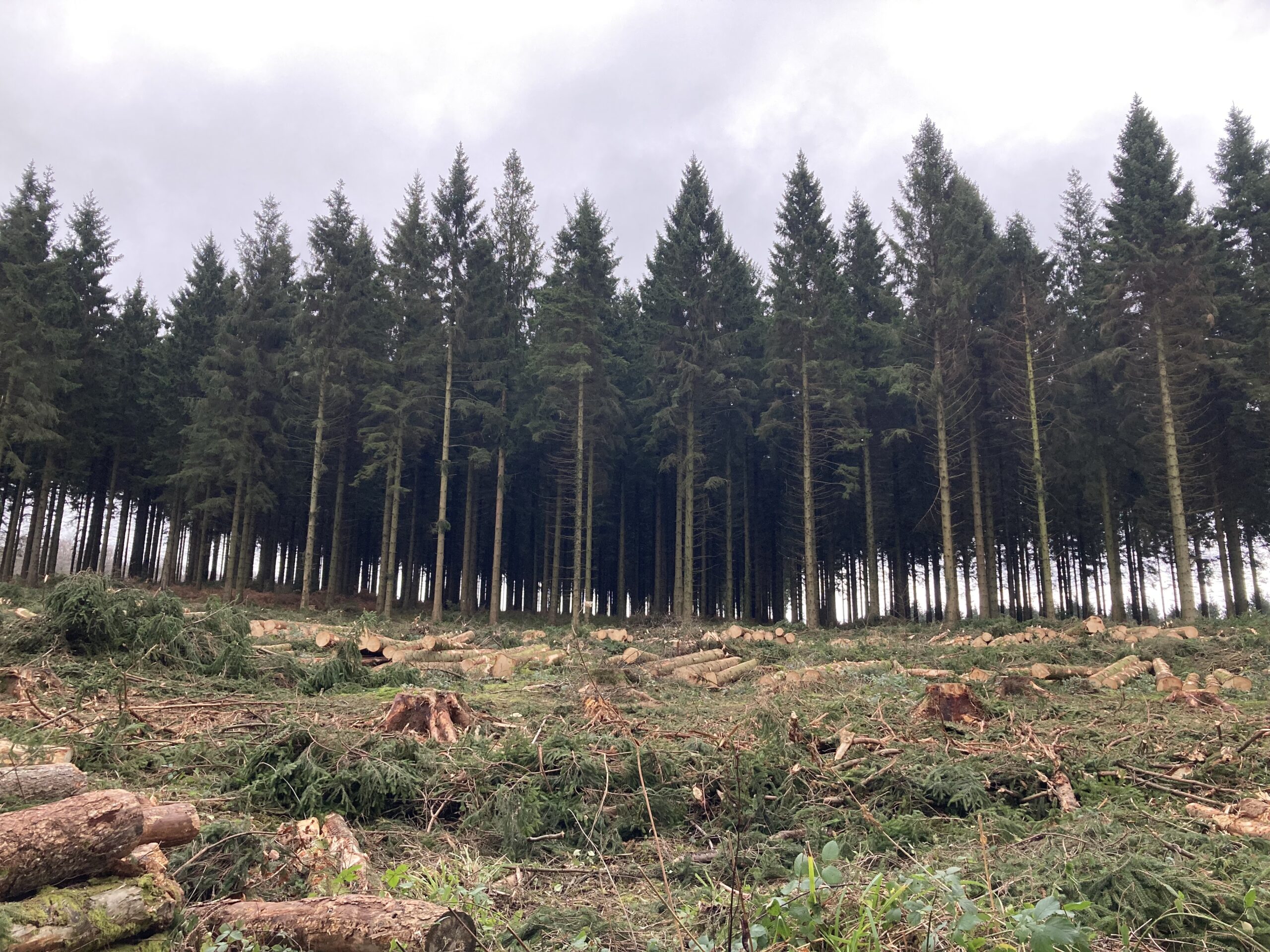
Photo: Woodknowledge Wales
From sequestration to storage: wood’s climate value
The principle is simple. Trees capture carbon through photosynthesis. If the resulting biomass is harvested from a sustainably managed forest and used to construct a home, that carbon stays locked away—potentially for decades or centuries. This transfer from the forest carbon pool to the ‘harvested wood products’ (HWP) pool is already recognised in national greenhouse gas inventories. The building becomes a carbon store.
In 2018, it was estimated that 1.14 MtCO2 e were added to the UK’s HWP pool through timber construction—mostly in housing5 . With the right demand signals, we could rapidly increase that annual inflow. Critically, even modest interventions—such as favouring timber frame over masonry— can double the carbon stored per unit of floorspace.
Yet, life cycle assessment (LCA) rules used in net-zero building frameworks assume that all biogenic carbon stored in construction products and materials is released. In GWP100 terms, this means no net climate benefit is recorded—regardless of whether the building lasts 30 years or 130. Our report challenges this logic, aligning instead with emerging international carbon removal frameworks.
GGR, not just LCA
What makes this issue urgent is that timber buildings do more than reduce emissions (by replacing concrete and steel). They actively remove atmospheric CO2—just like direct air carbon capture and storage (DACCS) or Bioenergy with carbon capture and storage (BECCS).
This makes them part of the UK’s GGR arsenal. The CCC’s Sixth Carbon Budget and the Royal Society’s landmark 2018 report both state clearly: to hit net zero by 2050, we must remove 75–130 MtCO2e per year through GGR3,2. Yet wood in construction was inexplicably excluded from the UK Government’s GGR demonstration programme4 .
This omission matters. Not because wood is better than every other method—but because it is shovel-ready. Unlike DACCS or BECCS, it needs no new infrastructure, no long-term liabilities, and no billion-pound subsidy regimes. We already know how to build with timber. What we lack is a market and regulatory framework that rewards the carbon value of doing so.
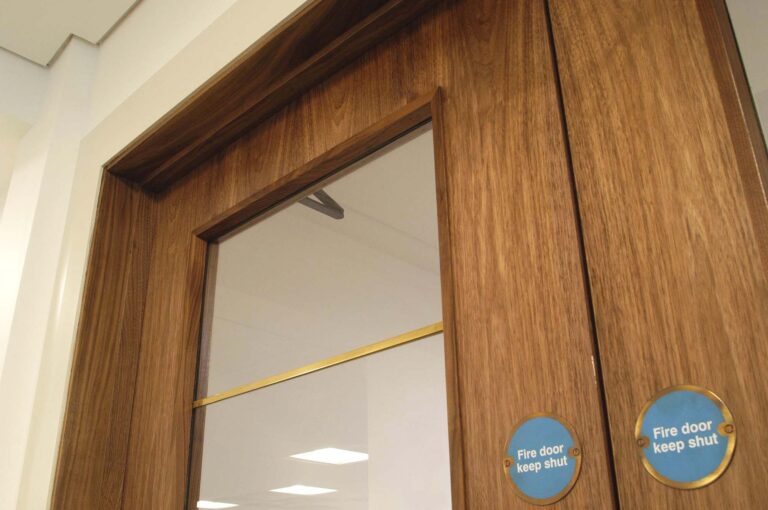
Photo: Woodknowledge Wales
What industry needs to do
For this to change, we must do three things:
Push for recognition in policy. Timber buildings must be included in national GGR portfolios and treated equivalently to other carbon storage technologies. That includes eligibility for incentives under future carbon certification schemes.
Improve measurement and reporting. New standards under development—such as ISO’s draft for quantifying carbon in harvested wood products—should be adopted and operationalised by manufacturers and building clients alike.
Design for longevity and reuse. If buildings are to be recognised as carbon stores, they must be built to last. That means paying attention to service life, circularity, and deconstruction pathways. Reuse and cascading use can extend carbon residence times well beyond 100 years.
A call to action
It’s time the timber industry claimed its rightful place in the climate solution portfolio. We are not just low-carbon. We are carbon negative. But unless we frame our product as a GGR mechanism—not just as a ‘greener material’—we risk being sidelined in favour of flashier tech with bigger lobbyists.
The timber sector needs to speak the language of climate policy: quantification, degree of permanence, additionality, verifiability, and cost-effectiveness. If we do, we will not only grow our market, but ensure that the buildings of the future actively help to cool the planet.
Wood in construction is not a silver bullet. But it is an overlooked workhorse. Let’s put it to work.
References
Newman, G. et al. (2025). Using Wood in Construction as a Significant Greenhouse Gas Removal Mechanism. Woodknowledge Wales.
The Royal Society (2018). Greenhouse Gas Removal.
Climate Change Committee (2020). Sixth Carbon Budget: The UK’s path to Net Zero.
Element Energy & Centre for Ecology and Hydrology (2021). Greenhouse gas removal methods and their potential UK deployment.
Ricardo Energy & Environment (2024). UK Greenhouse Gas Inventory: 1990–2022. Prepared for DESNZ.
Matthews, R. et al. (2023). “Temporary carbon storage in wood products and the climate change mitigation challenge.” Nature Communications.
Spear, M. (2024). How long is long enough? Carbon storage and wood products. Bangor University.
HM Government (2022). UK NDC ICTU Report.
UNECE/FAO (2021). The carbon sink potential of harvested wood products. Policy Brief.
To provide the best experiences, we use technologies like cookies to store and/or access device information. Consenting to these technologies will allow us to process data such as browsing behavior or unique IDs on this site. Not consenting or withdrawing consent, may adversely affect certain features and functions.
Functional
Always active
The technical storage or access is strictly necessary for the legitimate purpose of enabling the use of a specific service explicitly requested by the subscriber or user, or for the sole purpose of carrying out the transmission of a communication over an electronic communications network.
Preferences
The technical storage or access is necessary for the legitimate purpose of storing preferences that are not requested by the subscriber or user.
Statistics
The technical storage or access that is used exclusively for statistical purposes.The technical storage or access that is used exclusively for anonymous statistical purposes. Without a subpoena, voluntary compliance on the part of your Internet Service Provider, or additional records from a third party, information stored or retrieved for this purpose alone cannot usually be used to identify you.
Marketing
The technical storage or access is required to create user profiles to send advertising, or to track the user on a website or across several websites for similar marketing purposes.