A key contributor to this effort is Woodknowledge Wales (WKW), whose deep commitment to building a sustainable, low-carbon future has shaped both the content and direction of this Yearbook. Led by Sarah Lawton, an editor and communicator working to connect the timber industry with the wider climate, land-use and design agenda, the WKW team has played a central role in curating the insights, case studies, and technical contributions you'll find in these pages.
Reclaimed wood carries environmental, heritage and social value—yet its full potential remains underused. Sara Morel explores how the sector can overcome challenges to play a crucial role in building a circular, low-carbon future.
The UK’s reclaimed timber market has seen major changes over recent decades. Once a thriving sector with robust domestic stocks and usage, it has steadily lost ground to recycling and overseas processing. Despite growing awareness of climate impact, the prioritisation of reuse remains weak across policy and industry.
Market trends and historical context
Between 1998 and 2006, UK stocks of salvaged wood fell from 377,000 to 24,700 tonnes.1 This was partly due to a policy shift in the construction industry, which began to favour recycling over reuse. Simultaneously, the Wood Recyclers Association was founded, and early wood recycling social enterprises began operating.
Demolition in the UK generates around 100 million tonnes of waste annually,2 of which some is reusable wood, such as beams, flooring, mouldings, doors, and structural elements. However, the amount actually saved for reuse is significantly reduced due to logistical and economic constraints.
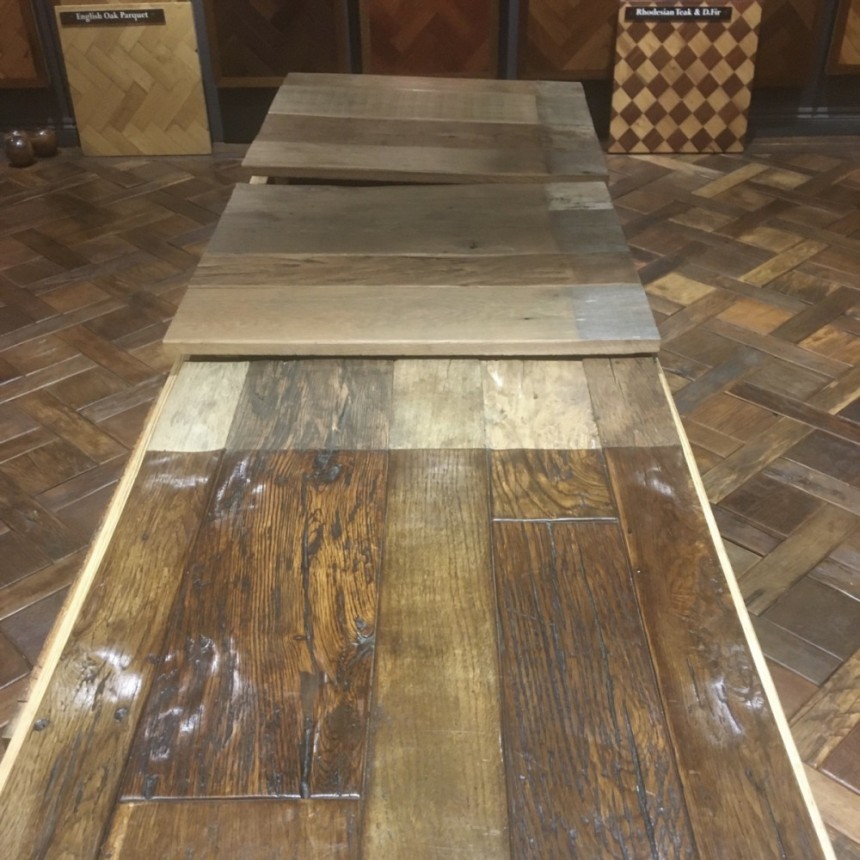
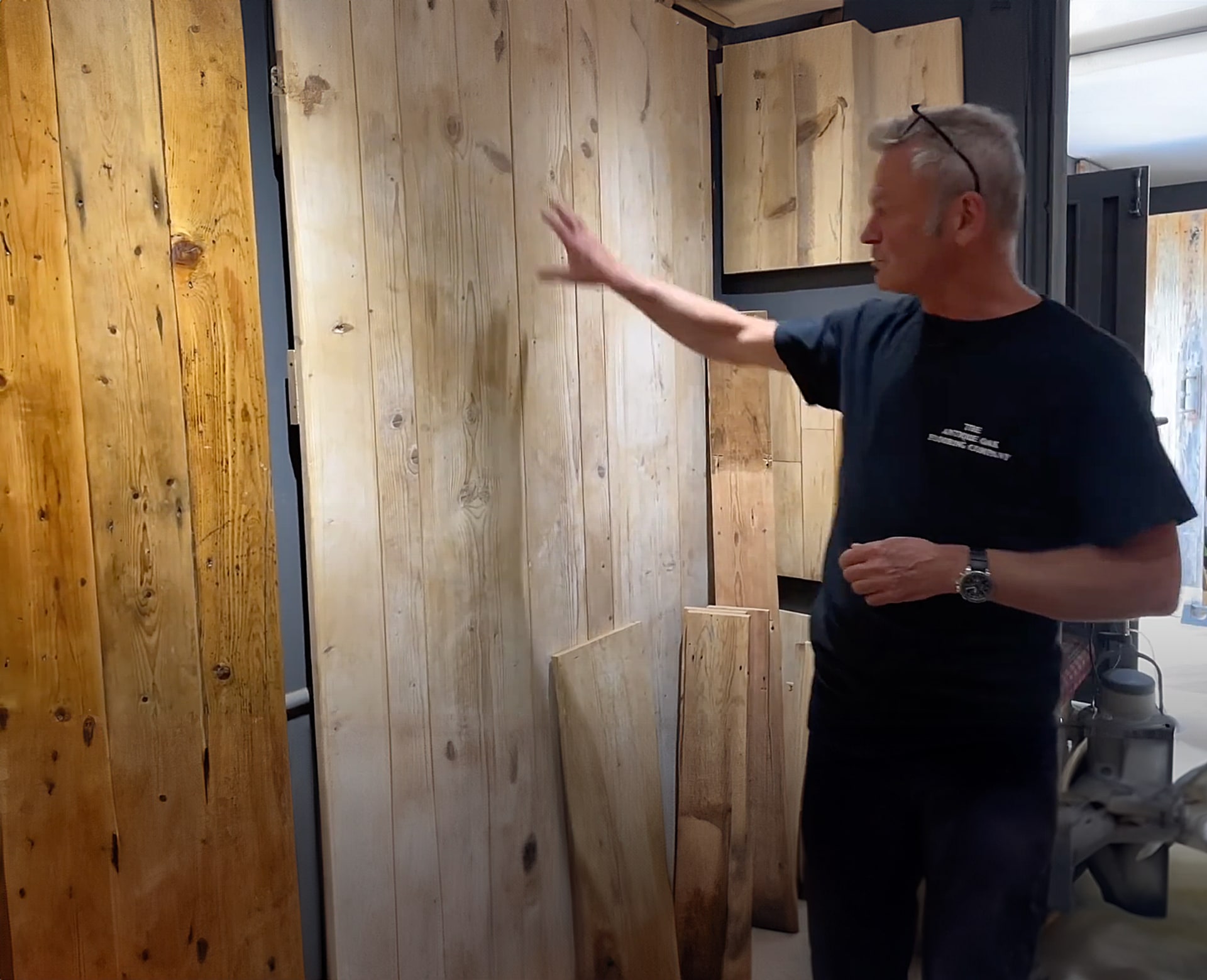
Reclaimed timber in a Salvo Code member showroom. Photo: Retrouvius
By the mid-1990s, up to 750,000 tonnes of timber were being reclaimed annually. Today, that figure stands at around 130,000 tonnes.1 A significant portion of high-quality wood is now downcycled into products such as biomass fuel, particle panel board, pet bedding, and mulch. Ironically, valuable UK timber is often exported, processed into furniture or
cladding abroad—especially in China—and reimported as ‘reclaimed wood furniture’ for Western markets.
In response to this decline, Salvo launched a campaign in 2006 promoting ‘Reuse Before Recycling’. This fed into the 2008 EU Waste Framework Directive3 , which enshrined reuse in the waste hierarchy and became UK law in 2011. However, implementation has been weak. The UN Sustainable Development Goal (SDG) 12.54 focuses on waste reduction, but its metrics prioritise recycling and ignore reuse.
Market segmentation
Salvo’s latest market description, including the findings from the EU FCRBE project, that ran from 2019 to 2023, identified six main reclaimed timber categories:
Salvaged timber
Reclaimed beams
Reclaimed flooring
Architectural woodwork
Doors
Ornamental woodwork
“Reclaimed wood is not just a material—it’s a story, a carbon store, and a path to circular construction.”
Categories of reclaimed timber
1. Salvaged timber
Includes modern demolition wood such as studding, staircases, mouldings, thinnings, and cheap composite furniture. This sector once supported more than 1,000 jobs in the 1990s, but much of the labour-intensive processing has moved overseas. Around 400,000 tonnes were sold annually in the 1990s, but significant volumes were also incinerated—some with energy recovery (e.g. stoves), some without. Today, exact volumes are unclear, but more material is exported than reused locally.
2. Reclaimed beams
These include structural elements such as joists, trusses, bressummers and railway sleepers. Typically predating the 1940s, many are made from slow-grown boreal softwoods or oak from the UK, the Baltics, France and North America. In the 1990s, half of all reclaimed beams came from UK demolition. Today, most are imported, with France a key source of reclaimed oak.
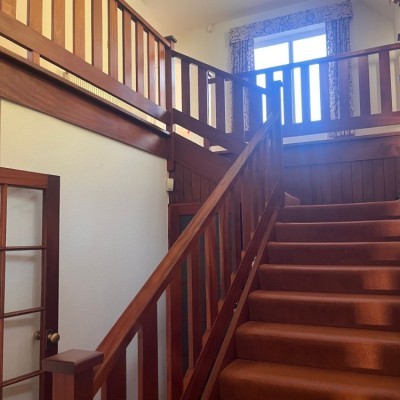
Demolition alert for a solid wood staircase on SalvoWEB
Greenheart and purpleheart—highly durable tropical hardwoods—are salvaged from UK maritime infrastructure. However, risk-averse specifiers are often hesitant to reuse timber structurally unless it has been stress-graded, despite visual grading being sufficient for many applications.
3. Reclaimed flooring
This category includes original floorboards, parquet, resawn beams, and engineered flooring (a reclaimed hardwood layer over a softwood base). In 2006, 1.73 million m2 of reclaimed flooring were sold, generating £26.7 million in sales. The value of reclaimed wood flooring has increased substantially since then, with some of the most valuable being more than £100/m2. Most flooring stock came from demolition (50%) or the building trade (30%), and 64% of customers were private individuals.
Reclaimed flooring is now often kiln-dried (71%), with 28% guaranteed for moisture content. Engineered reclaimed flooring makes installation easier and is compatible with modern requirements, such as underfloor heating.
4. Architectural woodwork
Comprising doors, windows, stairs, mouldings, panelling, and cladding, this sector generated £24.8 million in 2006 from 26,100 tonnes of stock. Items ranged from £1 banister spindles to £18,000 church fittings. Sourcing was relatively balanced across private sellers (37%), demolition (22%), and the building trade (20%).
The average sale was £663, with nearly 38,000 customers purchasing 700 kg each. Around 2,212 jobs were supported by this market segment, mostly in dismantling, restoration and sales.
5. Doors and windows
A 2005 survey estimated that two million wooden doors are removed in UK refurbishments each year, but only 100,000 are salvaged. Similarly, approximately 15 million wooden windows are removed annually, with wooden frames accounting for the majority. These represent a vast pool of potential reclaimed wood, much of which currently goes to waste due to a lack of collection infrastructure and market demand.
Quality control and labelling
With growing concerns over authenticity, Salvo launched the Truly Reclaimed® label in 2019 to differentiate genuine reclaimed wood from imitation products. Major UK and French dealers, including Antique Oak Flooring Company and BCA Matériaux Anciens, now use the label to offer transparency and credibility.
Aesthetics have also shifted. While some buyers still prefer ‘clean’ reclaimed wood, many now appreciate visible features like notches and aged patina that tell a story. Watch Salvo’s video about the Truly Reclaimed label linked at the end of this article.
Policy, perceptions, and industry challenges
A key issue is the blurred distinction between reuse and recycling in sustainability policies, which skews data and investment toward recycling. While social enterprises play a valuable role in the circular economy, it’s important they don’t imply they are the sole solution. Recognition should be given to the longstanding commercial sector—often unsubsidised—that has supported timber reuse for decades. Subsidised recycling risks creating an uneven playing field if it undermines the viability of reuse-focused enterprises.
Salvaged English Ash Bench on SalvoWEB
Conclusion
The UK reclaimed timber sector stands at a critical crossroads. Despite strong heritage and environmental benefits, it remains undervalued in national policy and overshadowed by recycling and downcycling.
Reviving the industry will require:
Stronger regulatory incentives for reuse in construction,
Greater investment in deconstruction (not demolition) skills,
Recognition of commercial salvage operations alongside social enterprises,
More accurate reporting that separates reuse from recycling.
Truly Reclaimed: Introducing the label for real reuse
Salvo presents the Truly Reclaimed label, which assures that a product or batch of material is genuinely antique or reclaimed. The campaign helps you distinguish Truly Reclaimed from new products that are made to resemble the old, highlighting the environmental benefit of choosing materials that really are reclaimed for reuse.
Watch Salvo’s video here:
References
Allwood J. (n.d.) Pushing reuse: Opportunities and barriers. Available at: www.library.uniteddiversity.coop/z_ unfiled_stuff/PushingReuse.pdf
BusinessWaste.co.uk (n.d.) How to reduce waste in construction. Available at: www.businesswaste.co.uk/ sectors/construction-waste-management/how-to-reduce- waste-in-construction
European Parliament & Council (2008) Directive 2008/98/EC on waste and repealing certain Directives. Official Journal of the European Union. Available at: www.eur-lex.europa.eu/eli/dir/2008/98/oj/eng
United Nations (n.d.) Sustainable Development Goal 12: Ensure sustainable consumption and production patterns. UN Sustainable Development Goals. Available at: www.sdgs.un.org/goals/goal12
Salvo (2021) SDG 12.5.1 – or why do 193 countries measure recycling but ignore reuse? SalvoNEWS. Available at: www.salvoweb.com/salvonews/40789-sdg- 1251-orwhy-do-193-countries-measure- recycling-but-ignore-reuse
To provide the best experiences, we use technologies like cookies to store and/or access device information. Consenting to these technologies will allow us to process data such as browsing behavior or unique IDs on this site. Not consenting or withdrawing consent, may adversely affect certain features and functions.
Functional
Always active
The technical storage or access is strictly necessary for the legitimate purpose of enabling the use of a specific service explicitly requested by the subscriber or user, or for the sole purpose of carrying out the transmission of a communication over an electronic communications network.
Preferences
The technical storage or access is necessary for the legitimate purpose of storing preferences that are not requested by the subscriber or user.
Statistics
The technical storage or access that is used exclusively for statistical purposes.The technical storage or access that is used exclusively for anonymous statistical purposes. Without a subpoena, voluntary compliance on the part of your Internet Service Provider, or additional records from a third party, information stored or retrieved for this purpose alone cannot usually be used to identify you.
Marketing
The technical storage or access is required to create user profiles to send advertising, or to track the user on a website or across several websites for similar marketing purposes.