A key contributor to this effort is Woodknowledge Wales (WKW), whose deep commitment to building a sustainable, low-carbon future has shaped both the content and direction of this Yearbook. Led by Sarah Lawton, an editor and communicator working to connect the timber industry with the wider climate, land-use and design agenda, the WKW team has played a central role in curating the insights, case studies, and technical contributions you'll find in these pages.
Timber performance depends heavily on managing moisture. Andy Pitman explains why understanding, measuring and controlling wood moisture content at every stage— from manufacture to installation—is essential to avoid decay, delays and design failure.
As timber consultants, much of our work relates to the effects of the interaction of wood and water. Recent conference and online seminar events, along with technical guidelines for the UK construction industry, have highlighted the importance of monitoring and controlling timber moisture during construction and in completed buildings.
It is important that the influence of wood and moisture is receiving so much attention given that wood exposed to wetting for extended periods can lead to decay and costly repairs. Drying down wet timber in situ is often challenging since pieces may not be exposed to airflow on all faces, reducing drying rates and leading to costly delays in construction programmes. The strength and performance of wood-composite sheathing / flooring and I-joists can also be reduced by wetting.
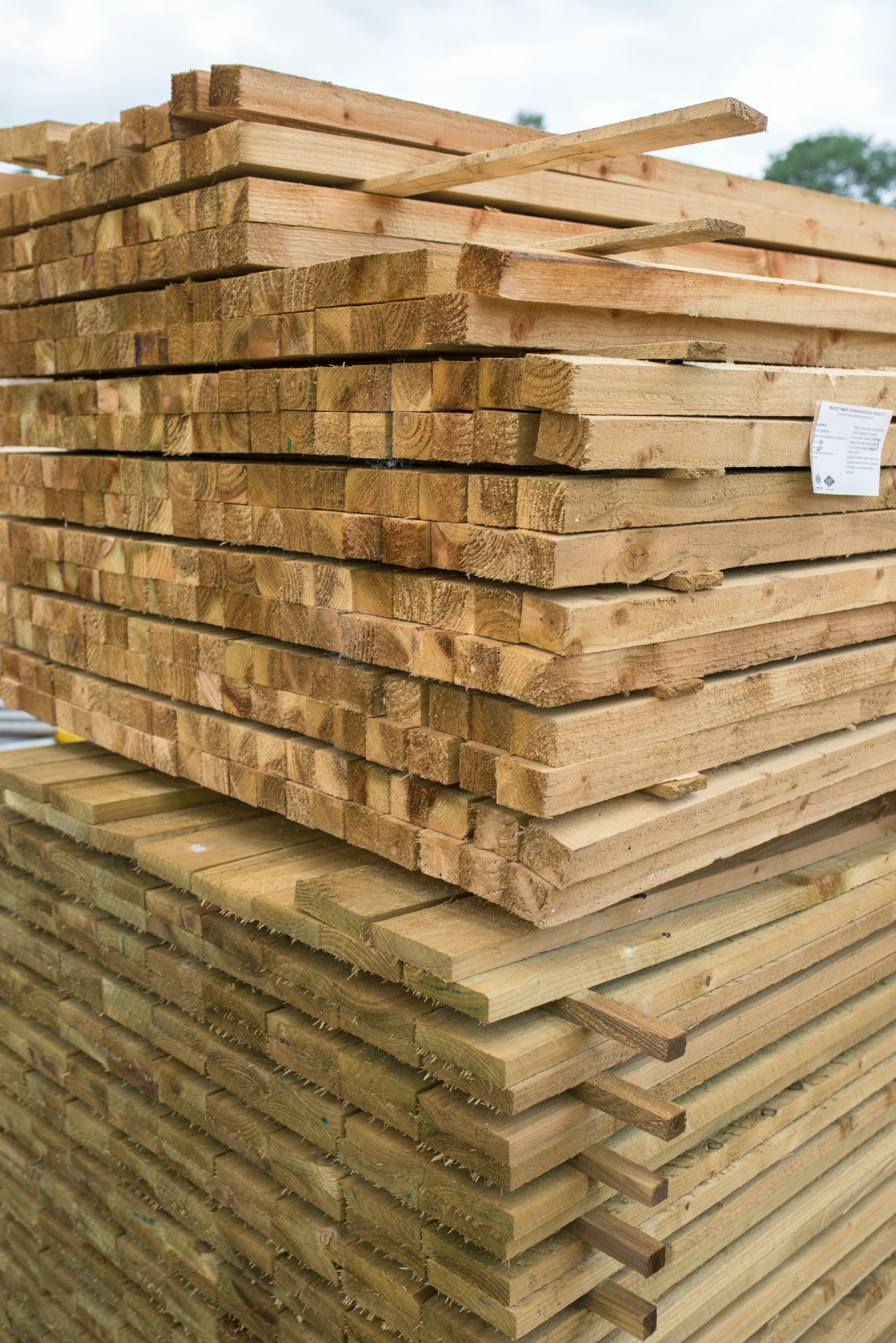
Photo: Adobe stock
Protecting wood against wetting
Contractors and their clients are increasingly aware of the importance of protecting wood against wetting, monitoring moisture content during construction and in completed buildings. Many have invested in moisture meters and moisture monitoring devices. It is important to highlight that frequency and locations for measurement are also important, particularly for large cross-section timbers and laminated structural timbers where moisture gradients are common and where glue lines influence wetting through the thickness.
As timbers dry, humidity increases; if not reduced through ventilation or dehumidification, promotes growth of mould on wood products as their surface moisture content increases. Moulds impact the health of workers and future occupiers, and mould growth can lead to the need for specialist cleaning. This is also important where the exposed faces of timber panels provide an aesthetic function. Being able to measure wood moisture and relative humidity can enable those involved in construction to reduce the risk of mould growth.
Protecting and conditioning wood
Wood moisture often needs to be below a certain level prior to treating, coating or gluing to enable adequate uptake of preservative and prevent delamination of coatings or timber components in service.
“Moisture may be invisible, but its impact on timber performance—and project costs—is anything but.”
Also, conditioning wood to a ‘constant’ moisture content termed equilibrium moisture content (EMC) under environmental conditions resembling those in service, will reduce the level of dimensional change that will take place in service, or enable change in dimension to be accommodated through design and installation. Understanding the moisture content of wood, dimensions, grain orientation, species and the environmental conditions during use enables a construction professional to understand levels of shrinkage or swelling that will occur and its consequences. A chart showing moisture contents for timbers under different service conditions was presented in Desch in 19621 with values comparable with those presented in the current joinery standard2 . Interestingly, the effects of not targeting wood moisture content with conditions in a building on product performance were raised in Desch 63 years ago! It highlights the importance of monitoring the moisture content of timbers at several key stages: during manufacture, during storage or acclimatisation on site, and again before installation. This is essential to ensure the timber is suitable for processing, has reached its equilibrium moisture content (EMC), and is at an appropriate level for its intended use.
Simple steps to prevent costly mistakes and ensure timbers deliver desired performance include:
Understand the moisture content range that a timber will be exposed to in service.
Include a moisture content in the specification and check timber moisture content at the time of delivery using appropriate sampling and measurement tools.
Store wood under conditions that maintain this moisture content by protecting against wetting if necessary.
For exterior joinery, understand the level of shrinkage and swelling that will occur and accommodate through design and installation.
For interior joinery, ensure wood products are acclimatised in heated weathertight buildings with control of temperature and humidity to an EMC under these conditions prior to installation.
Monitor moisture content of wood using the appropriate tools for the product in question.
These simple steps will ensure timber has the best start to its service life.
References
Desch HE. Timber: its structure and properties. London: MacMillan and Co Ltd; 1962.
BS EN 942:2007 Timber in joinery – General requirements
To provide the best experiences, we use technologies like cookies to store and/or access device information. Consenting to these technologies will allow us to process data such as browsing behavior or unique IDs on this site. Not consenting or withdrawing consent, may adversely affect certain features and functions.
Functional
Always active
The technical storage or access is strictly necessary for the legitimate purpose of enabling the use of a specific service explicitly requested by the subscriber or user, or for the sole purpose of carrying out the transmission of a communication over an electronic communications network.
Preferences
The technical storage or access is necessary for the legitimate purpose of storing preferences that are not requested by the subscriber or user.
Statistics
The technical storage or access that is used exclusively for statistical purposes.The technical storage or access that is used exclusively for anonymous statistical purposes. Without a subpoena, voluntary compliance on the part of your Internet Service Provider, or additional records from a third party, information stored or retrieved for this purpose alone cannot usually be used to identify you.
Marketing
The technical storage or access is required to create user profiles to send advertising, or to track the user on a website or across several websites for similar marketing purposes.