A key contributor to this effort is Woodknowledge Wales (WKW), whose deep commitment to building a sustainable, low-carbon future has shaped both the content and direction of this Yearbook. Led by Sarah Lawton, an editor and communicator working to connect the timber industry with the wider climate, land-use and design agenda, the WKW team has played a central role in curating the insights, case studies, and technical contributions you'll find in these pages.
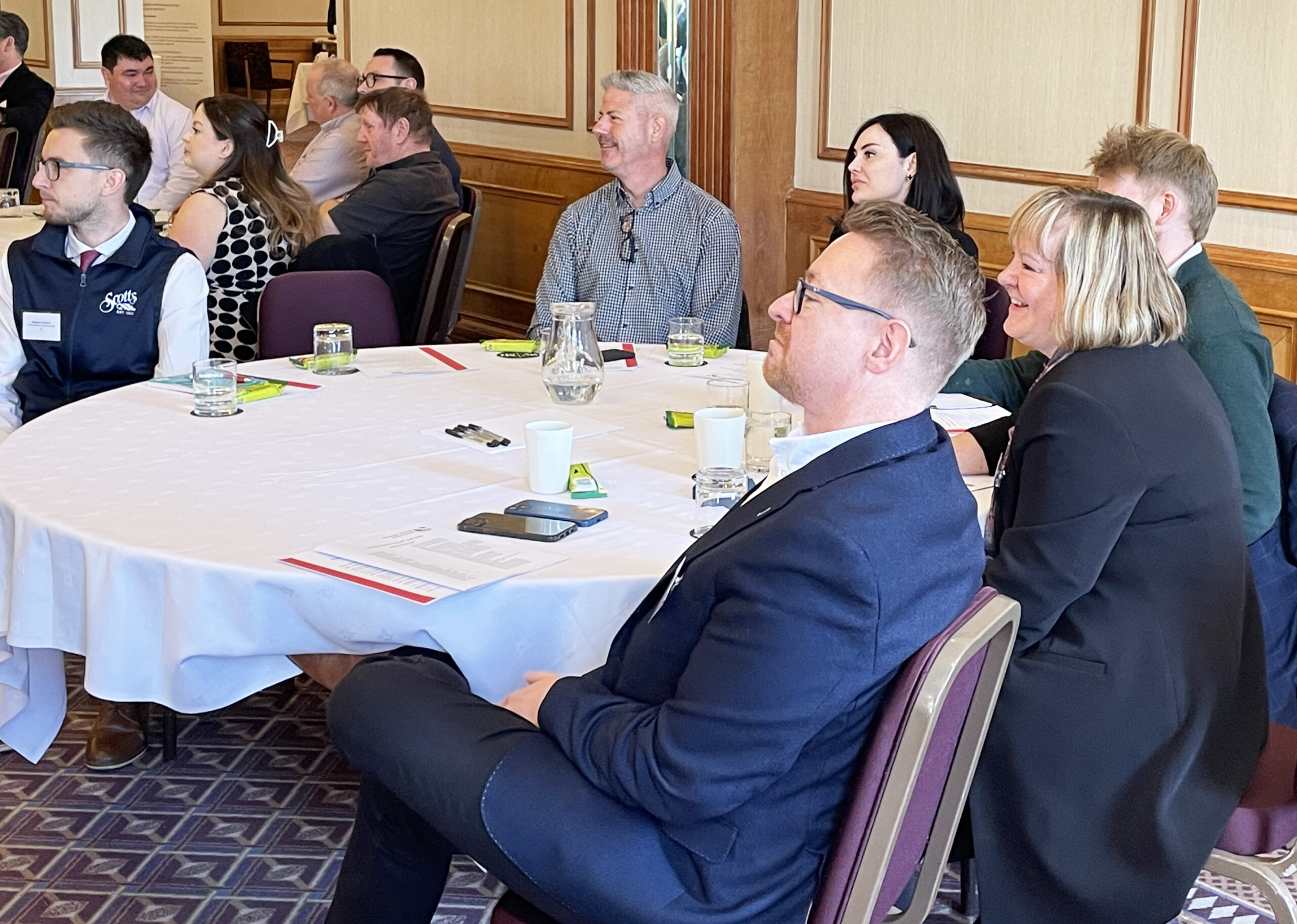
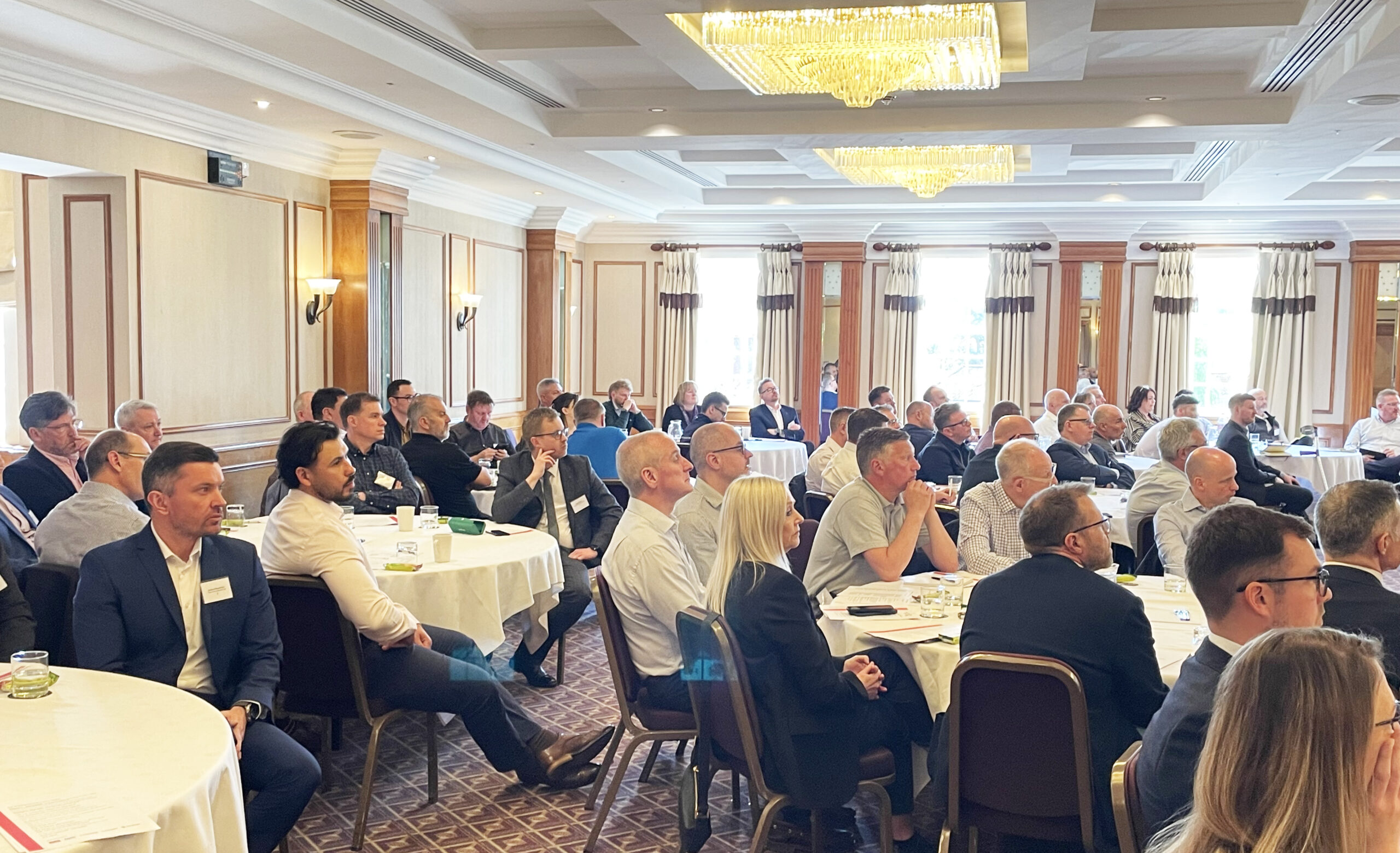
How was your Annual Members’ Day this year? We thoroughly enjoyed welcoming over 100 TRA members to the Manor House in Meriden – and we’re confident that everyone who attended left buzzing with as many insights as we did.
There was so much information packed into the day that we are publishing our summary in three parts. In part one, we cover the presentations focused on business survival – a pressing concern for many UK businesses today…
TRA CEO Nick Boulton welcomed TRA members to a packed and insightful day
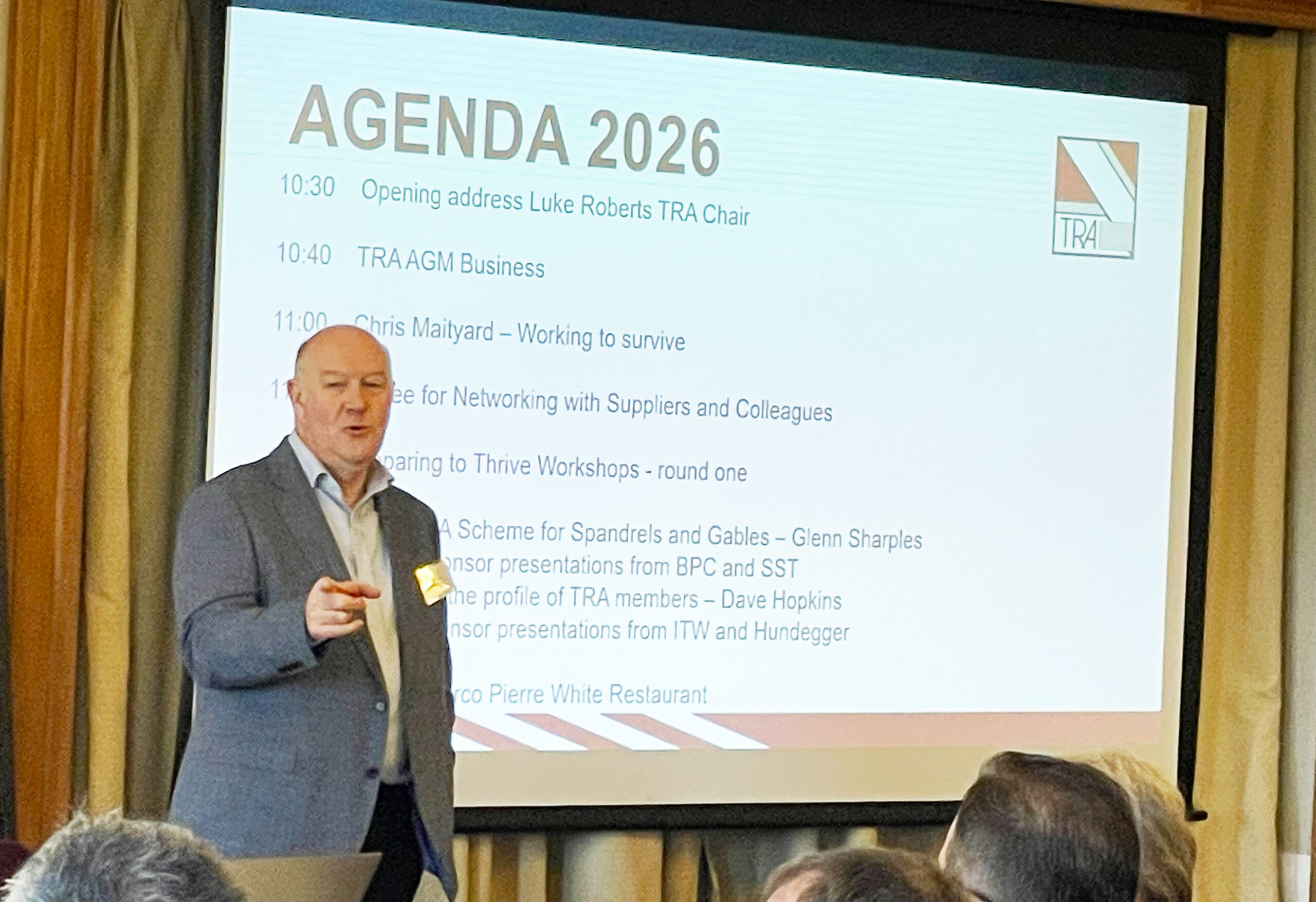
This year there was, understandably, a focus on resilience throughout the day. Nobody can deny that these are challenging times for any business. In his opening address, Luke Roberts – the TRA Chair – acknowledged the impact of cost increases.
He spoke for the whole room in stating that “we are stronger together,” and underscored the value of the TRA in providing “a single credible voice.” The importance of cooperation and collaboration was a recurring theme among the day’s speakers – and the winning projects in the evening’s Roofscape Awards were proof that successful projects are very much a group effort.
“Cashflow is king”: the keynote speech
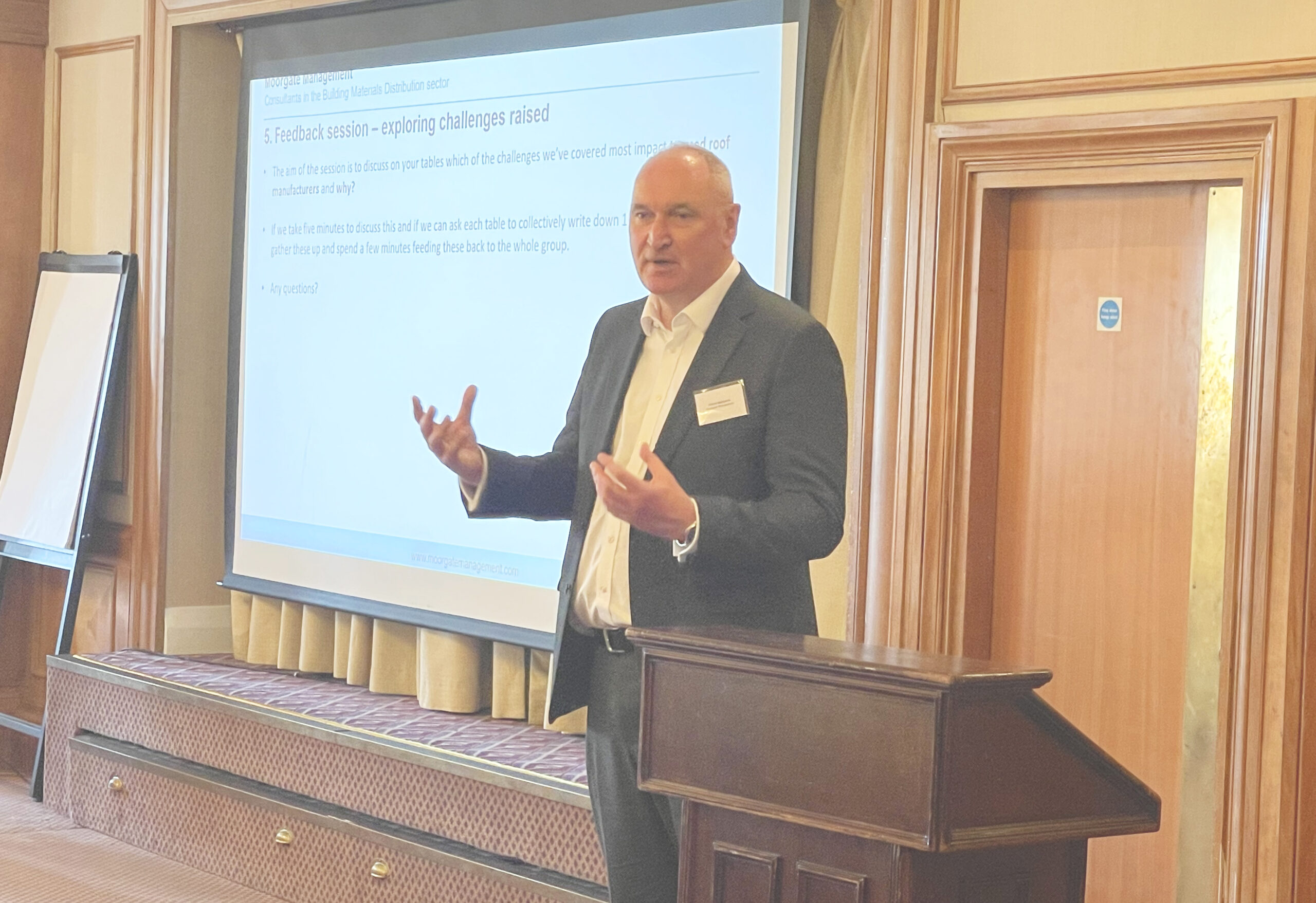
Chris Maityard, CEO of Moorgate Management, was our guest keynote speaker. He firmly grasped the nettle of the difficult climate we are working in today. “Are you spending more time in your business, rather than on your business?” That’s just one of the many fundamental questions that Chris challenged us with.
His presentation was a bootcamp of sorts – prompting us to re-examine our relationships with customers, creditors and colleagues. He urged us to apply a forensic focus on where profit lies and where loss occurs, reminding us that “cashflow is king”. He showed us how easily ERP (Enterprise Resource Planning) software can immediately bring clarity to a business’ effectivity.
Chris Maityard provided a business resilience bootcamp to kickstart the morning
Surviving the current challenges, Maityard made clear, requires active decision-making, discipline and a willingness to adapt. Those who take that approach are far more likely to come through the current cycle in a position of strength, ready to take advantage of the opportunities that follow.
Everyone taking notes in the room will have taken home something to action – whether it was related to financial management, operational efficiency or long-term strategy. We’ll be publishing an in-depth article on Chris’ presentation shortly.
Steel and tariffs: sponsor presentation
from Simpson Strong-Tie
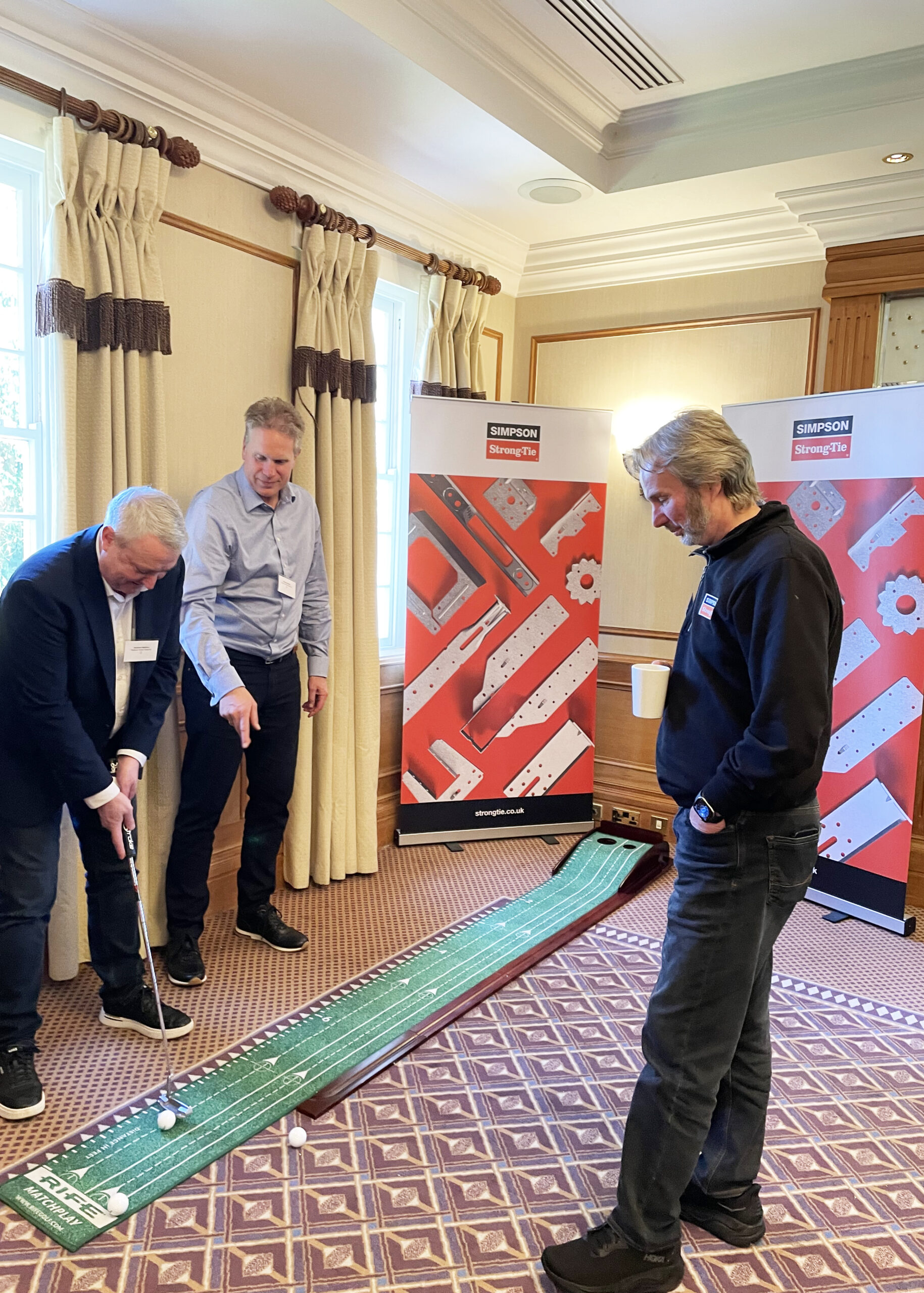
Simpson Strong-Tie brought along their enduringly popular mobile mini-golf set to the Member’s Day. Attendees relaxed in-between presentations by showing off some seriously impressive putting skills. But they also brought us up to speed on the current situation in the UK regarding steel tariffs, courtesy of Arran Aris
The UK government has invested heavily into steel, making its most significant intervention in the UK steel industry in decades: £2.5bn overall, with £500m to Tata Steel. Crude steel production has fallen 50% in the past decade with several major sites at risk of closure. The funding is intended to stop more closures and loss of skills. Unfortunately despite this investment all the steel need for construction fixings now and going forward will have to be imported.
Simpson Strong-Tie gave an extremely valuable presentation on the impact of steel tariffs – and they treated delegates to mini-golf putting challenges between sessions
To protect the market, the government is reducing overall quota volumes of tariff-free steel imports by 60% from July 2026. Steel imported above those quotas will face a 50% tariff. This is designed to stop subsidised steel from flooding the UK market. Currently, just under 6m tonnes of steel can be imported tariff-free; but this will fall to around 2.3m tonnes after July.
Planning and quota timing is now much more important than price, as there will be a much tighter supply from Q3 onwards. Once tariff-free quotas are exhausted, supplies will be 50% more expensive and some will stop completely until the next quarter. The quota has already pushed prices up and increased spot price spikes. Importers expect steel will either be priced to include the tariff, or supply will pause until the next quota opens.
Crucially, there is no steel shortage in the UK: mills and stockholdings and ports are still busy. But availability risk is replacing price for UK manufacturers.
Click here to read Part 2 of this year’s Members’ Day write-up in which we heard all about ‘Opportunities to Thrive’; with more of our sponsor’s presentations.
Thanks to all our Member’s Day sponsors: Simpson Strong-Tie, BPC, Hundegger, Cullen and James Hardie. They were on-hand throughout the day to help attendees better understand their products and services. Without our sponsors, the day could not have been the success that it was.
To provide the best experiences, we use technologies like cookies to store and/or access device information. Consenting to these technologies will allow us to process data such as browsing behavior or unique IDs on this site. Not consenting or withdrawing consent, may adversely affect certain features and functions.
Functional
Always active
The technical storage or access is strictly necessary for the legitimate purpose of enabling the use of a specific service explicitly requested by the subscriber or user, or for the sole purpose of carrying out the transmission of a communication over an electronic communications network.
Preferences
The technical storage or access is necessary for the legitimate purpose of storing preferences that are not requested by the subscriber or user.
Statistics
The technical storage or access that is used exclusively for statistical purposes.The technical storage or access that is used exclusively for anonymous statistical purposes. Without a subpoena, voluntary compliance on the part of your Internet Service Provider, or additional records from a third party, information stored or retrieved for this purpose alone cannot usually be used to identify you.
Marketing
The technical storage or access is required to create user profiles to send advertising, or to track the user on a website or across several websites for similar marketing purposes.