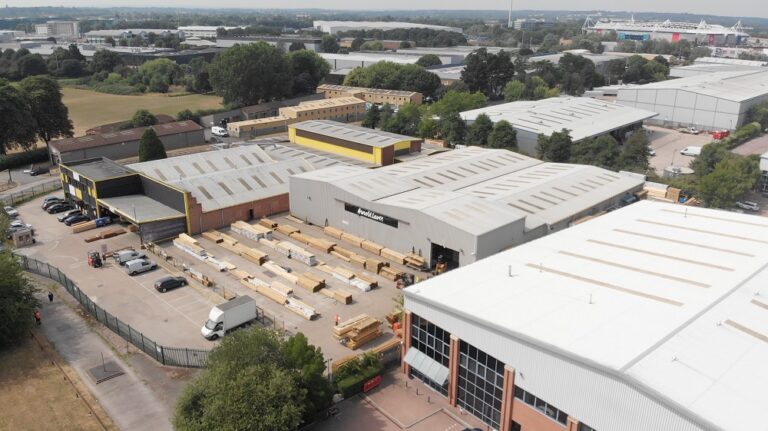
A key contributor to this effort is Woodknowledge Wales (WKW), whose deep commitment to building a sustainable, low-carbon future has shaped both the content and direction of this Yearbook. Led by Sarah Lawton, an editor and communicator working to connect the timber industry with the wider climate, land-use and design agenda, the WKW team has played a central role in curating the insights, case studies, and technical contributions you'll find in these pages.
The new Currie Community High School in Edinburgh recently opened its doors, making history as one of Scotland’s first Passivhaus secondary schools; a significant milestone in the UK’s low-energy design agenda. The space was handed over ready for the start of the new school year, bringing a healthy and vibrant new space for the Edinburgh community. In Part 1, project architect Jorge Barreno-Cardiel explains the design choices for this exciting new building.
A Public Brief
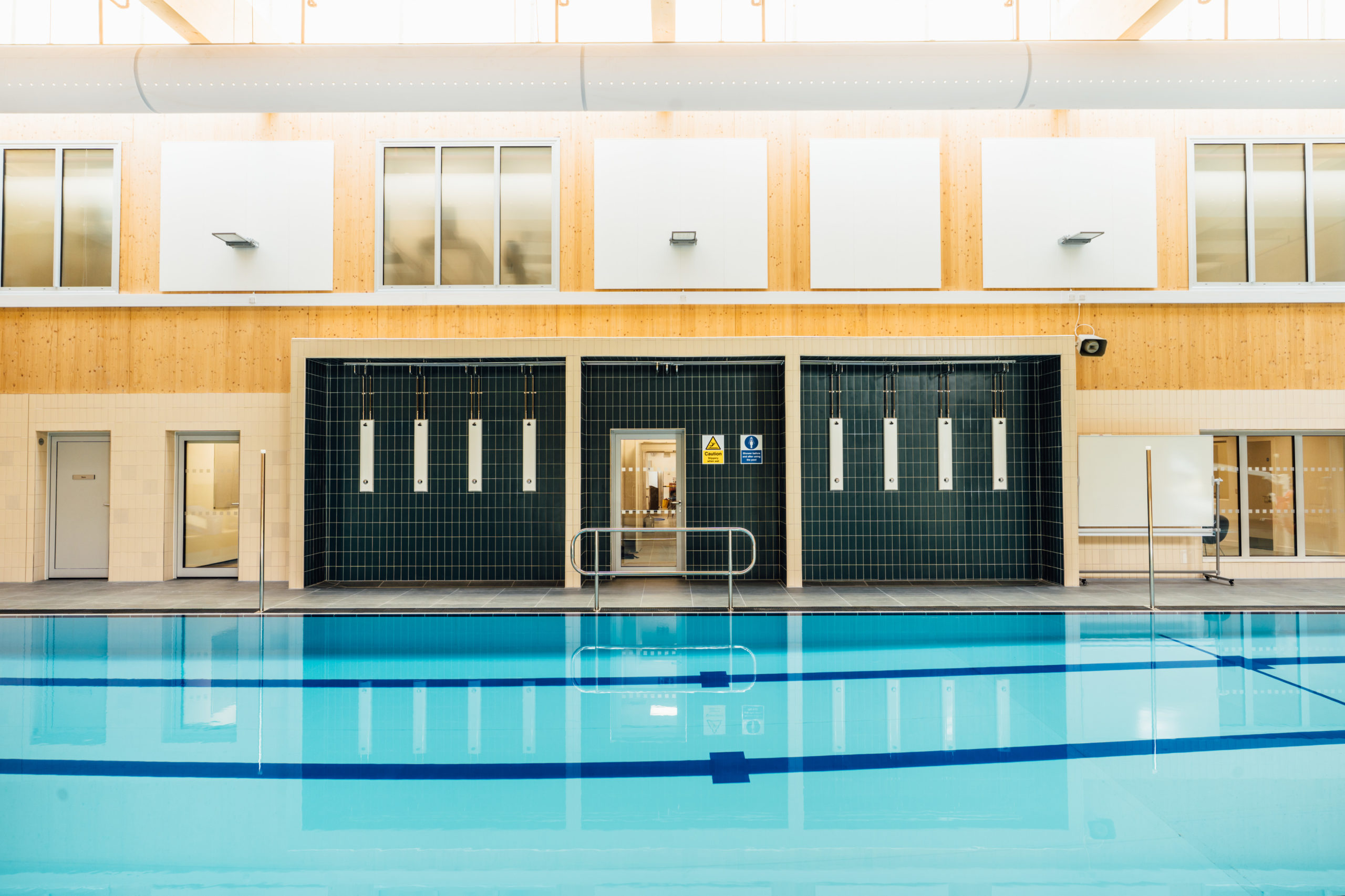
Edinburgh City Council’s ambition extended far beyond providing a replacement school. Currie was conceived as a multi-generational community asset, combining education with health, wellbeing and civic uses. Alongside a 1,000-pupil secondary school, the building accommodates a public library, a wellness centre, café, allotments, a four-court sports hall, and a Passivhaus swimming pool.
The strategy recognises the school as a social anchor: a place of learning during the day, and a hub for recreation, support, and culture beyond school hours. This inclusive ethos informed both programme and spatial organisation from the outset.
Architectural Approach
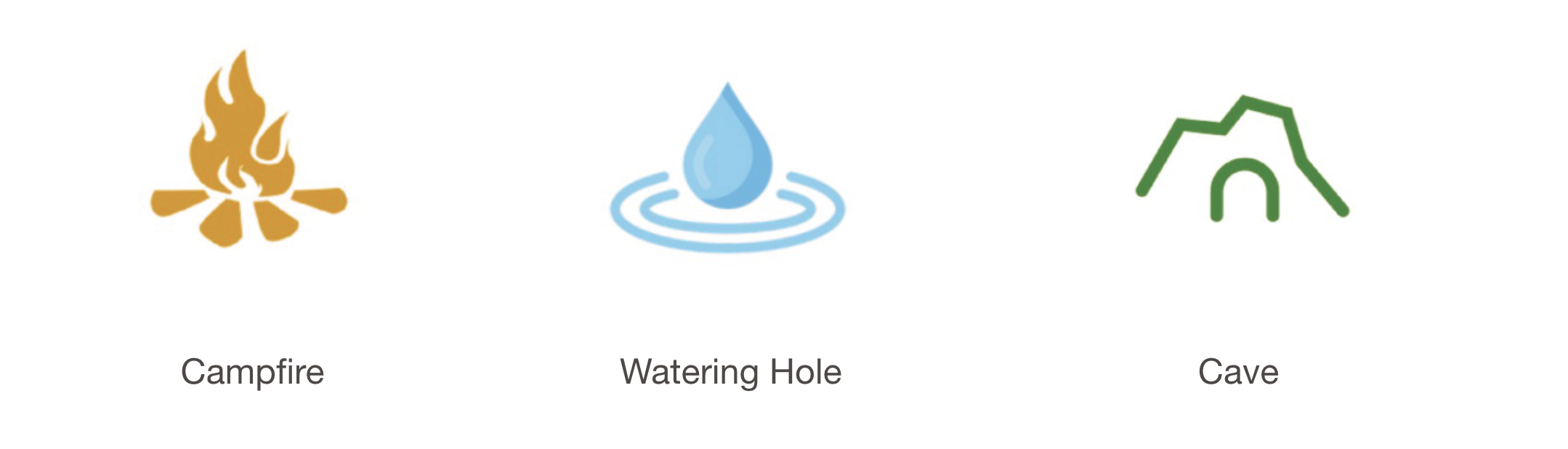
Architype’s design articulates a series of learning environments inspired by social learning theory:
Campfire spaces for large-group teaching and assembly
Watering holes for informal exchange
Caves for quiet, individual reflection
These models underpin a spatial composition that mixes open, flexible areas with more intimate niches, giving pupils variety and agency in how they learn.
Externally, the architecture draws on the surrounding Pentland Hills. Textured cladding, natural tones and framed views tie the school to its landscape setting, while generous glazing maximises daylight and visual connection to the outdoors. Outdoor terraces, a sensory garden and allotments further extend the educational environment into the landscape.
In keeping with the holistic sustainability approach, the material palette was carefully selected to enhance air quality through low-VOC products and natural materials such as linoleum and wood-fibre ceilings tiles.
Community value
The scheme is engineered to create community and intergenerational interactions, becoming a place that the whole neighbourhood truly feels is their own, from parents and teenagers to lane swimmers.
As one of the first developments in the Scottish Futures Trust’s Learning Estate Improvement Programme, it had to meet strict energy requirements that are linked to school funding.
We chose Passivhaus as our design approach as the most rigorous and efficient way to achieve both the energy requirements, with the added value of enhanced comfort, wellbeing and all-round quality. Our team also used our in-house ECCOLAB software to monitor the building’s embodied carbon impact as the design developed.
To provide the best experiences, we use technologies like cookies to store and/or access device information. Consenting to these technologies will allow us to process data such as browsing behavior or unique IDs on this site. Not consenting or withdrawing consent, may adversely affect certain features and functions.
Functional
Always active
The technical storage or access is strictly necessary for the legitimate purpose of enabling the use of a specific service explicitly requested by the subscriber or user, or for the sole purpose of carrying out the transmission of a communication over an electronic communications network.
Preferences
The technical storage or access is necessary for the legitimate purpose of storing preferences that are not requested by the subscriber or user.
Statistics
The technical storage or access that is used exclusively for statistical purposes.The technical storage or access that is used exclusively for anonymous statistical purposes. Without a subpoena, voluntary compliance on the part of your Internet Service Provider, or additional records from a third party, information stored or retrieved for this purpose alone cannot usually be used to identify you.
Marketing
The technical storage or access is required to create user profiles to send advertising, or to track the user on a website or across several websites for similar marketing purposes.