A key contributor to this effort is Woodknowledge Wales (WKW), whose deep commitment to building a sustainable, low-carbon future has shaped both the content and direction of this Yearbook. Led by Sarah Lawton, an editor and communicator working to connect the timber industry with the wider climate, land-use and design agenda, the WKW team has played a central role in curating the insights, case studies, and technical contributions you'll find in these pages.
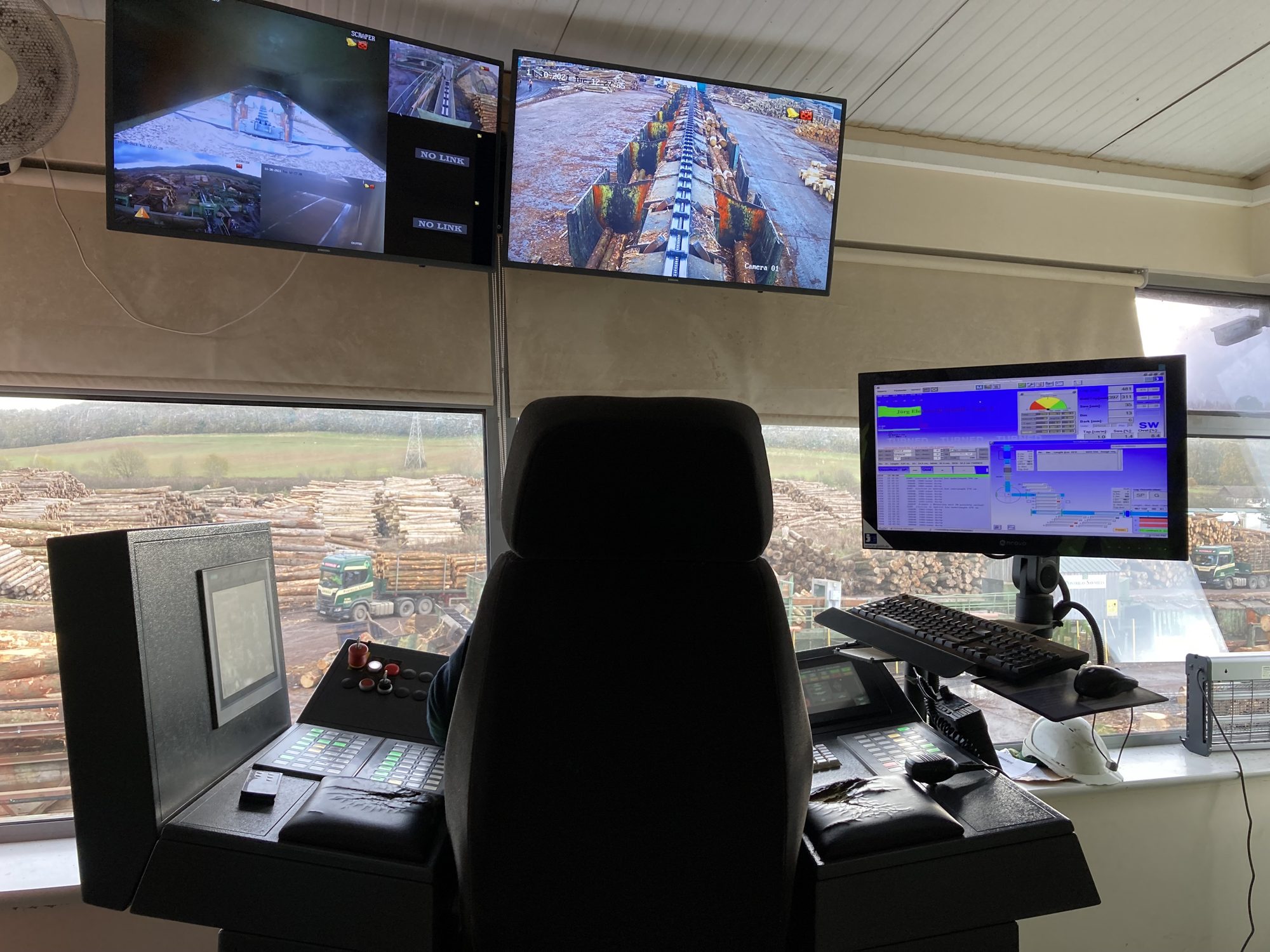
Shona Smyth and Caroline Harrison examine how digital platforms, intelligent machinery and spatial data systems are reshaping harvesting and haulage operations across the UK forest supply chain.
The forest economy is undergoing a profound transformation. Once characterised by labour-intensive practices, paper-based systems and fragmented logistics, the harvesting and haulage sector is now increasingly shaped by digital innovation, automation and data-driven decision-making. As demand for sustainably produced timber rises, alongside heightened regulatory scrutiny and pressure on margins, innovation in forest machinery, logistics transparency and operational efficiency has become essential rather than optional.
Across the UK, harvesting and haulage operations sit at the critical interface between forest management and downstream processing. The efficiency, accuracy and resilience of this interface determines not only commercial performance, but also carbon outcomes, road safety, regulatory compliance and public confidence in forestry as a sustainable land use.
The changing context for harvesting and haulage
UK forestry operates in a challenging environment. Harvesting sites are often remote, access infrastructure is constrained, and public road networks are under increasing pressure. At the same time, timber production volumes are rising as forests planted in the latter part of the twentieth century reach maturity. Each year, hundreds of thousands of lorry loads of timber move from forests to processors, making haulage one of the most significant cost and risk components in the forest supply chain.
Against this backdrop, inefficiencies such as paper delivery tickets, poor visibility of timber movements, and limited real-time coordination between harvesting teams, hauliers and processors have historically constrained performance. Innovation has therefore focused on three interconnected areas: harvesting machinery capability, haulage transparency, and digital integration of spatial and operational data.
The digitalisation of timber haulage
One of the most significant recent innovations in UK timber logistics has been the adoption of platforms such as LOGR, a digital timber haulage and chain-of-custody platform. Digital platforms are now capable of replacing traditional paper dockets with electronic delivery records, providing real-time visibility of timber movements from forest to customer.
Introduced to the UK market in 2021, including early adoption and rollout by forestry consultancies, such as Bronwin & Abbey, digital solutions have addressed several long-standing inefficiencies in timber haulage. Through GPS-enabled tracking, electronic dockets and geofencing at both harvesting sites and delivery locations, advanced digital platforms enable all parties in the supply chain to see when timber leaves site, where it is in transit, and when it is delivered.
The implications are significant. Real-time transparency reduces disputes over volumes and destinations, improves haulage scheduling, and supports compliance with evolving regulatory frameworks such as chain-of-custody and due diligence requirements. For forest managers and agents, the ability to monitor haulage activity live allows earlier identification of delays, missed collections or access issues, improving overall operational control.
Crucially, digital solutions also support improved collaboration between harvesting teams, hauliers and processors. By moving away from fragmented, paper-based systems to a shared digital platform, the forest economy becomes more resilient, auditable and efficient.
Intelligent boom control and operator efficiency
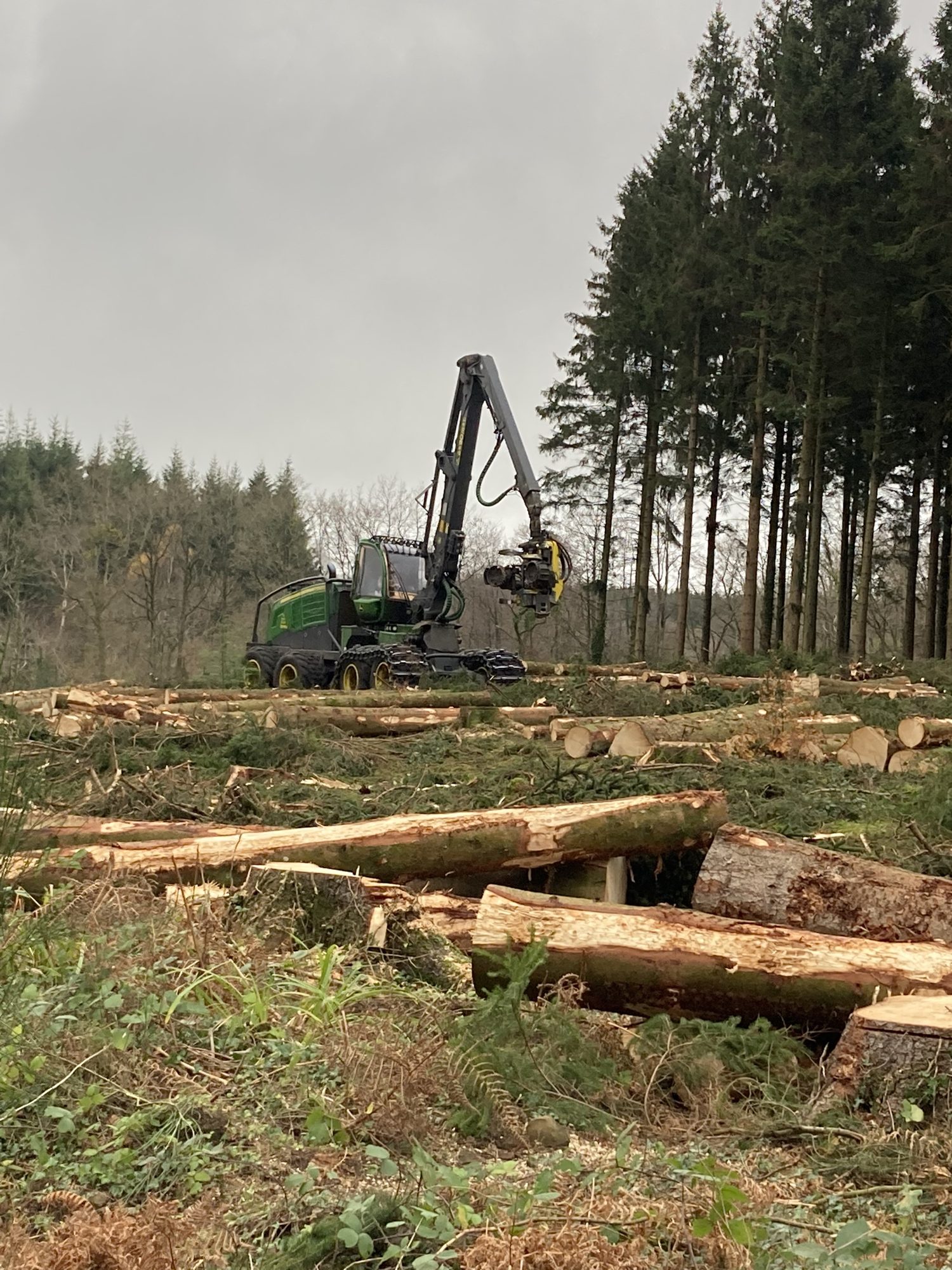
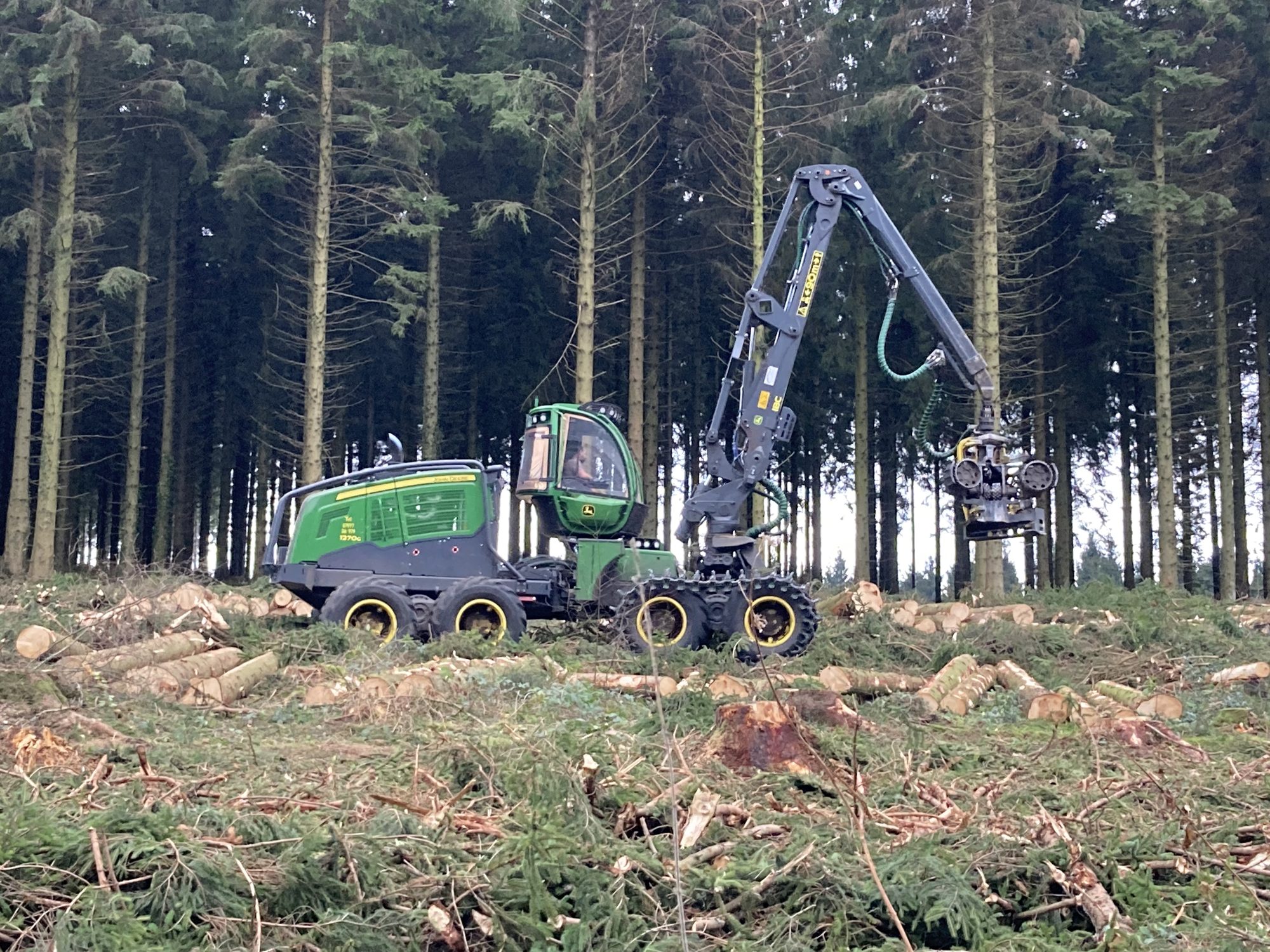
While haulage transparency has advanced rapidly, innovation within harvesting machinery itself has been equally transformative. Modern harvesters and forwarders are no longer simply mechanical tools; they are increasingly sophisticated mechatronic systems designed to optimise productivity, reduce operator fatigue and protect machine longevity.
A leading example is Intelligent Boom Control (IBC), developed by John Deere and now widely available across harvesters and forwarders. IBC fundamentally changes how operators control the boom by allowing them to guide the boom tip directly, rather than managing multiple individual boom functions simultaneously.
Through sensors and software, IBC automatically coordinates boom movements, extension and swing speed, enabling smoother, more precise operation across the harvesting compartment. This delivers several important benefits. First, it significantly shortens the learning curve for new operators, addressing a critical skills challenge in the forestry sector. Second, it reduces physical and cognitive strain on experienced operators, allowing them to maintain consistent productivity over longer shifts.
From an economic perspective, IBC contributes to improved machine utilisation and reduced structural fatigue, helping to extend component life and lower maintenance costs. From a safety standpoint, smoother boom movements and automated end-damping reduce shock loads and the risk of operator error in complex harvesting conditions. Together, these benefits reinforce the role of intelligent machinery in improving both efficiency and resilience within harvesting operations.
Telematics and the rise of data-driven forestry
Beyond individual machine functions, the integration of machine telematics is reshaping how harvesting and forwarding fleets are managed. Modern forest machines increasingly generate continuous streams of data on engine performance, fuel consumption, productive machine hours and utilisation rates. When aggregated and analysed, this data provides unprecedented insight into operational performance.
Telematics platforms allow managers to identify under-utilised assets, benchmark productivity between sites, and make evidence-based decisions about machine deployment and replacement. When combined with digital haulage systems, a near-continuous picture of timber flow emerges, from standing tree to roadside to processor.
Importantly, telematics also support environmental and social objectives. Improved fuel efficiency and reduced idle time contribute to lower emissions, while better route planning and coordination help minimise impacts on rural road networks and local communities.
Drones, GIS and spatial intelligence
Perhaps the most transformative innovations, however, lie in the integration of drone-derived data, GIS and remote sensing into harvesting and haulage planning. Drones equipped with high-resolution cameras, LiDAR and multispectral sensors are now widely used in UK forestry to support inventory, access planning and operational risk assessment.
Drone data allows forest managers to map terrain, standing timber volumes and access constraints with far greater accuracy than traditional ground surveys alone. This spatial intelligence feeds directly into GIS platforms, enabling more precise harvesting boundaries, extraction routes and stacking locations to be defined before machines arrive on site.
For harvesting operations, this reduces uncertainty and improves productivity from day one. For haulage, better spatial data supports safer and more efficient routing, reducing the risk of damage to forest roads and public infrastructure. In sensitive landscapes, drone-derived models also help identify environmental constraints, archaeological features or high conservation value areas that must be protected during operations.
Integration across the forest supply chain
The real power of innovation in the forest economy lies not in individual technologies, but in their integration. When harvesting machinery equipped with IBC feeds production data into telematics systems, which in turn align with GIS-based planning and LOGR-enabled haulage transparency, the result is a genuinely connected forest supply chain.
This integration supports better commercial outcomes, stronger compliance and improved sustainability. It also aligns forestry with broader trends in infrastructure, logistics and land management, where digital twins, real-time monitoring and data-driven optimisation are becoming standard practice.
Looking ahead
Innovation in harvesting, haulage and machinery is no longer about incremental gains; it is about systemic change. As the UK seeks to increase domestic timber production, reduce reliance on imports and deliver climate and biodiversity objectives, the efficiency and credibility of the forest economy will be under increasing scrutiny.
Technologies such as digital timber haulage and chain-of-custody platforms, Intelligent Boom Control, advanced telematics and drone-enabled GIS are not peripheral tools. They are foundational components of a modern, professional forestry sector capable of meeting economic, environmental and social expectations.
For forestry businesses, agents and landowners, the challenge now is not whether these innovations work, but how quickly and effectively they can be adopted, integrated and scaled. Those who embrace this transition will be best placed to deliver resilient, transparent and sustainable forestry in the decades ahead.
Environmental protection guidance
Operational efficiency and digital integration within forestry must continue to align with wider environmental protection requirements, including UK Forestry Standard (UKFS) compliance, water protection, archaeology, biodiversity and site management obligations.
Further guidance is available through Confor’s publication Guidance on responsibilities for environmental protection in forestry, developed in partnership with sector stakeholders and regulators.
To provide the best experiences, we use technologies like cookies to store and/or access device information. Consenting to these technologies will allow us to process data such as browsing behavior or unique IDs on this site. Not consenting or withdrawing consent, may adversely affect certain features and functions.
Functional
Always active
The technical storage or access is strictly necessary for the legitimate purpose of enabling the use of a specific service explicitly requested by the subscriber or user, or for the sole purpose of carrying out the transmission of a communication over an electronic communications network.
Preferences
The technical storage or access is necessary for the legitimate purpose of storing preferences that are not requested by the subscriber or user.
Statistics
The technical storage or access that is used exclusively for statistical purposes.The technical storage or access that is used exclusively for anonymous statistical purposes. Without a subpoena, voluntary compliance on the part of your Internet Service Provider, or additional records from a third party, information stored or retrieved for this purpose alone cannot usually be used to identify you.
Marketing
The technical storage or access is required to create user profiles to send advertising, or to track the user on a website or across several websites for similar marketing purposes.