A key contributor to this effort is Woodknowledge Wales (WKW), whose deep commitment to building a sustainable, low-carbon future has shaped both the content and direction of this Yearbook. Led by Sarah Lawton, an editor and communicator working to connect the timber industry with the wider climate, land-use and design agenda, the WKW team has played a central role in curating the insights, case studies, and technical contributions you'll find in these pages.
Safe Schools for the Future saw its official launch on 2nd September. Co-author and Architype’s associate Seb Laan Lomas shares an introduction to the guidance, and why it is essential reading for everyone involved in the built environment.
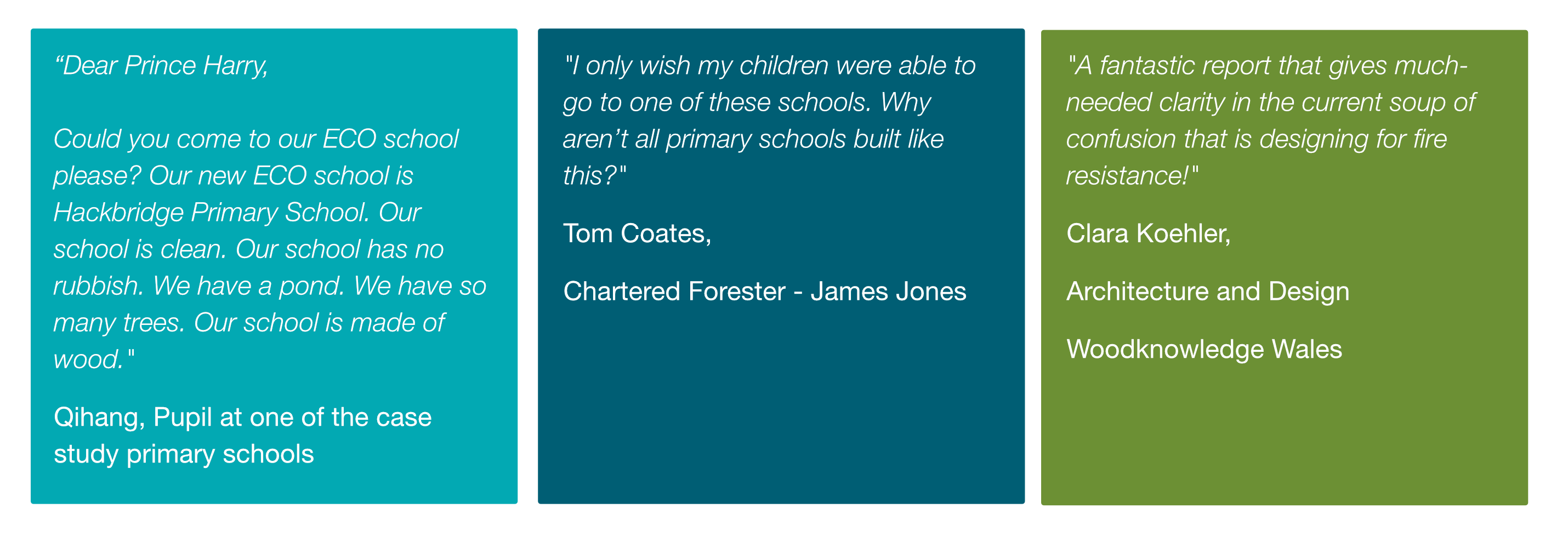
Safe Schools for the Future offers new guidance for project teams so the UK can rapidly upscale the benefits from the high-health, high-comfort, high-performance, low-impact benefits that timber frame primary schools can offer.
This research has been funded by the Forestry Commission as part of the Woods into Management Forestry Innovation Fund which sought to address identified barriers for safely increasing the use of home-grown timber and wood-based products in construction, as a response to the climate emergency.
Why primary schools?
Primary schools are the ideal typology for using timber frame due to their medium scale when compared to taller urban buildings, and the building users are familiar with the evacuation routine. A lot of existing timber frame guidance is aimed at domestic projects, and much of the recent industry research has focused on mass timber construction which can be an inefficient solution for many instances with primary schools.
Keeping students safe
Over recent years we have seen the rightful rise of scrutiny in Building Control and insurance that has followed the Grenfell Tragedy. We have also seen how the construction sector is struggling to keep pace with this, for example with the availability of sufficient fire resistance data. Whilst this is a materially agnostic challenge, this is another hurdle that threatens the use of timber in construction, and one that unaddressed could inhibit our national ambitions to see more timber in construction.
Supported by Jose Torero from UCL, Luke Bisby from University of Edinburgh, and Joachim Schmid from IGNIS, the publication illustrates how performance-based routes to demonstrating fire resistance may be more suitable for timber-framed primary schools. Through a recently completed case study, examples of using Eurocode 5 and more progressive geometry and physics-based fire engineered solutions set out their transparent and iterative processes. These can also offer significant embodied carbon and construction cost optimisations without compromising life safety or asset protection*.
A data-rich guide
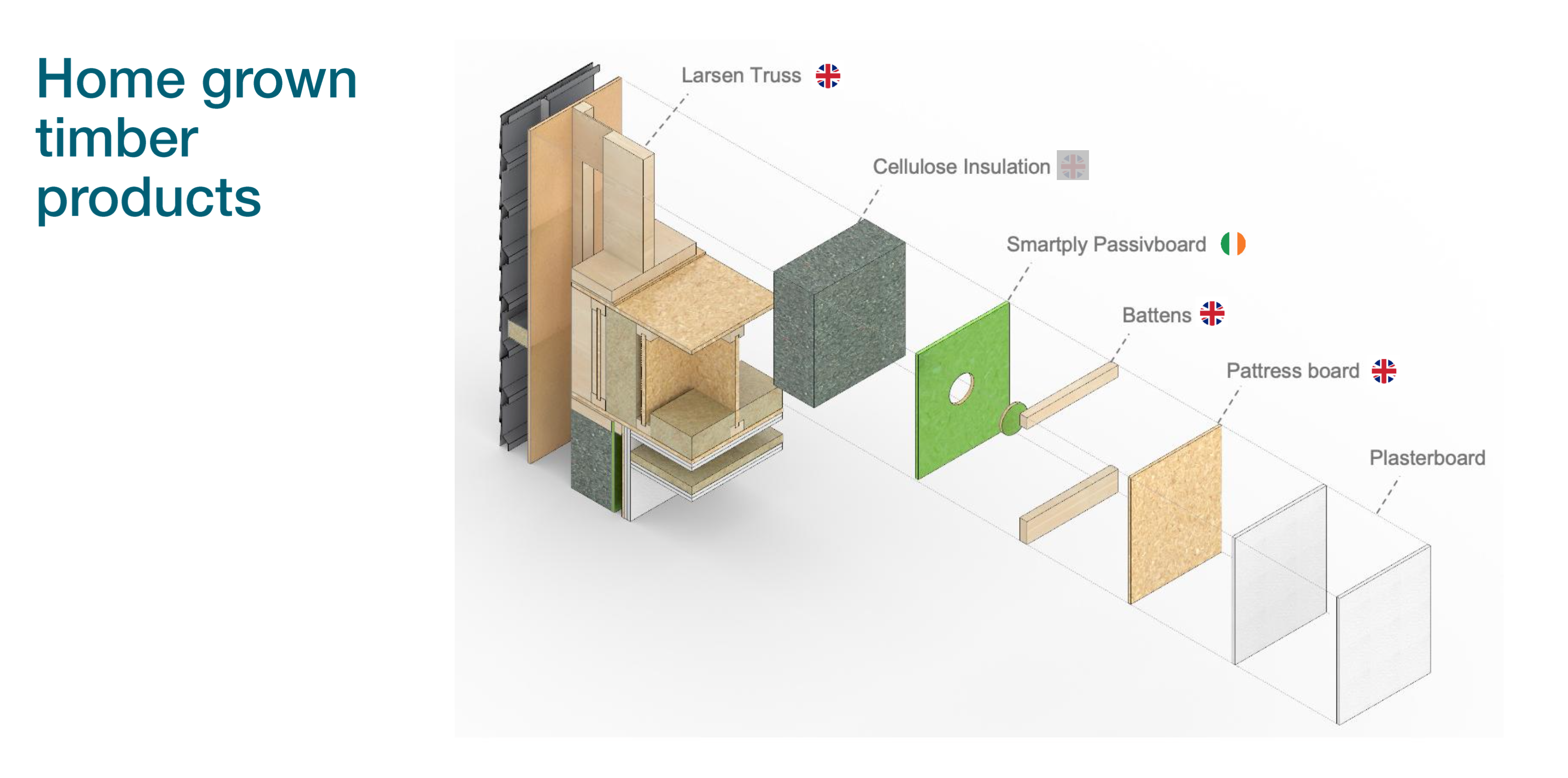
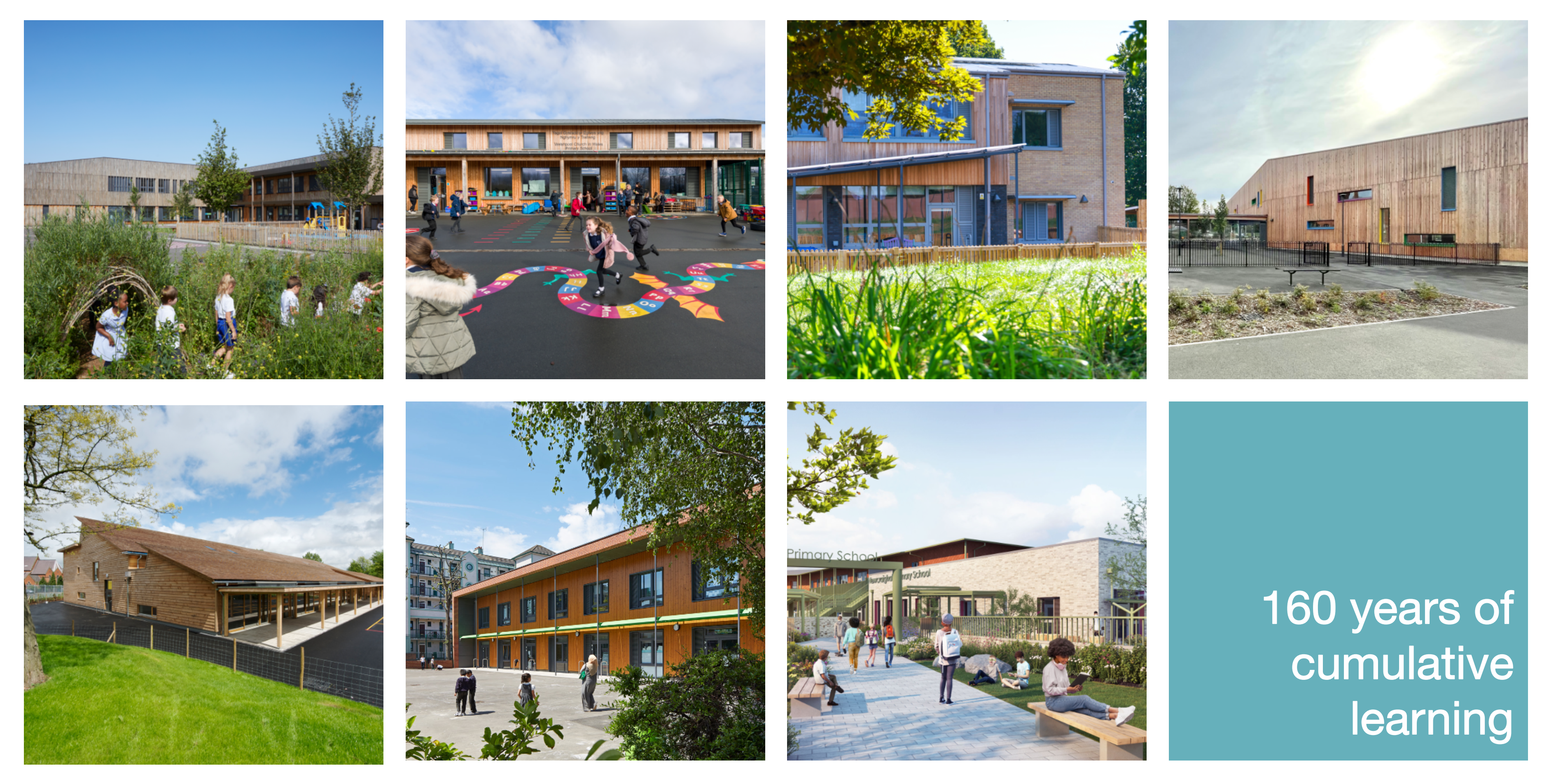
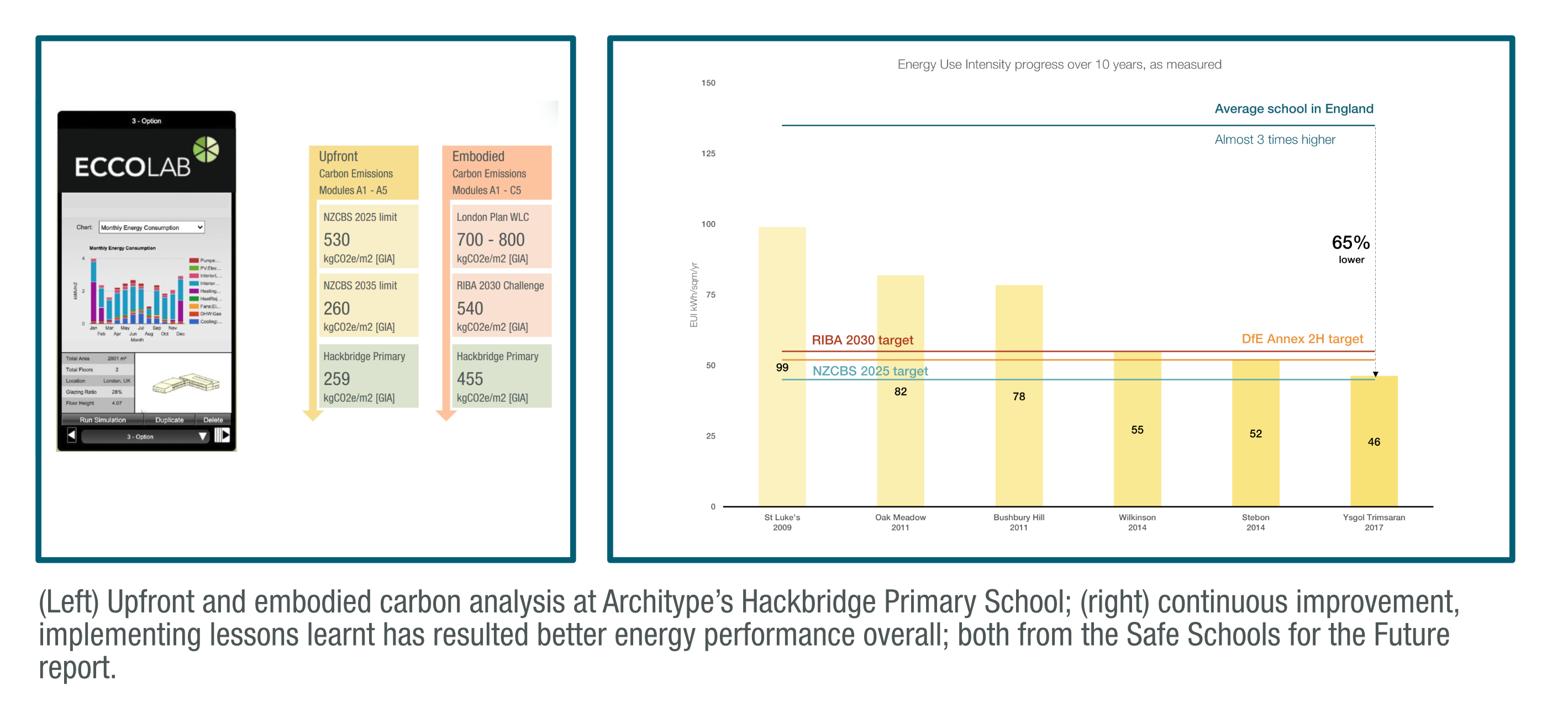
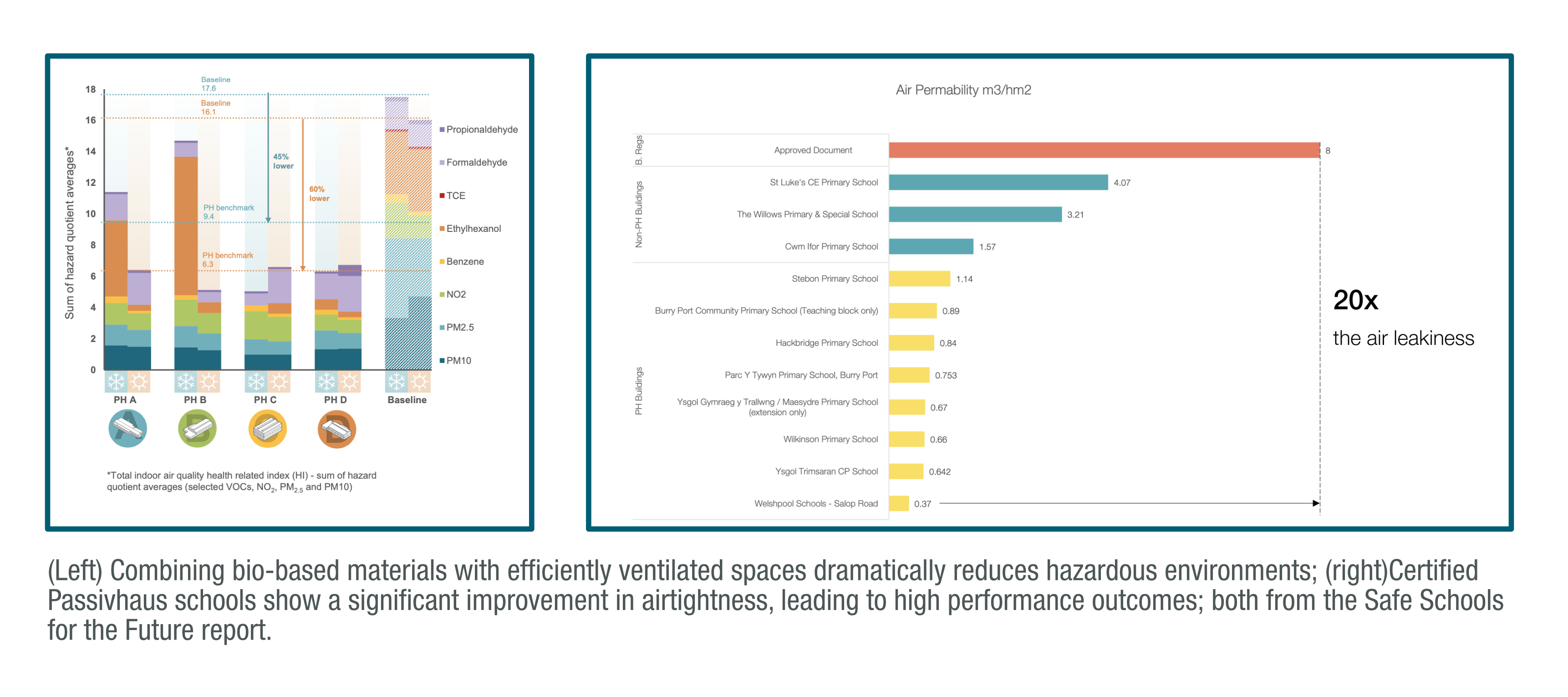
Drawing on design and in-use data from 18 completed schools representing 160 years of combined operation from 58,000 square meters across England, Scotland, and Wales, the guide shares the positive feedback and lessons learned to support others. Based on a proprietary timber structural system that supports the use of home-grown C-16 timber as part of a robust and holistic build-up, this system can consistently deliver exemplar outcomes. These schools can better the strictest energy and embodied carbon targets set by the three nations currently, and parametric analysis of the case study cohort shows the system can reliably deliver embodied carbon outcomes withing a 5% tolerance, provided the noted simple rules of thumb are followed.
This is a publication for anyone looking to understand how to design and build a timber-framed primary school, and to enjoy the health + wellbeing, energy, carbon, and cost benefits they can bring when designed and delivered holistically. If your organisation is interested in using the guidance, please visit the website to download the reports, and express your interest in joining a knowledge group for ongoing collaboration.
To provide the best experiences, we use technologies like cookies to store and/or access device information. Consenting to these technologies will allow us to process data such as browsing behavior or unique IDs on this site. Not consenting or withdrawing consent, may adversely affect certain features and functions.
Functional
Always active
The technical storage or access is strictly necessary for the legitimate purpose of enabling the use of a specific service explicitly requested by the subscriber or user, or for the sole purpose of carrying out the transmission of a communication over an electronic communications network.
Preferences
The technical storage or access is necessary for the legitimate purpose of storing preferences that are not requested by the subscriber or user.
Statistics
The technical storage or access that is used exclusively for statistical purposes.The technical storage or access that is used exclusively for anonymous statistical purposes. Without a subpoena, voluntary compliance on the part of your Internet Service Provider, or additional records from a third party, information stored or retrieved for this purpose alone cannot usually be used to identify you.
Marketing
The technical storage or access is required to create user profiles to send advertising, or to track the user on a website or across several websites for similar marketing purposes.