From historic sawmiller to fully integrated supply chain leader, BSW Group is using innovation and investment to reshaping the future of UK forestry. Supplying Timber found out more.
As one of the UK’s most historic and well-known timber businesses, TDUK member BSW Group is not a new name to many in the industry. But since its 2022 acquisition by binderholz – Europe’s largest and the world’s third-largest timber processor – BSW Group has undergone a quiet revolution. Now, the company is introducing a more connected, sustainable, and future-focused model for the entire timber supply chain.
Founded in 1848 and officially formed in its current guise in 1988 following the merger of Brownlie with Smith and Western, BSW Group has always held a prominent role in British forestry and sawmilling. Yet its transformation in recent years has been remarkable. Moving from a family-owned business into private equity ownership, and now back into family ownership under binderholz group, BSW has not only grown but matured – embracing integration, innovation and efficiency on a whole new scale.
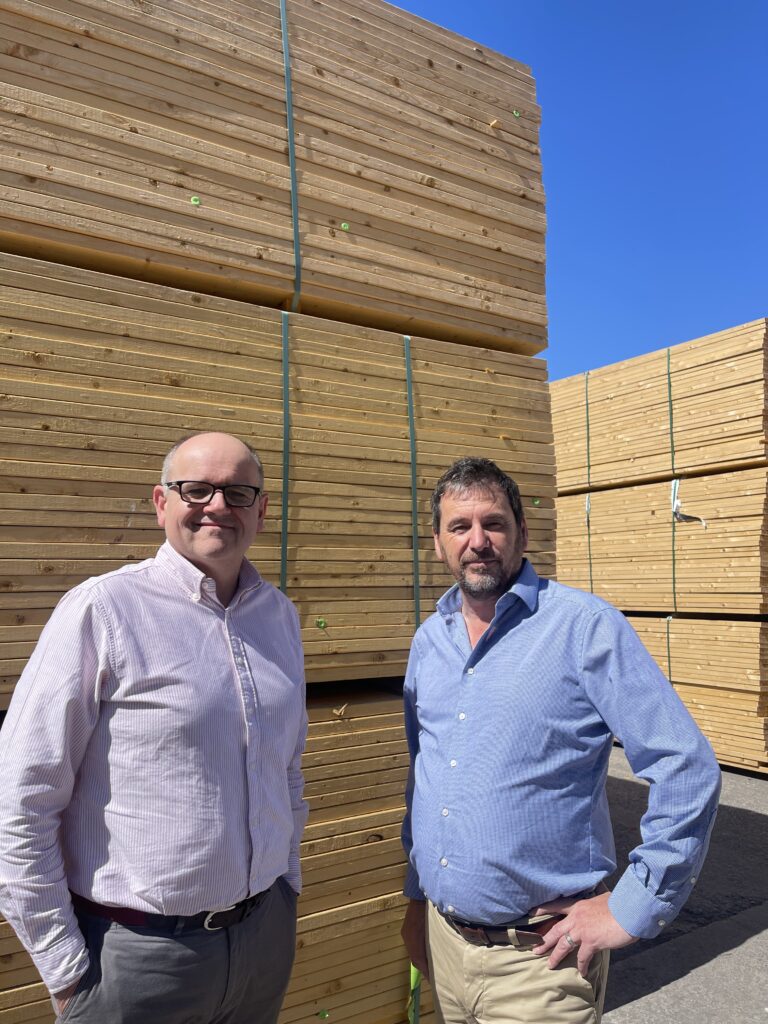
“We’ve gone from a series of connected acquisitions to a fully integrated operation across the whole timber lifecycle – from tree nursery to pallet reuse,” says James Brennan, Head of Marketing at BSW. “It’s a huge transformation, and one that we think sets us apart in the UK market.”
A fully integrated supply chain
BSW now operates across three core pillars: forestry, timber manufacturing, and pallets and packaging. Each pillar has been strategically developed to maximise efficiencies, reduce risk and enhance the value chain. This integration has included combining historic standalone operations under one legal and operational umbrella. Maelor Forest Nurseries, Dick Brothers Forestry, and Tilhill Forestry, for example, now function cohesively as Tilhill Forestry, BSW’s forestry division.
Where once these businesses operated independently, they now communicate more collaboratively – with transplants grown by Maelor planted by Tilhill Forestry and harvested by Tilhill Harvesting (formerly Dick Brothers) – all part of one strategic plan. “What being part of the group has allowed individual businesses to do is lean on the expertise and capabilities of other areas,” explains James. “That kind of joined-up thinking just wasn’t possible in the same way previously.”
This cohesion is also enhancing customer relationships. By offering a full-service perspective – from forest management to finished timber products – BSW can provide greater certainty and supply security to its major partners. “Many of the businesses we acquired, such as Powersheds and Scott Pallets in more recent times, were already our customers or suppliers,” says James. “Now we’re not only delivering that same value, but striving to enhance it within one unified business.”
Investment and innovation
Much of BSW’s transformation has been driven by a focus on efficiency, sustainability, and long-term thinking. Under binderholz’s ownership, significant investment has been channelled into modernising flagship sites like Dalbeattie and Fort William, as well as consolidating production at higher-output, better-equipped locations.
“binderholz has introduced that Austrian and German mindset for process, quality and efficiency,” says James. “The business has had to make some really difficult decisions, but our output remains the same – or better – because we’re doing more with the best facilities.”
Nowhere is this more visible than in BSW’s forestry operations. Through their nursery sites in northern Scotland and on the Welsh border, Maelor Forest Nurseries produces around 35 million saplings each year, with a growing emphasis on advanced tree genetics. “We’re crossbreeding trees in a similar way to livestock – looking to create better, straighter, stronger, faster-growing timber,” James explains. “This can allow us to reduce time to maturity from 40 years to 35, for instance, which could be transformational for the industry.”
BSW is also researching which tree species are best suited to future UK climates – basing their assessments on regions of France that currently mirror the climate the UK is expected to be experiencing in the next 30 years. “Forestry is a long-term game,” says James. “We’re planting now for a future where climate, customer needs and the supply chain will all look very different.”
 Smart, efficient logistics
Logistics is another key area of evolution, with plans well underway to establish a new inland rail terminal at the company’s Carlisle site. The move would create a vital connection between Fort William and the rest of the UK, reducing its reliance on road haulage.
“There’s no inland rail terminal between Glasgow and Manchester,” explains James. “Carlisle is perfectly located, right next to the main line, and planning permission has been approved. It’s a project that could really reshape how timber moves around the country, taking a lot of lorries off the road.”
Another area of focus has been improving how young trees are transported from nursery to planting site, with BSW trialling a cool chain delivery system to protect sapling health during transit. “To give trees the best possible chance of establishing strong roots, they need to be kept at or below four degrees Celsius,” explains James. “That’s achievable in a nursery, but once they’re on a lorry in the middle of summer, the temperature can hit 20 to 30 degrees or more.”
BSW’s new approach uses refrigerated vehicles to maintain optimal temperatures during delivery, helping ensure successful planting and reducing the risk of costly replanting later. “Getting them to site in good condition is crucial. We’ve invested in refrigerated transport and specialist off-road forklifts to make sure we do this safely and sustainably,” James adds.
Across its fleet, harvesting equipment, and warehousing, BSW is also making major capital investments – not just for performance, but to attract top-tier contractors and reduce the company’s overall carbon footprint. “All our harvesters and forwarders are now under five years old. If we want to lead the industry, we’ve got to operate like it,” James says. Timber products for new markets
BSW is well-known in the UK for its structural, carcassing and fencing timber, supplying the builders’ merchant, landscaping and DIY markets. But under the binderholz umbrella, BSW Timber is also now expanding into engineered timber and added-value products.
New offerings include cross-laminated timber (CLT) and glulam for commercial construction, alongside smaller-scale innovations like decorative micro CLT – a three-layer spruce product ideal for DIY applications like feature walls or garage conversions. “The UK is behind Europe and the US in engineered timber,” says James. “But it has the potential to grow quickly, and we’re now in a position to help drive that market forward.”
The integration of BSW Timber Solutions – formerly SCA Wood UK – has also allowed the business to extend its reach into the mouldings, skirtings and PSE sectors, offering a broader basket of goods to both DIY and trade customers.
James explains: “We’re seeing real success in cross-promoting these products. A merchant who used to just buy just sawn timber from us can now take interior mouldings, and vice versa. It’s all about delivering added value and a wider basket of timber products to our customers.”
A circular economy in practice
One of the most high-profile parts of BSW’s broader group activity in the past year is The Pallet LOOP – a reusable pallet scheme that’s rapidly gaining traction across UK construction. UK timber is supplied from the sawmills into manufacturing partner and fellow BSW Group member Scott Pallets. This creates a sustainable, circular model, with LOOP incentivising the return and reuse of these very pallets to maximise the value of timber.
“If we’re going to spend 40 years growing trees, we can’t afford to see that material used once and skipped,” says James. “The Pallet LOOP is about making sure every part of the tree’s journey adds value.”
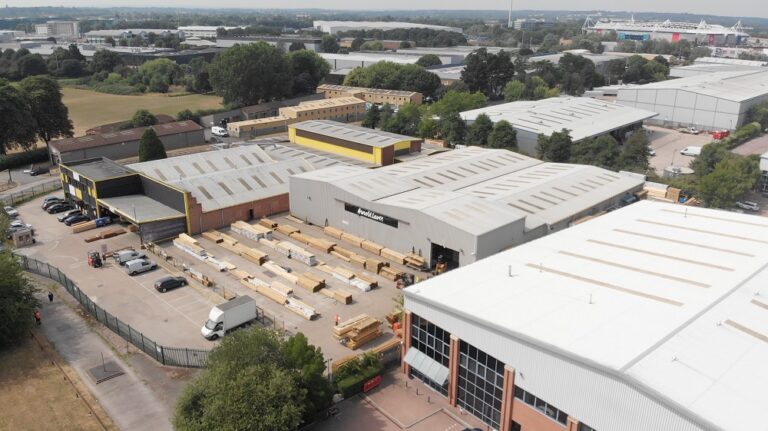
This ethos of circularity runs through the business, with BSW taking major steps to reduce the environmental and financial costs of empty truck movements across its operations. With a network of more than 50 sites nationwide – spanning nurseries, sawmills, forestry operations and pallet manufacturing – BSW is leveraging its group-wide logistics planning to maximise efficiencies.
“Historically, a lorry might deliver a load and then return empty,” says James. “Now we’re working hard to backfill those journeys wherever possible, whether it’s moving saplings, timber, or pallets between sites.” This smarter use of fleet resources reduces carbon emissions and also supports the company’s broader sustainability goals, delivering real commercial benefits.
BSW’s business transformation is far from over. As demand for timber is forecast to grow four- or five-fold globally in the coming decades, the company is aligning itself for the future – and encouraging the wider UK industry to do the same.
“The UK imports around 80% of our timber requirements – making us the largest net importer of forest products in Europe and the second largest globally, after USA,” James says.“That’s not sustainable in the long term. We need to plant more, use more of what we grow here, and use it more wisely.”
With its unique end-to-end capabilities – from sapling to pallet and from nursery to national rail network – BSW Group is already demonstrating what a smarter, more sustainable UK timber sector could look like.
www.thebswgroup.co.uk
* This article was originally published in the Autumn 2025 issue of Supplying Timber magazine.
The post Member Profile: An integrated future from seed to sawn product appeared first on Timber Development UK.