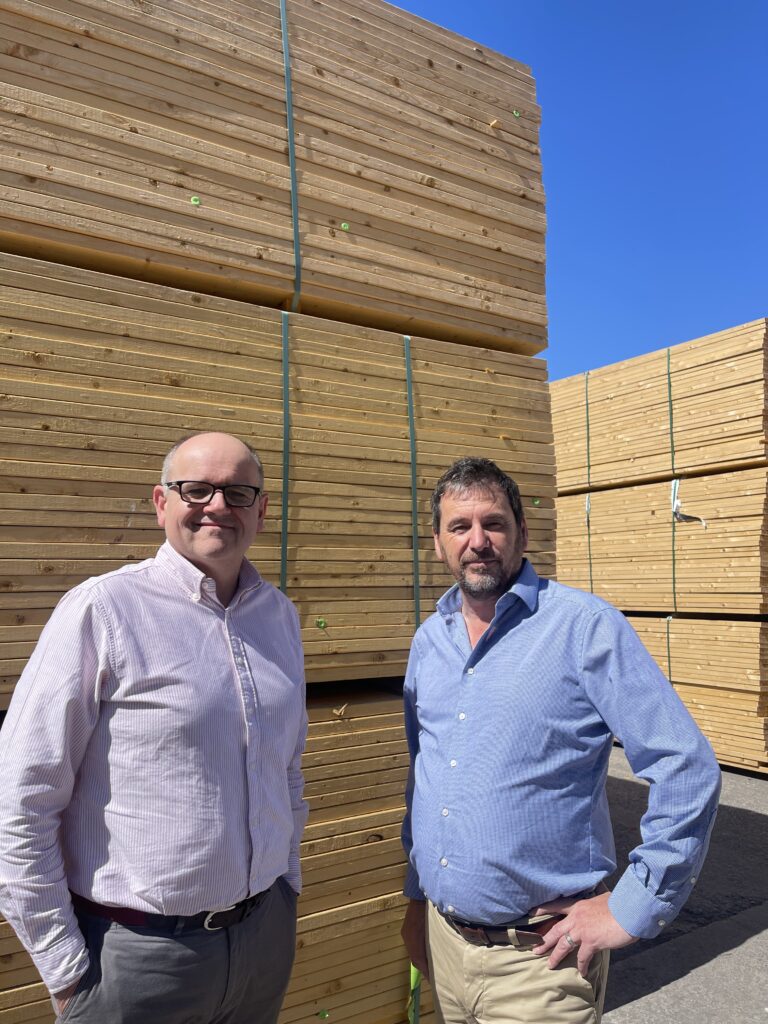
Timber Connection is a privately-owned hardwood and premium-grade softwood importer that brings passion and knowledge to the UK timber sector. Supplying Timber visited them to find out more.
In a timber market dominated by multinational businesses, UK importer Timber Connection stands as proof that being modest, nimble, and deeply knowledgeable can be its own kind of superpower.
“We’re an agile team delivering precision and passion,” says Managing Director Keeley Baker. “What we specialise in, hardwoods, is minute in volume in comparison to the overall UK timber industry. But that’s where our strength lies. We may be lean, but our impact is anything but small.”
Founded in 1991 by current CEO Danny Catherall, Timber Connection began as a brokerage business. Within just a few years, the business invested in stockholding, transforming into a landed stockist, distributor, and wholesaler.
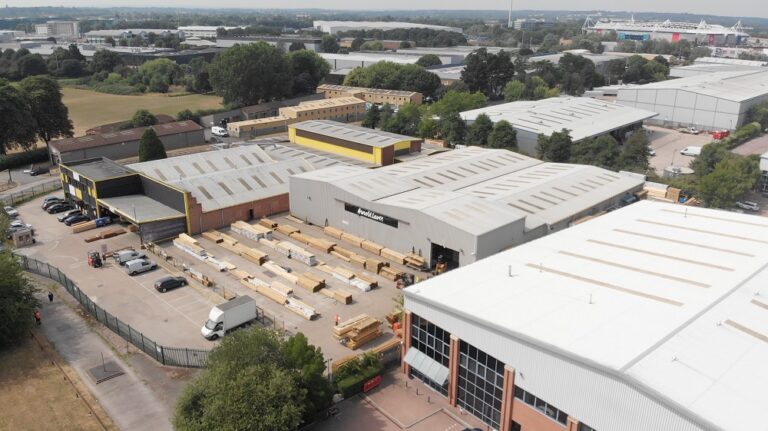
Today, Timber Connection operates from its Liverpool hub and keeps in excess of 12,000m3 of timber in stock at any given time, spanning more than 30 species imported from around the world. Its reach is international, yet its ethos remains personal.
“We’re a small team of 17 people, and most of us juggle multiple roles,” Keeley shares. “Our buyers also handle sales, and when a customer calls, whoever picks up the phone knows their preferences, order history, and payment terms. We operate with speed and clarity – qualities that often get lost in larger organisations.”
A trusted partner in a changing landscape
Trust and establishing long-term customer relationships have been central to Timber Connection’s longevity.
“We did some analysis a couple of years ago,” Keeley recalls. “Around 80% of our top 10 customers were the same as they were 10 years earlier – and the same goes for our suppliers. That’s because we build relationships on trust, not transactions.”
It’s this trust that has allowed Timber Connection to thrive in a challenging market. The company’s ability to carry slow-moving stock, offer flexible consignment deals, and finance large purchases has made it a valuable ally in a sector often challenged by cash flow and storage constraints.
Keeley says: “We’re wholesalers and we’re there to support our customers. Relationships matter so much in our industry.”
The value of being independent
In an era where major timber companies are consolidating, Timber Connection has leaned into its independence as a key differentiator.
“Being independent means we can react fast,” Keeley says. “If we see a great spot deal we can finalise it that day. That agility is vital when prices fluctuate and opportunities appear – and disappear – quickly.”
This independence has also insulated Timber Connection from the turbulence currently hitting the hardwood sector.
“Consolidation can sometimes come with bureaucracy and a loss of identity. We’ve chosen to stay alert, stay focused, and stay connected with our customers.”
Keeley and some of the team have just returned from a trip to visit some sawmills in person.
“Meeting our suppliers in person is essential,” Keeley said. “It helps us put faces to names, deepen our understanding of their operations, and strengthen our relationships. By seeing their facilities firsthand, we’re better equipped to respond to customer enquiries with clarity about what’s available and how we can meet their needs.”
This proactive approach ensures the team stays informed, connected, and ready to deliver tailored solutions with confidence.
Knowledge as currency
Beyond stockholding and supply chain efficiency, Timber Connection’s standout strength is its timber expertise.
“We’ve been doing this for decades, and we know our products inside out,” says Keeley. “Whatever your enquiry, we’ll guide you to the right species, the right production, the right specification to suit your requirements. That advice can save customers serious money.”
One striking example of this support involved a client struggling with timber splitting and cracking while trying to machine oak mouldings.
“They were using American Oak that is kiln-dried to 6-8% moisture content, then machining it into smaller profiles. The lack of moisture levels was causing splits and hairline cracks,” Keeley explains. “We recommended switching to European Oak, which is dried to a 10-12% moisture content, and producing cut-to-size component blanks at source. The customer’s timber waste reduced by 30%. Although the initial price per cubic meter was more expensive, the yield made it much more economical overall.”
This kind of advice, Keeley notes, is second nature to the Timber Connection team. “Sometimes we forget that what we know has real value, and customers value that expertise.”
Educating the industry
While softwoods dominate UK imports, Timber Connection is keen to champion the potential that hardwoods offer. The company’s work is as much about education as it is about timber supply.
Keeley is passionate about helping architects and designers understand how specifications can affect both price and feasibility.
“Architects sometimes specify hardwood dimensions and length specifications that are increasingly challenging. They don’t realise that if they tweak the spec – say, by accepting narrower and or shorter boards – they can cut costs by 20/30% without sacrificing aesthetics.”
This is particularly true for hardwoods like Black Walnut, which Keeley calls “the jewel in the crown of hardwoods” but is also one of the most misunderstood species. “Grades and regional variations aren’t widely understood, even among seasoned buyers. That’s why education is so important – both for customers and the wider industry.”
Tackling timber challenges
The timber industry has faced a whirlwind of challenges in recent years: freight cost volatility, container shortages, and geopolitical disruptions.
“Freight is a huge factor,” Keeley says. “If you buy timber today, by the time it’s ready to ship, container rates could have doubled or halved. That uncertainty has pushed buyers toward more predictable species and sources, but it also creates opportunities for those willing to navigate the challenges.”
Timber Connection’s global relationships and vast stockholding – from North America and Europe to Africa and the Far East – can help to buffer industry challenges.
“Our connections allow us to pivot quickly,” Keeley says. “We can source from different regions, negotiate advantageous terms, and keep stock flowing even when others are struggling.”
Quiet ambition
For all its expertise and reach, Timber Connection remains refreshingly understated.
“We’ve always been humble,” Keeley continues. “We’re not shouting that we’re the biggest or the best. But we’re serious players: we’re solid, reliable, and looking to the future.”
From Timber Connection’s busy Liverpool warehouse, raw timber becomes award-winning furniture and architectural features. “We’re the invisible link in the supply chain,” Keeley says. “No one admires a hardwood sculpture and thinks about the wholesaler who imported the timber. But without us those projects wouldn’t exist.”
Keeley concludes: “We want to share our knowledge. We want people to understand why hardwoods matter, how the right specifications can save money, and why timber is the ultimate sustainable material.
“We want customers to know we’re here for the long haul: growing our stockholding, expanding our connections and investing in our team. That’s what our customers deserve, and what we’ll keep delivering.”
www.timberconnection.co.uk
* This article was originally published in the Autumn 2025 issue of Supplying Timber magazine.
The post Member Profile: ‘Small team, big timber impact’ appeared first on Timber Development UK.