Supplying Timber spoke to Sykes Timber to learn how the sixth-generation timber merchant is blending tradition, innovation, and education to challenge industry norms.
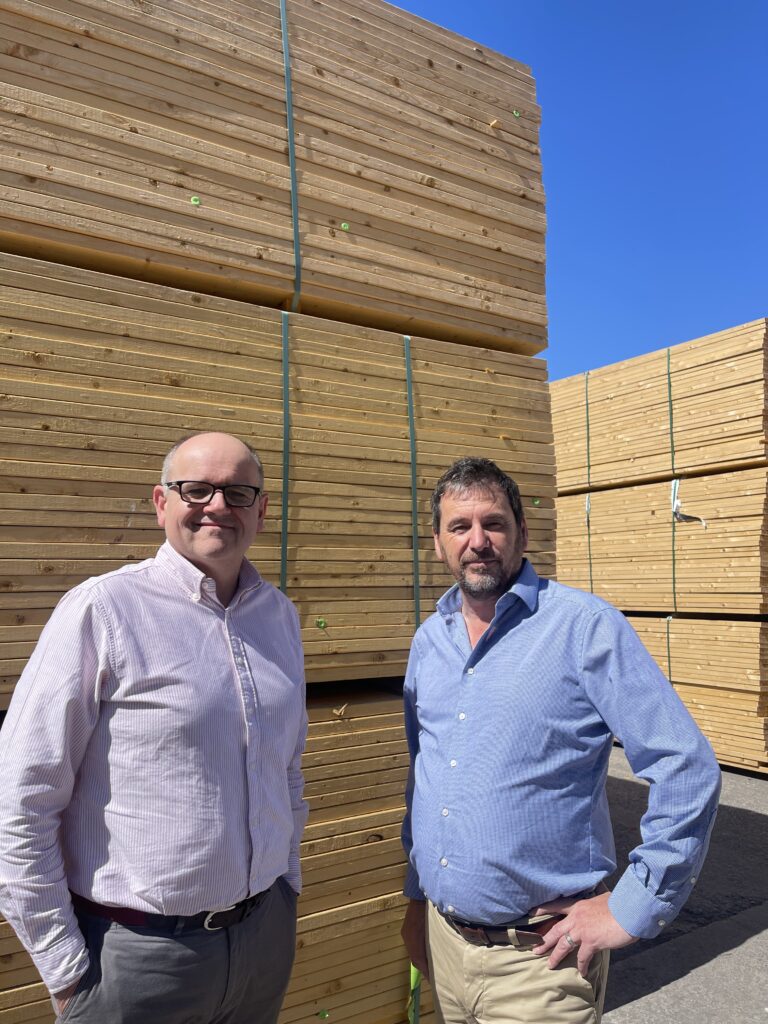
Now in its sixth generation, Sykes Timber is a business built on experience, long-term thinking and a deep understanding of wood. Based in Warwickshire, the company has been trading since 1862 and, today, continues to operate as a family-run business with a strong sense of continuity and purpose.
According to Joe Sykes, that family ownership is a core part of what makes the company different. “Being a family-run business gives us a level of control, integrity, and authenticity that’s hard to find in other organisations,” he says. “We care deeply about what we do. It’s not just a job; it’s our life.”
That attitude, Joe believes, influences everything from the way the business sources timber to how it supports its customers. Rather than focusing solely on volume or turnover, Sykes Timber works closely with clients to understand the demands of individual projects. “We don’t want to flog wood,” he says. “We want to work closely with people to achieve the best possible outcome for their project through transparency, relationships and a strong knowledge base.”
The Sykes family’s passion for timber goes back as long as the company has been trading. In recent years Joe and Bob Sykes have regularly travelled to forests and plantations around the world to view the quality of the timber in person, including trips to America, Java, Slovenia, France and Canada. But these trips have been happening for more than 100 years, even back when travelling to other countries was for more challenging. In fact, a photo exists from 1908 showing ancestor George Sykes, and his wife, inspecting a Chicago sawmill after having crossed the Atlantic ocean.
Sykes Timber supplies a wide range of hardwoods and softwoods, from sawn boards to fully machined sections and bespoke profiles. The company stocks around 70 different species and can provide anything from a single board to a full lorry load from their 10-acre site in Warwickshire.
Global imports
Sourcing is a major part of the business, and it’s one where Sykes Timber takes a direct and detailed approach. Timber is sourced from across the globe, including Africa, North and South America, Europe, Asia and, increasingly, from the UK. Joe points out that the tropical hardwoods in particular have excellent performance qualities.
“Tropical hardwoods often get criticised, but the reality is they offer qualities other timbers simply can’t match,” he explains. “That doesn’t mean we should rely solely on tropical species, but they remain an integral part of the timber market. Forestry practices are far more developed in tropical regions than one might think.”
Sykes Timber holds FSC and PEFC certifications but doesn’t rely on these alone. “We’re big believers in doing our own due diligence,” says Joe. “We visit plantations, forests, and mills ourselves to see first-hand how suppliers operate, ensuring that we’re not just sourcing sustainable timber, but quality timber too.”
Many of the company’s relationships with their suppliers go back decades and have resulted in unique specifications. “Our long history has meant longstanding exclusive relationships across the globe. Mills are producing a ‘Sykes Grade’ that supersedes the grades on the common market,” Joe explains. “We carry out rigorous quality checks because that’s what our reputation is built on.”
That reputation sees Sykes Timber supplying material for a wide variety of applications, from high-end joinery and furniture making to historic restorations and newbuild projects. “We’re involved in a lot of restoration work, supplying timber for some of the most beautiful historic buildings and boats in our country. But we’re just as excited about the new work, the kitchens, libraries and furniture being made today that will still be around in 200 years,” Joe says. “When we talk about buildings and furniture that tell stories for generations, wood is at the heart of that.”
Expanding for the future
The company is currently undertaking a significant redevelopment of its Warwickshire headquarters, including a new office and a dedicated education centre. According to Joe, the investment is designed to support the next phase of the company’s life and reflect its current direction.
“The old building was more than 60 years old. It had served us well, but we needed something that could take us into the next generation; something that reflects who we are now and where we’re heading,” he says.
As well as providing a better working environment for staff, the redevelopment includes a space specifically designed to support learning. “We’re building a dedicated education centre – a space that will take visitors on a journey from forest floor to finished product,” Joe says. “We’ll be able to host architects, designers, boatbuilders, makers and their clients, helping them learn more about the timber they’re working with.”
The space will also be open to schools and colleges. “We need young people coming through our industry,” he adds. “This investment isn’t just solely business focused.”
That focus on education is partly a response to what Joe sees as a wider issue in the timber sector – a loss of knowledge and confidence in the product itself. “The biggest threat to the timber trade is, quite honestly, the trade itself,” he says. “We’ve had this incredible, natural material, arguably the most versatile and beautiful product on Earth, and yet we’ve consistently failed to communicate its value properly to the wider world.”
As experienced professionals are leaving the industry, that depth of timber understanding is becoming harder to replace. “In many businesses today, timber is treated as a commodity,” Joe says. “You have to know what you’re selling. And when that knowledge is lost, it opens the door for misinformation and confusion.”
This, Joe believes, is one reason why chemically enhanced and composite materials have gained such ground. “These are often marketed as being more durable and more sustainable, which is contentious at best,” he says. “Natural timber has stood the test of time for centuries, why try and reinvent the wheel with less aesthetically pleasing and environmentally flawed alternatives?”
For Joe, and for Sykes Timber more broadly, the need to promote timber is a call to action. “The industry needs to come together to tell timber’s story,” he says. “We should be selling wood on its natural merit – its longevity, its renewability and its beauty. If we don’t, we risk losing ground to inferior materials and allowing public perception to drift even further from the truth. The issue is ours to fix.”
While Sykes Timber’s heritage goes back over 160 years, its future lies in timber advocacy as well as supply. From the new education centre and technical support services to the quality of the material they select, the company is working hard to build a more informed, more connected timber culture.
www.sykestimber.com
* This article was originally published in Supplying Timber‘s Autumn 2025 issue.
The post Member Profile: ‘Tradition, Quality and Timber That Lasts’ appeared first on Timber Development UK.