A key contributor to this effort is Woodknowledge Wales (WKW), whose deep commitment to building a sustainable, low-carbon future has shaped both the content and direction of this Yearbook. Led by Sarah Lawton, an editor and communicator working to connect the timber industry with the wider climate, land-use and design agenda, the WKW team has played a central role in curating the insights, case studies, and technical contributions you'll find in these pages.
David Hopkins explores the most influential and technically robust outputs from Timber Development UK’s ever-expanding knowledge base—tools that continue to shape and inform the way Britain builds with timber.
When we founded Timber Development UK (TDUK), we envisioned a central hub for timber knowledge—accessible, credible, and most importantly, technically useful. Today, our mission remains the same: support an industry that designs and builds with confidence in wood.
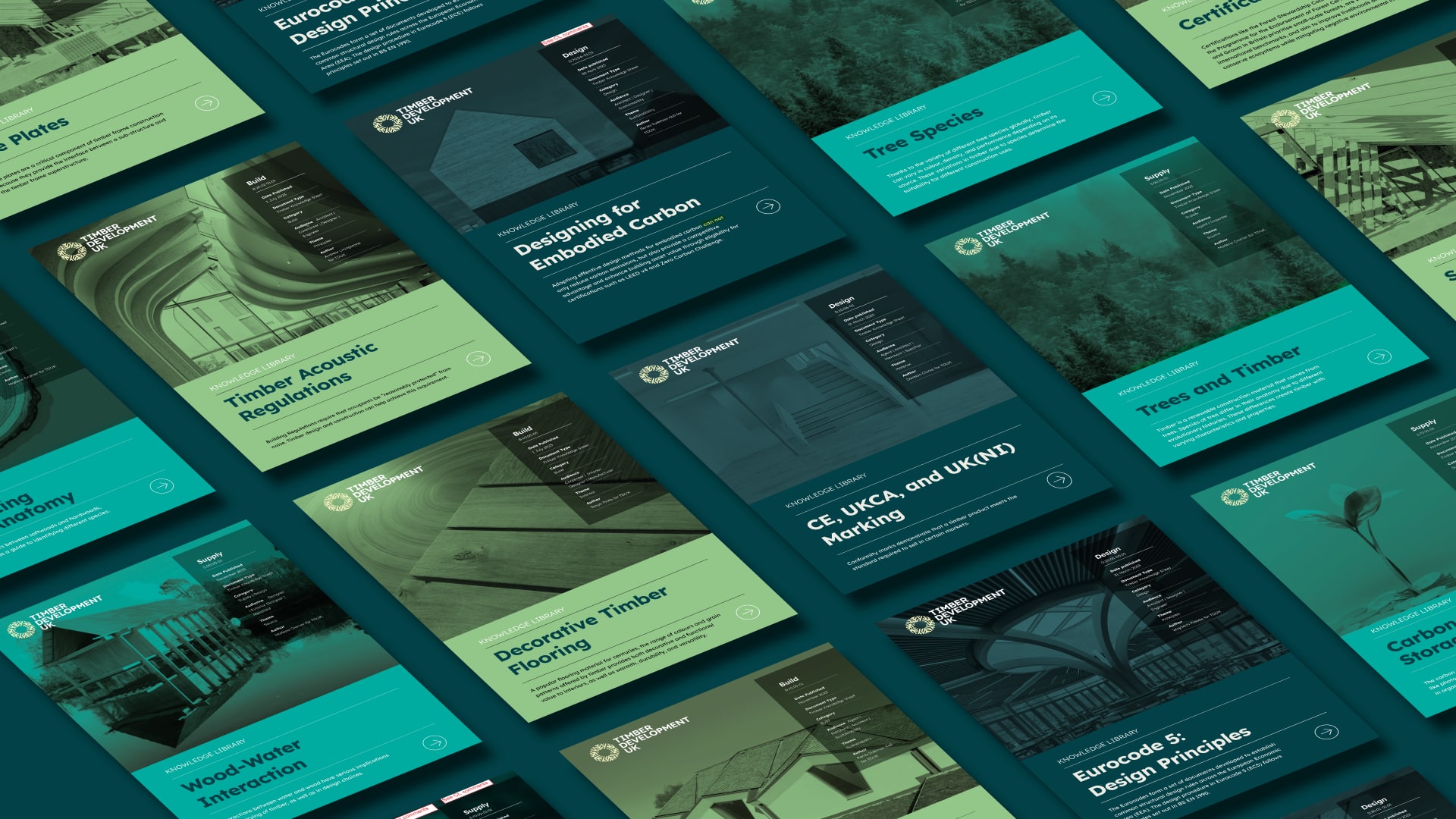
While our database now houses hundreds of resources, from standard details to carbon assessments, some works have proven particularly influential among designers, engineers, and specifiers. This article brings together a selection of the most read, most referenced, and most technically instructive resources in our library—a toolbox for those who build with understanding.
The case study archive: a window into real-world timber performance
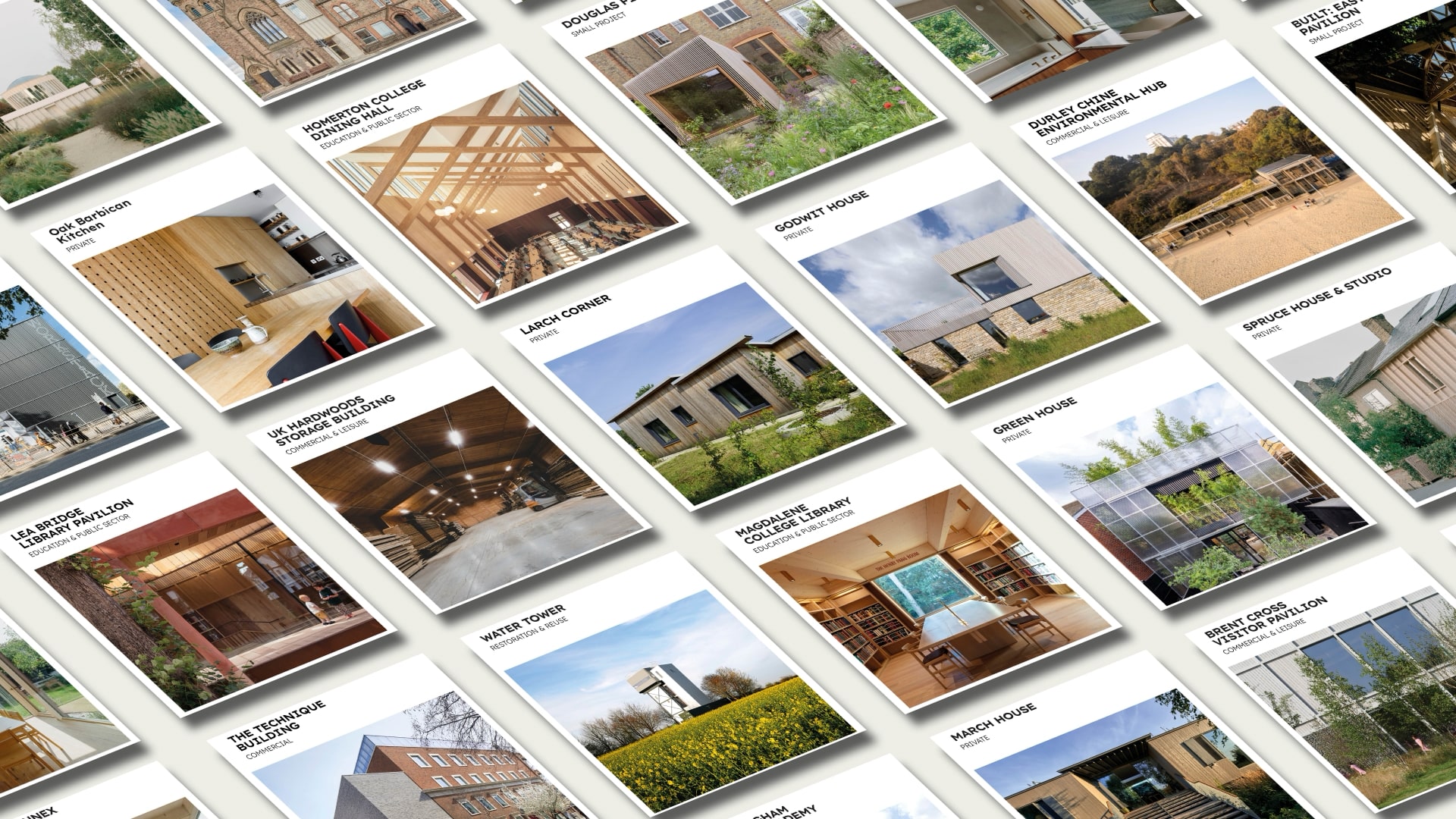
With over 170 detailed case studies now freely available1 , TDUK offers unparalleled access to real-world applications of timber design—from low-carbon schools and high- performance retrofit projects to complex engineered structures. These are not marketing stories; they are technical narratives—complete with architectural drawings, material specs, lessons learned, and performance insights.
Standouts include:
The Old Mill Retrofit – Rebuilt after a fire, this exemplar of craft and safety provides a rare, honest look at fire-resilient detailing in mass timber retrofits. .
National Manufacturing Institute Scotland (NMIS) – Featuring hybrid glulam-steel portal frames and offsite DfMA strategies, NMIS provides a lesson in timber’s industrial-scale application. .
These case studies are TDUK’s most visited resources—and serve as a living library of best practice.
Timber Typologies: a route map for low-carbon design
Published as part of our collaboration with Waugh Thistleton Architects and the Built by Nature network, Timber Typologies is a visual and technical guide to low-carbon, scalable housing systems4 . It breaks down timber structure types—from panelised to volumetric—and offers comparative data, ideal applications, and procurement strategies.
Architects and housing associations have told us it’s become a de facto briefing tool when approaching low-rise residential schemes. It balances simplicity with technical clarity—and importantly, helps early-stage project teams ask the right questions.
Designing Timber is our flagship long-form technical magazine. The most downloaded issue to date, “Engineered for Reuse,” focuses on the circular future of timber and the engineering practices enabling it.
This edition dives into:
Moisture risk frameworks for reusable timber
Probabilistic durability modelling
Adaptive structural detailing for demountable buildings
Case studies featuring hybrid materials and design-for-disassembly strategies
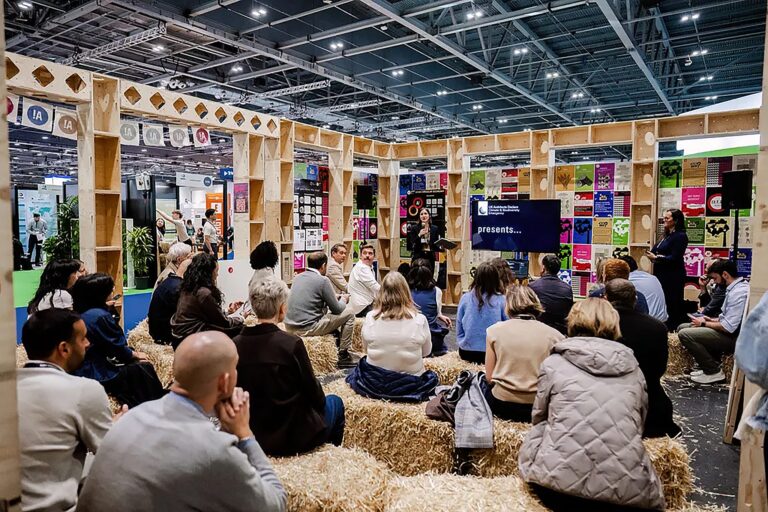
The 2025 designTimber webinar series builds directly on these themes, bringing engineers and designers together to share live project learning.
Timber and carbon: technical clarity in a noisy field
Much of the conversation around timber’s role in carbon reduction is polarised. At TDUK, we’ve tried to cut through by publishing precise, evidence-led materials for professionals.
Our 2024 briefing on carbon storage in timber buildings helped clarify the role of biogenic carbon in lifecycle assessments7 . Meanwhile, our CPD materials and webinars continue to inform debates on what responsible sourcing, carbon accounting, and sequestration really mean in practice.
More recently, we’ve contributed to emerging frameworks for reuse readiness, helping quantify the likelihood that timber components can be safely reclaimed and reused at end-of-life.
Photo: TDUK
Detail libraries and performance guidance: quiet essentials
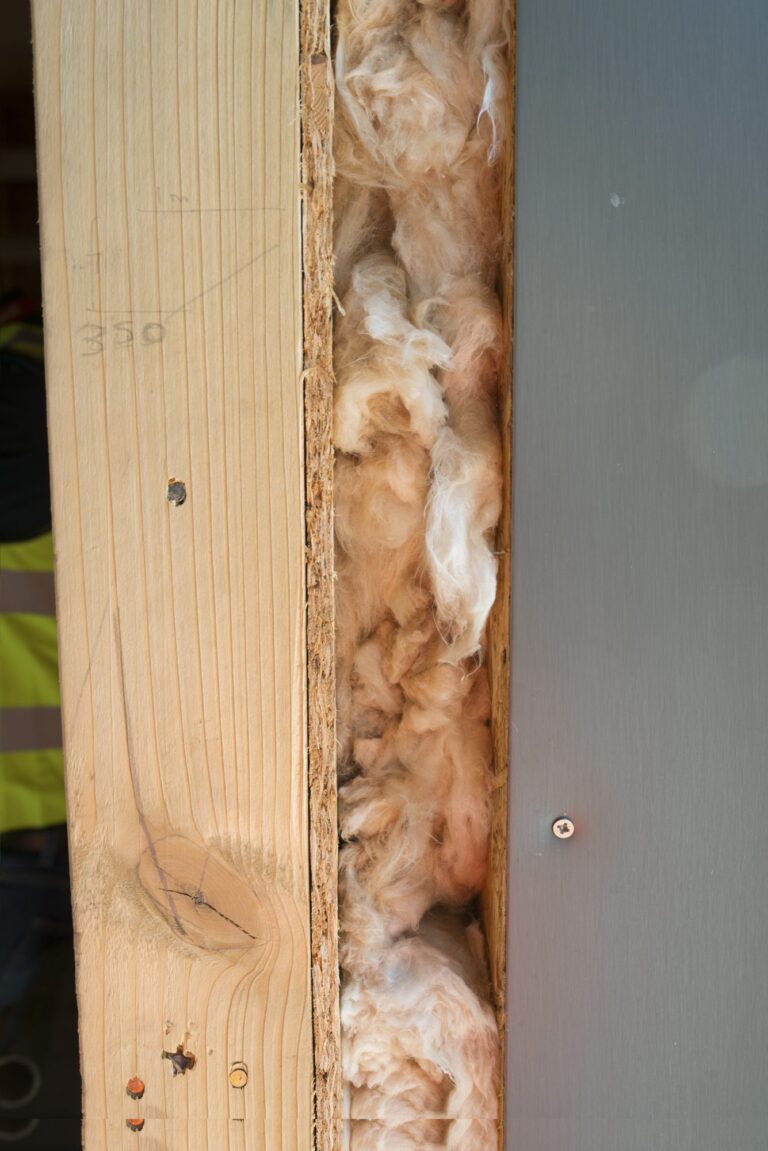
While not flashy, our growing catalogue of standard details, fire guidance, and moisture management tools is among our most downloaded content.
Our moisture technical papers are widely cited in industry and architecture studios.
We’ve recently launched new fire performance guidance with partners like Structural Timber Association.
Detail sets—including fixings, junctions, and insulation strategies—are now being embedded into BIM workflows by practices across the UK.
Closing thought
Timber’s renaissance depends not on style, but on substance. The projects, primers, and papers above don’t simply promote timber—they strengthen the case for it. Whether you’re designing a home, managing risk, or advising clients, we hope this toolbox of resources brings confidence to your work.
References
TDUK. (2024). Free Access to 170+ Technical Case Studies. Retrieved from www.timberdevelopment.uk/tduk- releases-more-than-170-technical-case-studies-for-free
TDUK. (2024). An Old Mill Rises from the Ashes. Retrieved from www.timberdevelopment.uk/an-old-mill-rises-from-the-ashes
TDUK Case Study Archive. National Manufacturing Institute Scotland (NMIS). Retrieved from www.timberdevelopment. uk/case-study-national-manufacturing-institute-scotland
TDUK. (2023). Timber Typologies. Retrieved from www.timberdevelopment.uk/resources/timber-typologies
TDUK. (2023). Designing Timber: Engineered for Reuse. Retrieved from www.timberdevelopment.uk/resources/ designing-timber-engineered-for-reuse
TDUK. (2025). designTimber 2025: Live Project Webinar Series. Retrieved from www.timberdevelopment.uk/ designtimber-2025-new-project-talks-by-leading-architects- engineers-and-timber-specialists
TDUK. (2024). Carbon Storage in Timber Buildings. Technical Briefing.
TDUK / CIRIA. (2025). Reuse Readiness Levels: A Probabilistic Approach for Timber. (Draft in development).
TDUK Resources. (Ongoing). Fire, Moisture, Detail Libraries. Retrieved from www.timberdevelopment.uk/resources
To provide the best experiences, we use technologies like cookies to store and/or access device information. Consenting to these technologies will allow us to process data such as browsing behavior or unique IDs on this site. Not consenting or withdrawing consent, may adversely affect certain features and functions.
Functional
Always active
The technical storage or access is strictly necessary for the legitimate purpose of enabling the use of a specific service explicitly requested by the subscriber or user, or for the sole purpose of carrying out the transmission of a communication over an electronic communications network.
Preferences
The technical storage or access is necessary for the legitimate purpose of storing preferences that are not requested by the subscriber or user.
Statistics
The technical storage or access that is used exclusively for statistical purposes.The technical storage or access that is used exclusively for anonymous statistical purposes. Without a subpoena, voluntary compliance on the part of your Internet Service Provider, or additional records from a third party, information stored or retrieved for this purpose alone cannot usually be used to identify you.
Marketing
The technical storage or access is required to create user profiles to send advertising, or to track the user on a website or across several websites for similar marketing purposes.