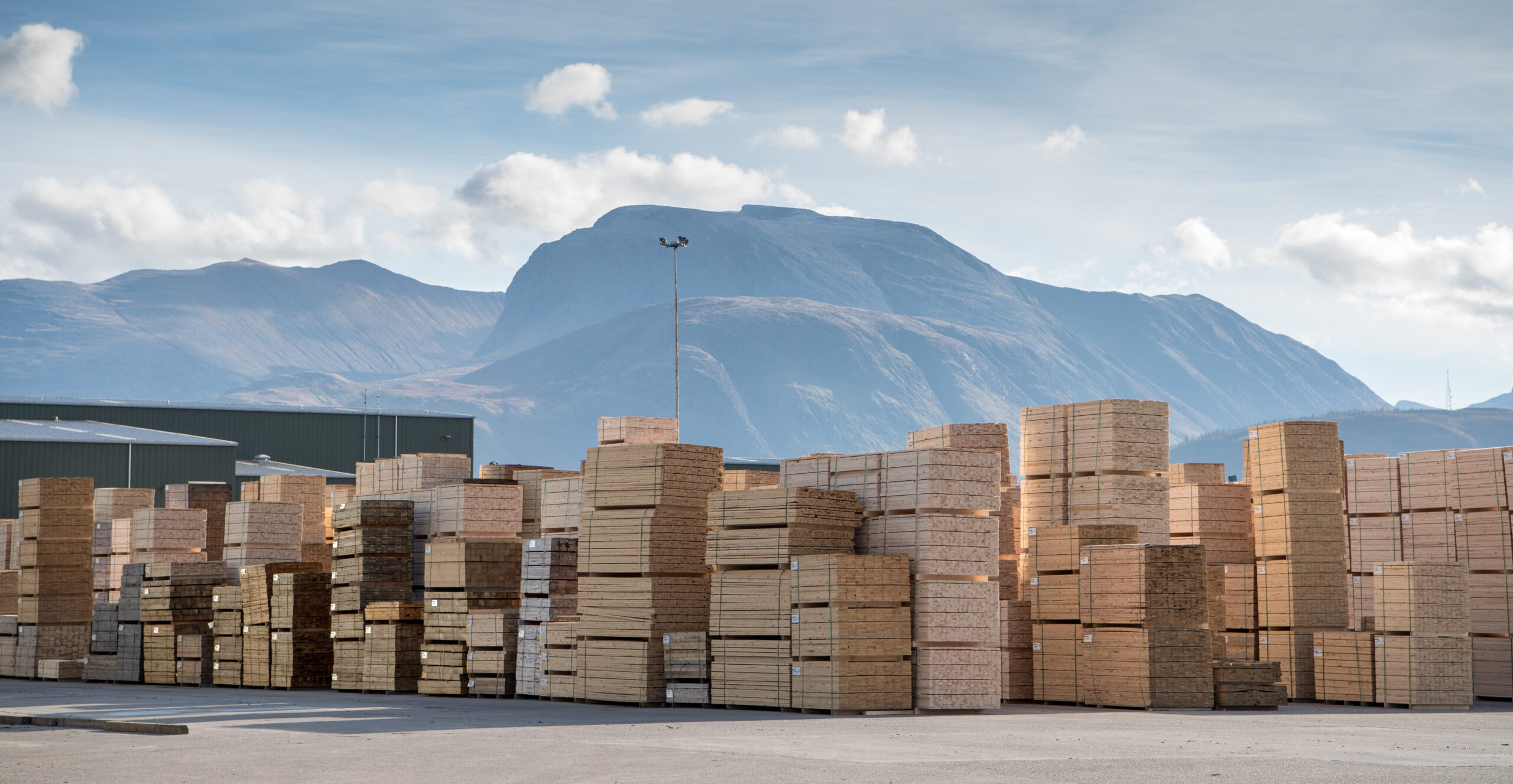
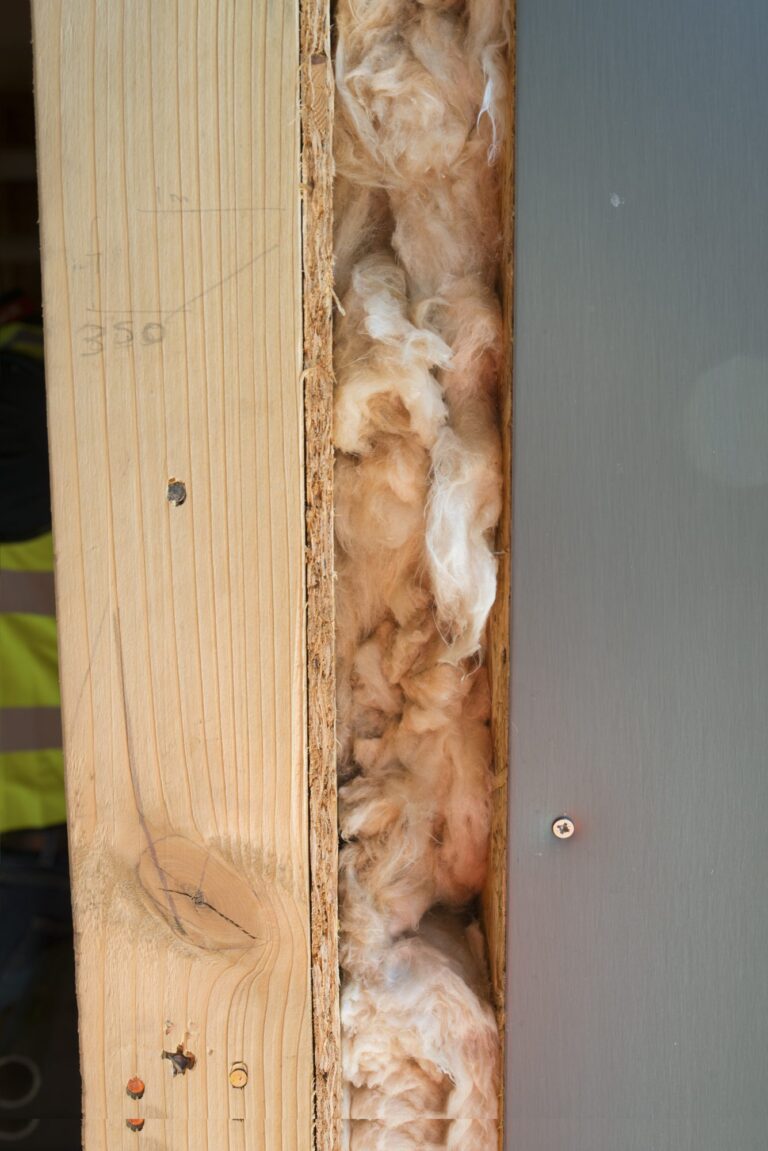
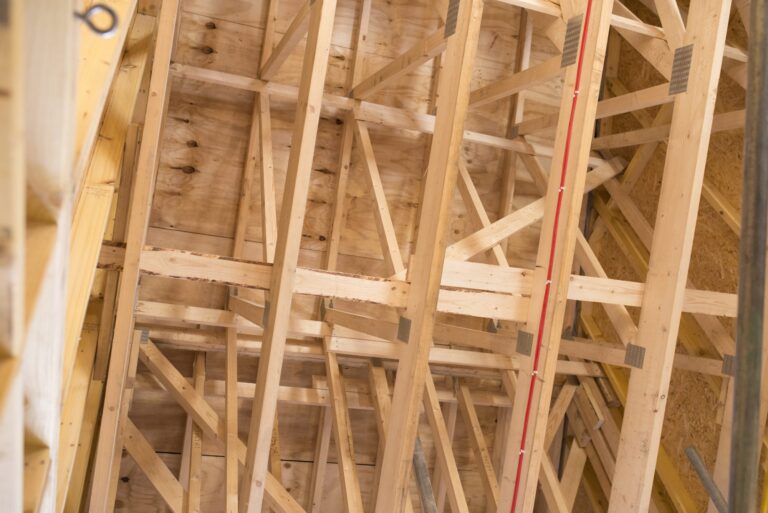
A key contributor to this effort is Woodknowledge Wales (WKW), whose deep commitment to building a sustainable, low-carbon future has shaped both the content and direction of this Yearbook. Led by Sarah Lawton, an editor and communicator working to connect the timber industry with the wider climate, land-use and design agenda, the WKW team has played a central role in curating the insights, case studies, and technical contributions you'll find in these pages.
David Hopkins looks at why embracing sustainability and circular economy principles is smart business for timber merchants—offering greater resilience, customer loyalty, and cost efficiencies in a carbon-conscious, resource-constrained construction sector.
I n a world increasingly shaped by climate regulations, shifting consumer preferences, and supply chain volatility, timber merchants are facing a choice: adapt or risk obsolescence. While sustainability has long been seen as a concern for policymakers or manufacturers, it’s now central to the business case for timber merchants across the UK and beyond.
From securing long-term supply to meeting client demands and unlocking new revenue opportunities, committing to sustainability isn’t just good ethics—it’s smart business. This article explores how timber merchants can embed sustainability into their operations and why circular economy principles are the key to future-facing business models. We examine the challenges, the implications, and the real opportunities—drawing from case studies and examples within and beyond the UK timber sector.
Why sustainability now?
The climate crisis, tightening regulation, and customer pressure have converged to create a new operating environment. Timber merchants are increasingly expected to demonstrate responsible sourcing, reduce waste, and offer lower-carbon options. This expectation is coming not just from governments, but from housing associations, contractors, specifiers, and even individual consumers.
New environmental regulations—such as the UK’s commitment to net zero by 2050 and emerging carbon disclosure requirements—are accelerating this shift. With embodied carbon in materials now a key factor in procurement decisions, the demand for responsibly sourced timber with verified credentials is growing fast.
For example, companies bidding for public sector projects increasingly require Environmental Product Declarations (EPDs), FSC or PEFC certification, and clear carbon data. Merchants who can’t supply this risk losing business to competitors who can .
Understanding the circular economy in timber
Circular economy principles revolve around keeping materials in use for as long as possible, designing out waste, and regenerating natural systems2 . For the timber industry, this translates into a range of actions:
Prioritising longer-life timber products
Enabling disassembly and reuse at end-of-life
Offering reclaimed and remanufactured timber
Reducing processing waste and improving offcut reuse
Supporting timber’s role as a carbon sink through responsible forestry
of materials—it’s about using them better. And timber, as a renewable, versatile, and sequestering material, is perfectly placed to lead this shift.
Business benefits: why it pays to be sustainable
1. Securing supply chains
Sustainability-minded merchants often enjoy more secure long-term supply, especially as forest certification becomes a procurement requirement. By working with sawmills and importers who can demonstrate sustainable practices, merchants reduce their exposure to volatile markets and reputational risk.
During the COVID-19 pandemic and subsequent timber shortages, merchants with traceable and local supply chains fared better than those reliant on global imports.
2. Winning work with clients who care
Developers and housing associations are under pressure to prove their net zero and social value credentials. As a result, they are seeking partners who can help them meet these goals. Merchants who offer certified, low-carbon timber products—and can provide data on their environmental impact—are more likely to be seen as value-adding partners.
3. Reducing waste and increasing margins
Sustainability often goes hand in hand with efficiency. Merchants who implement better stock management, offcut reuse systems, or secondary processing (e.g. machining waste into sellable products) not only reduce environmental impact—they improve their margins.
Case study: Whitmore’s Timber, a UK hardwood merchant, has invested in drying kilns powered by wood waste, turning a disposal cost into an energy source. Their sustainability credentials have opened doors to bespoke work for high-end heritage and architectural projects.
Taking practical steps: where to start
Not every merchant can overhaul their operations overnight. But every merchant can take steps toward more sustainable, circular practices. Here are realistic starting points:
1. Assess and reduce waste
Simple waste audits can identify offcuts, packaging, or unsold stock that could be reused, remanufactured, or sold on.
Case study: Arnold Laver (now part of National Timber Group) introduced a take-back scheme for timber packaging and offcuts at selected sites, diverting waste from landfill and improving customer loyalty.
2. Stock responsibly sourced timber
Merchants should actively stock FSC- or PEFC-certified timber where possible, and work with suppliers to improve chain of custody.
3. Support reuse and reclamation
Offering reclaimed timber, second-grade materials, or hosting a trade exchange noticeboard can create new revenue streams and reduce landfill.
Case study: The Bristol Wood Recycling Project, while not a traditional merchant, demonstrates how urban timber reuse can generate community value and economic return6 . Mainstream merchants could adopt aspects of this model at scale.
4. Train staff and inform clients
Staff who understand sustainability can advise customers better. This adds value and positions the merchant as a knowledgeable, future-ready partner.
Barriers to adoption: being realistic
Despite the benefits, several challenges remain:
Space and logistics: Many merchant yards are tight for space, making segregation of reclaimed materials or storage of diverse product lines difficult.
Customer habits: Some clients still prioritise cost and convenience over sustainability, especially in competitive markets.
Supplier variation: Not all suppliers offer EPDs or certification, especially in hardwoods or niche products.
Lack of standardised data: Comparing products on embodied carbon can be difficult without consistent declarations.
Photo: TDUK
“Sustainability isn’t a burden—it’s a business advantage in a world demanding traceability, low-carbon solutions, and circular thinking.”
Photo: TDUK
These are not trivial challenges. But they are not insurmountable—and the landscape is changing. Industry bodies, like the Timber Development UK and ASBP, are increasingly offering tools, training, and data sets to support merchants in navigating these complexities.
Towards a circular timber marketplace
Imagine a future timber merchant that doesn’t just sell products but offers a material service: supporting reuse, offering design-for- disassembly advice, taking back waste, and connecting clients to low-carbon solutions. This is already happening in other sectors— from carpets to electronics—and it is beginning in timber.
In the Netherlands, Stiho, a major timber and building supplier, is trialling material passports and circular stock planning in collaboration with architects and digital platforms8 . These pilots suggest a clear trajectory: the future merchant is circular, data- literate, and embedded in the sustainable built environment value chain.
Be part of the change
Sustainability and circular economy principles are not a threat to timber merchants—they are a strategic opportunity. Those who act now can differentiate themselves, secure supply, and win the loyalty of future-facing clients. Those who delay may find themselves locked out of procurement frameworks, unable to offer the transparency or flexibility the market increasingly demands.
Change need not be radical or immediate. But it does need to start. From waste reduction and responsible sourcing to better customer advice and reclaimed stock, every step matters.
For the timber industry, the path to circularity isn’t just possible—it’s perfectly natural.
References
Timber Development UK. (2024). Embodied Carbon: Why Timber Needs to Lead. Retrieved from www.timberdevelopment.uk
Ellen MacArthur Foundation. (n.d.). What is a Circular Economy? Retrieved from www.ellenmacarthurfoundation.org
Timber Trades Journal. (2021). Lessons from the Timber Shortage: Local Wins. Retrieved from www.ttjonline.com
Whitmore’s Timber. (2022). Sustainable Hardwood Supply Case Study. Retrieved from www.whitmores.co.uk
National Timber Group. (2023). Sustainability Report. Retrieved from www.nationaltimbergroup.com
Bristol Wood Recycling Project. (2023). About Us. Retrieved from www.bristolwoodrecycling.org.uk
Alliance for Sustainable Building Products. (2024). Circular Economy in Construction. Retrieved from www.asbp.org.uk
Circle Economy. (2021). Case Study: Circular Construction Practices at Stiho. Retrieved from www.circle-economy.com
To provide the best experiences, we use technologies like cookies to store and/or access device information. Consenting to these technologies will allow us to process data such as browsing behavior or unique IDs on this site. Not consenting or withdrawing consent, may adversely affect certain features and functions.
Functional
Always active
The technical storage or access is strictly necessary for the legitimate purpose of enabling the use of a specific service explicitly requested by the subscriber or user, or for the sole purpose of carrying out the transmission of a communication over an electronic communications network.
Preferences
The technical storage or access is necessary for the legitimate purpose of storing preferences that are not requested by the subscriber or user.
Statistics
The technical storage or access that is used exclusively for statistical purposes.The technical storage or access that is used exclusively for anonymous statistical purposes. Without a subpoena, voluntary compliance on the part of your Internet Service Provider, or additional records from a third party, information stored or retrieved for this purpose alone cannot usually be used to identify you.
Marketing
The technical storage or access is required to create user profiles to send advertising, or to track the user on a website or across several websites for similar marketing purposes.