A key contributor to this effort is Woodknowledge Wales (WKW), whose deep commitment to building a sustainable, low-carbon future has shaped both the content and direction of this Yearbook. Led by Sarah Lawton, an editor and communicator working to connect the timber industry with the wider climate, land-use and design agenda, the WKW team has played a central role in curating the insights, case studies, and technical contributions you'll find in these pages.
Focusing on materials alone won’t deliver the carbon savings we need. Here, Clara Koehler explores how early-stage thinking—before design is fixed— can unlock the greatest opportunities for embodied carbon reduction.
Whilst the construction industry has been widely championing the performance of buildings and reducing carbon emissions related to the operation of buildings, the art of reducing upfront and embodied carbon is still an emerging area.
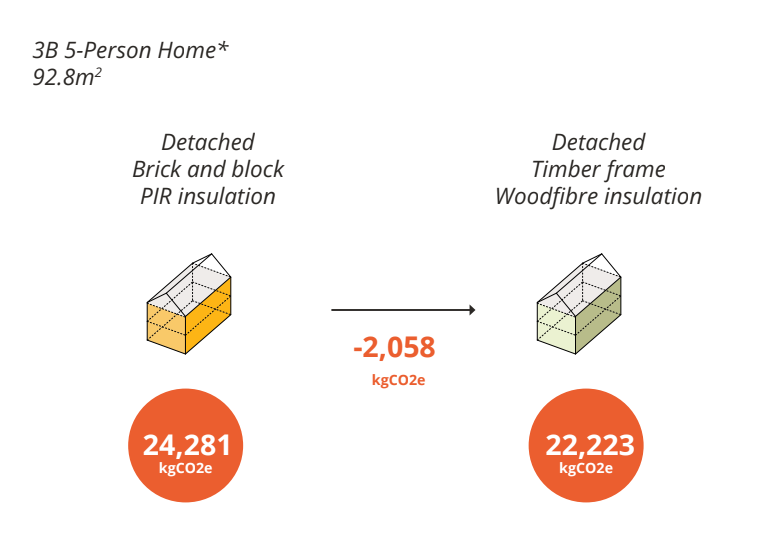
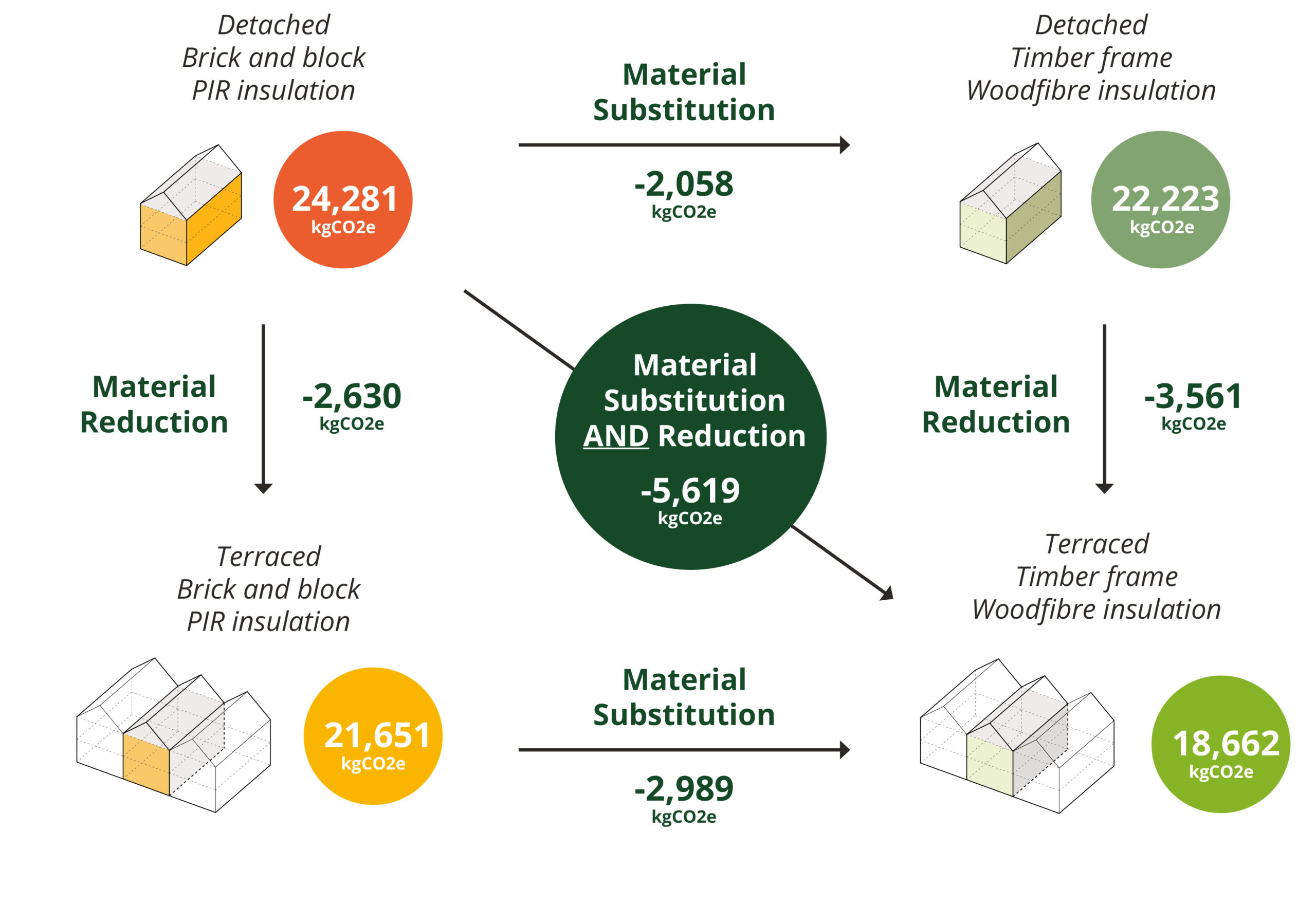
Figure 1 – Indicative A1-A3 upfront embodied carbon estimations for a nominal 2-storey 3B 5-Person dwelling of 92.8 m2; Calculations include building fabric and structure only and excludes all fixtures and fittings. Source: Woodknowledge Wales
Embodied carbon is often addressed during the technical design stage by replacing traditional, extractive materials— such as concrete, steel, or masonry—with bio-based alternatives like timber. However, many clients are hesitant to take this step. They worry about higher consultancy fees, a longer and more iterative design process, and the potential for increased cost and risk when using unfamiliar materials. But are we missing a trick by focusing solely on material swaps rather than looking holistically at the design, construction and use of our environment?
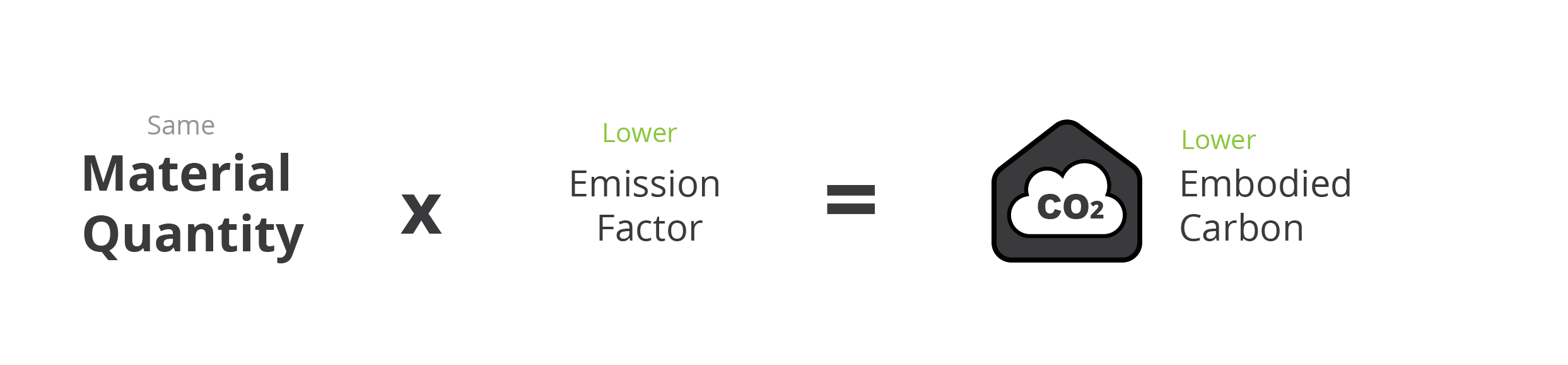
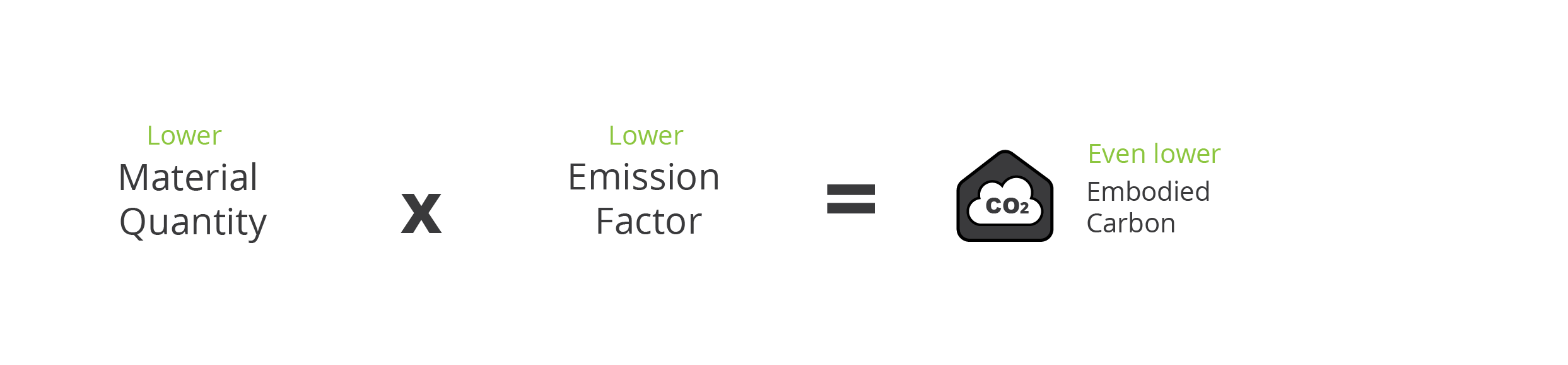
In simple terms, embodied carbon emissions are calculated by multiplying material quantities with a specific carbon emission factor for that given material.
“We can’t reduce what we overbuild—true carbon savings start with using less stuff, not just greener stuff.”
Estimating embodied carbon emissions
In practice, this means that to estimate embodied carbon emissions, a degree of certainty is required regarding both the material quantities as well as their specification. However, this detailed level of information is often not available in the early design stages. Consequently, whole life carbon assessments tend to be undertaken too late in the design process – when the design is already fixed and quantities are known. At that point, the main opportunity for carbon reduction is limited to using alternative materials with a lower carbon emissions factor.
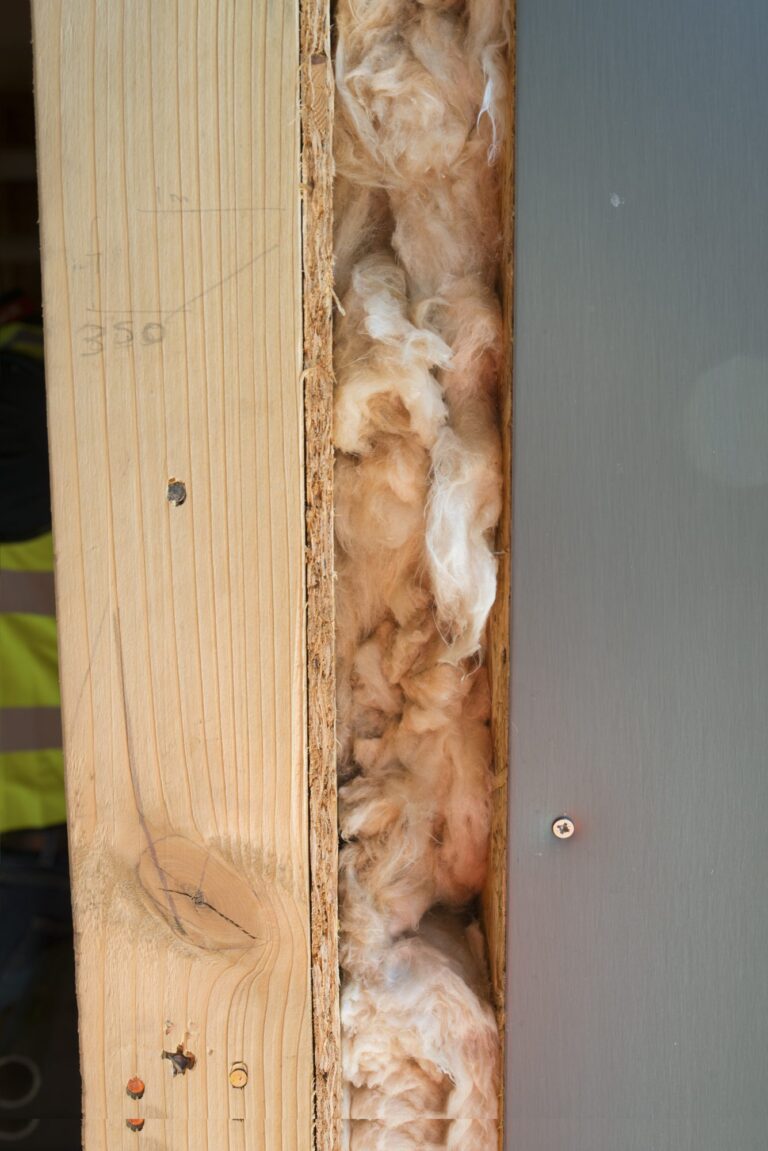
And this approach can show immediate results: Take, for example, a generic three-bedroom detached house. Replacing a traditional brick-and-block construction and PIR insulation with a standard timber frame, woodfibre insulation and brick cladding can save a significant amount of upfront embodied carbon (Figure 1). The benefits of this method go beyond carbon counting and immediate quantifiable results. Bio-based and natural materials can improve resident health and indoor environments, support local economies by increasing demand within the regional supply chain, and remove CO2 from the atmosphere by storing carbon in the building’s fabric for its lifetime.
Reducing material quantities
Often overlooked, however, is another approach to reducing carbon: by reducing material quantities. And that starts right at the beginning of a project – often before any designers or sustainability specialists are involved.
Take the same three-bedroom house. What if, instead of plotting the house as a detached home, the designers decide to arrange it as part of a terrace? This reduces the amount of external surface area, and with that both the area exposed to external temperatures through which heat leaves the building, and the amount of insulation and cladding required. This leads to a reduction in both operational as well as embodied carbon.
As Figure 1 shows, the resulting reduction in upfront embodied carbon can be even greater than that achieved through material substitution. Results will depend on the specific assumptions and context, but this example gives an indication of the relative impact that could be achieved.
Carbon savings made in this way, from changes to the brief or adapting early concept options, are usually not accounted for because they are too difficult to quantify at that stage. They tend to fall outside the standard approaches to reducing embodied carbon but, as seen from the example above, are critical if we are to meet our climate obligations.
Embracing the principle of ‘less is more’
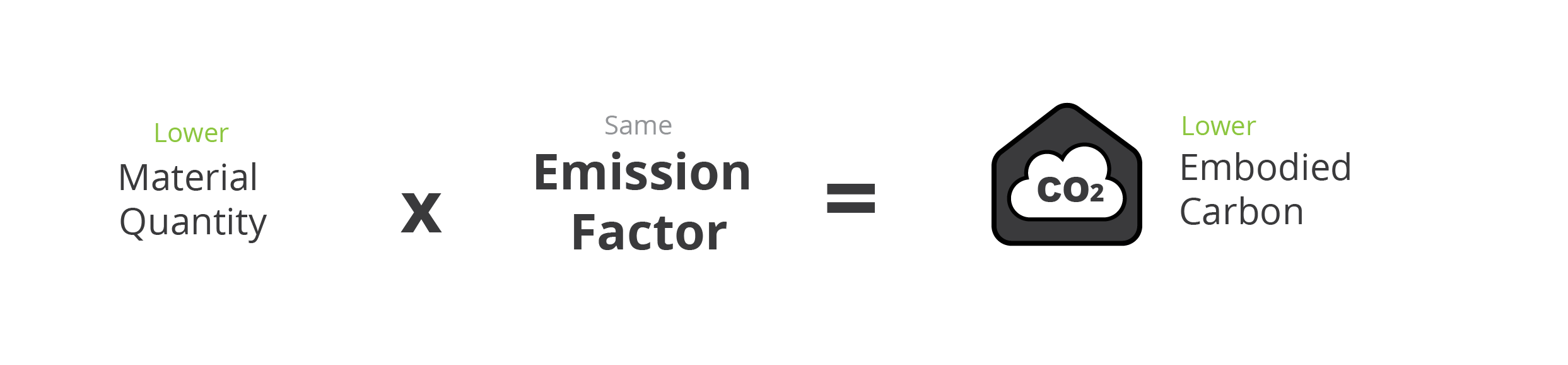
These alternative solutions to carbon reduction often need better communication, critical thinking and a willingness from key stakeholders—many of whom may not be carbon specialists—to challenge norms and go beyond established standards and regulatory approaches. By embracing the principle of ‘less is more’ (Figure 2), we need to challenge briefs, learn from previous experiences and re-think our positions on what we need and how we live as a society; only then can we optimise our designs by adopting strategic decisions that emphasise multi- functional use, efficiency and sufficiency.
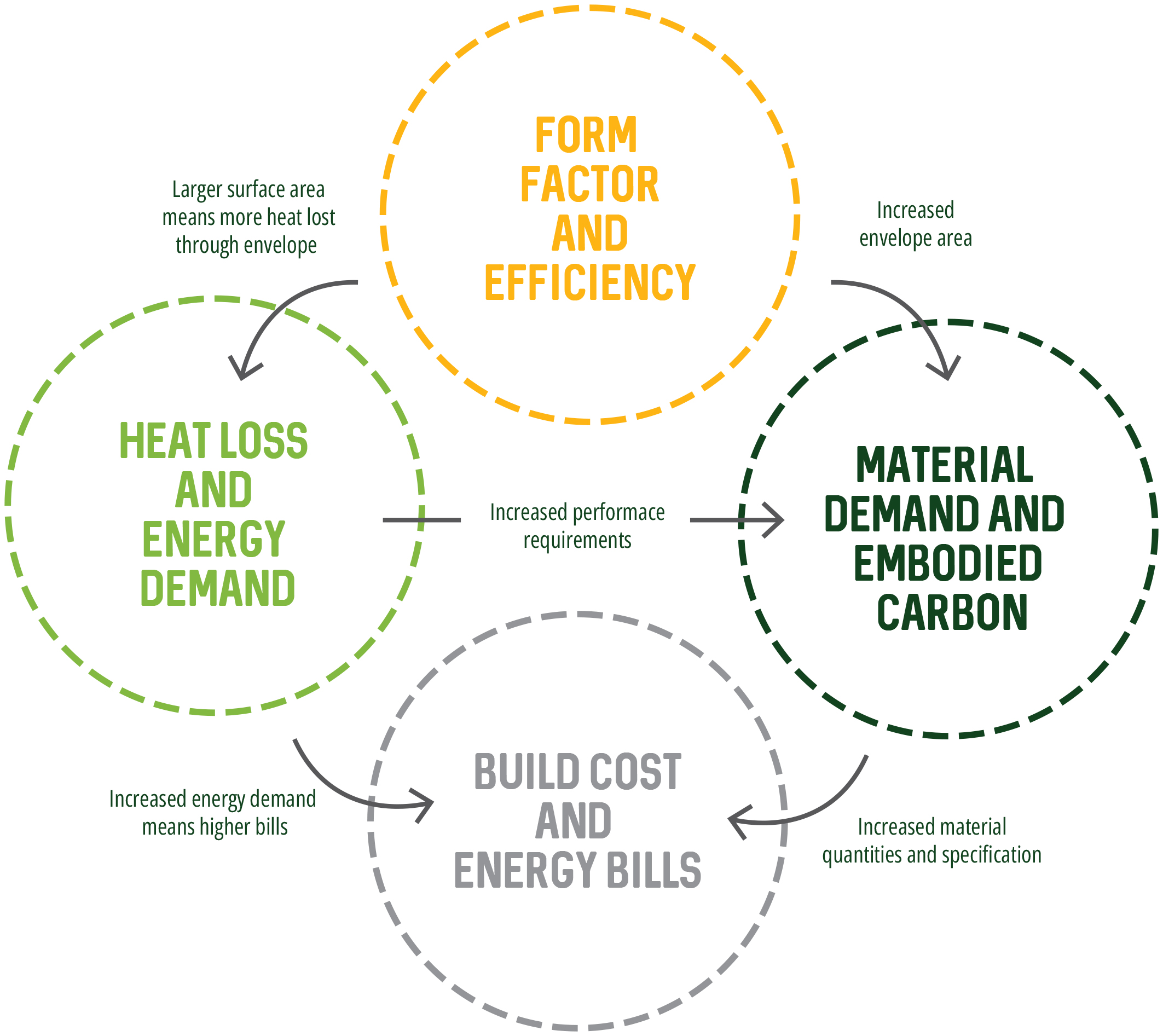
‘Using less stuff’ can be applied in various ways throughout design process– through reuse of existing buildings, flexible designs strategies that allow for future adaptation, clever timetabling of activities or even through challenging policy requirements like parking provision. Efficient massing, layout and building configuration not only reduce material use but also save cost whilst potentially reducing operational carbon emissions and energy bills (Figure 3).
In practice, if we are to keep to our carbon budget, we need both approaches: Reducing material quantities as well as choosing materials with the least environmental impact. But this can’t remain a separate exercise that happens adjacent to the design process. It needs to become an integral part in the development of a project and requires everyone involved to take responsibility and challenge societal norms and conveniences.
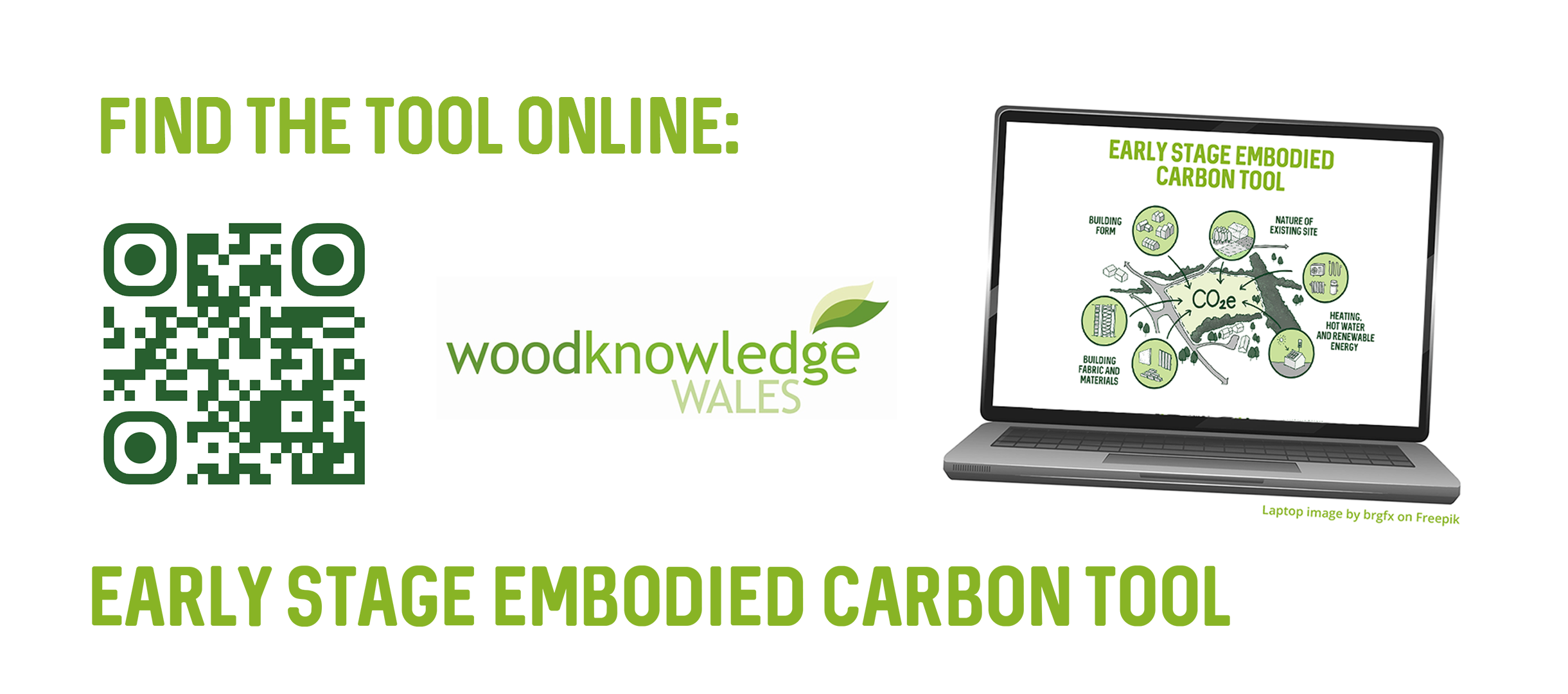
The Early Stage Embodied Carbon Tool
This is why Woodknowledge Wales has developed the Early Stage Embodied Carbon Tool (or short ESECT). Although primarily aimed at the social housing sector and low-rise housing developments, its core principles are transferrable to a wide range of projects as it introduces and explains the key concepts around embodied carbon. By acknowledging that the opportunities for carbon reduction will be unique to every project and site, rather than pointing to a specific solution, the tool functions as an illustrated case study to raise awareness and enable informed decision-making.
“In practice, if we are to keep to our carbon budget, we need both approaches—reducing material quantities as well as choosing materials with the least environmental impact.”
If you would like to be involved in further conversations around this topic, get in touch with [email protected]
To provide the best experiences, we use technologies like cookies to store and/or access device information. Consenting to these technologies will allow us to process data such as browsing behavior or unique IDs on this site. Not consenting or withdrawing consent, may adversely affect certain features and functions.
Functional
Always active
The technical storage or access is strictly necessary for the legitimate purpose of enabling the use of a specific service explicitly requested by the subscriber or user, or for the sole purpose of carrying out the transmission of a communication over an electronic communications network.
Preferences
The technical storage or access is necessary for the legitimate purpose of storing preferences that are not requested by the subscriber or user.
Statistics
The technical storage or access that is used exclusively for statistical purposes.The technical storage or access that is used exclusively for anonymous statistical purposes. Without a subpoena, voluntary compliance on the part of your Internet Service Provider, or additional records from a third party, information stored or retrieved for this purpose alone cannot usually be used to identify you.
Marketing
The technical storage or access is required to create user profiles to send advertising, or to track the user on a website or across several websites for similar marketing purposes.