A key contributor to this effort is Woodknowledge Wales (WKW), whose deep commitment to building a sustainable, low-carbon future has shaped both the content and direction of this Yearbook. Led by Sarah Lawton, an editor and communicator working to connect the timber industry with the wider climate, land-use and design agenda, the WKW team has played a central role in curating the insights, case studies, and technical contributions you'll find in these pages.
Engineered elegance: The rise of timber bridges in modern Britain
Timber bridges are making a comeback across the UK, blending engineering reliability with environmental sensibility. This article explores how timber is reasserting itself as a serious, modern infrastructure material.
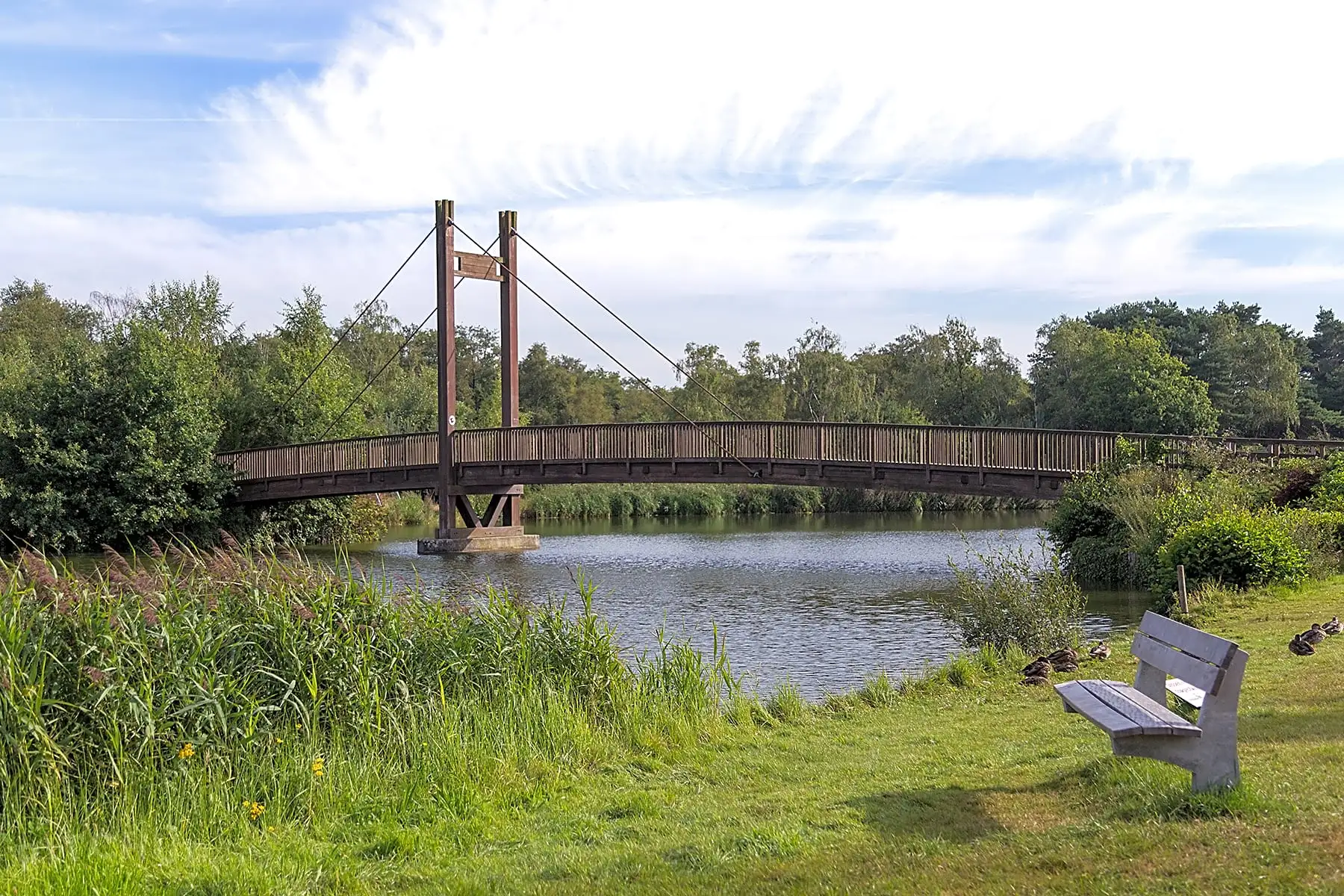
Timber bridges are far from a new idea. In fact, many of the UK’s earliest bridges were made from wood. But the current wave of timber bridge construction looks markedly different. Advances in engineered timber—especially glued laminated timber (glulam)—have transformed what’s possible. These materials offer a compelling combination of lightness, strength, and architectural flexibility. And because they can be prefabricated off-site, they’re ideally suited for rapid installation in hard-to-access locations.
Contemporary craft: timber bridges in practice
Beaver Bridges, based in Shropshire, has been quietly expanding the profile of timber in small-to-medium span infrastructure. Their work spans everything from modest pedestrian crossings to light-use vehicular bridges. A key feature of their approach is versatility—with both hardwood and softwood solutions available—matched by a commitment to rapid deployment and environmental sensitivity. Their projects have attracted interest from local authorities and contractors seeking practical alternatives to steel or concrete1 .
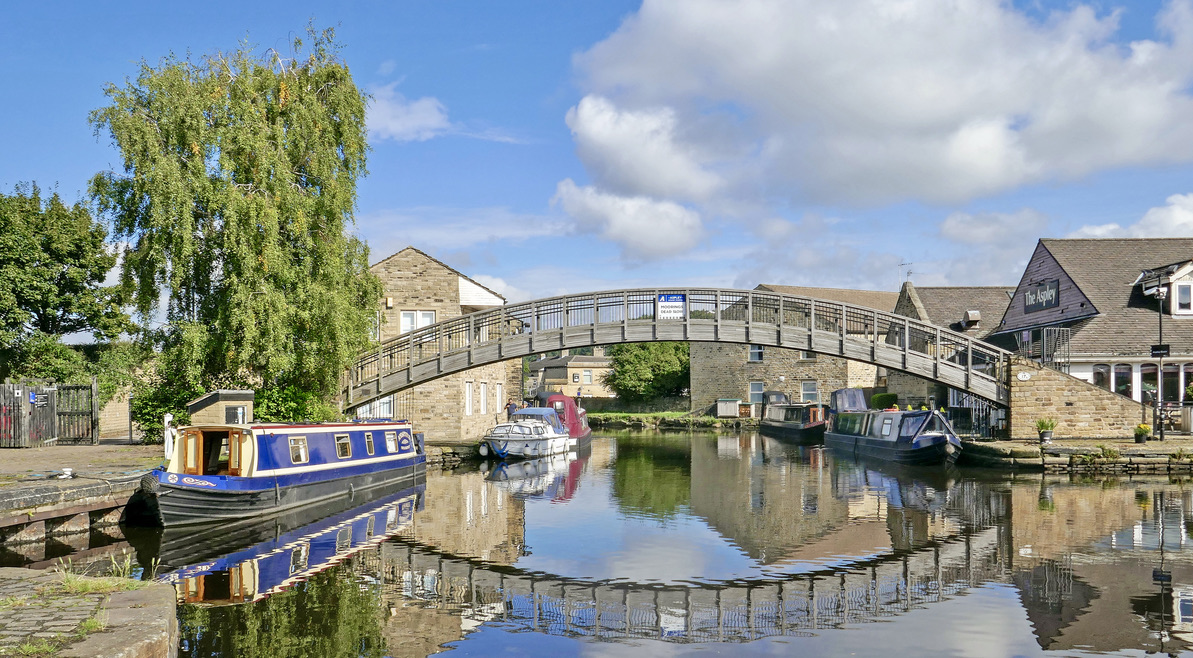
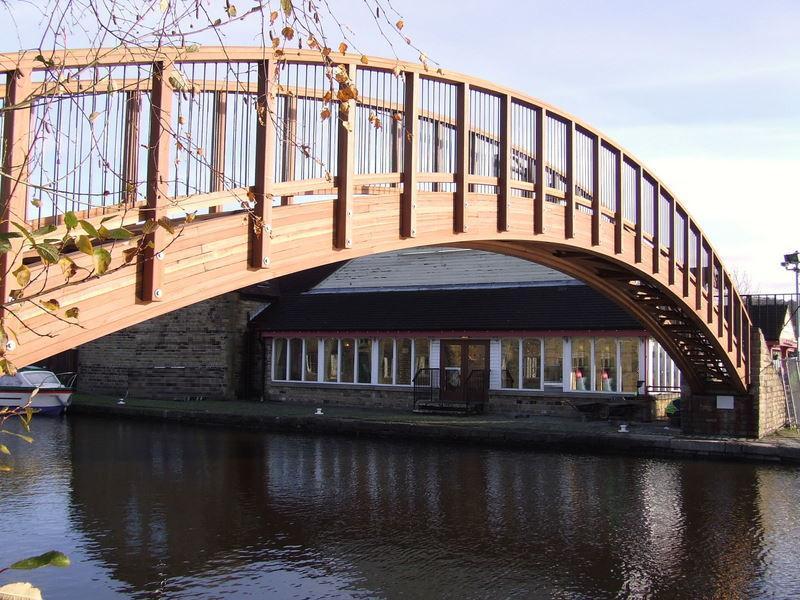
Similarly, CTS Bridges in West Yorkshire has built a strong reputation for delivering bespoke timber bridges, often tailored to fit natural settings such as parklands, historic estates, and nature reserves. Their designs, which can extend up to 30 metres in length, are typically prefabricated and delivered as ready-to-install structures. The off-site construction model not only speeds up installation but also reduces site disturbance—an advantage in protected or ecologically sensitive locations.
From science to site: the engineering leap
The increased confidence in timber as a structural material is underpinned by a growing body of research. Engineers and architects are no longer limited to historical rules of thumb—they’re working with rigorous data on timber’s behaviour under stress, humidity, and long-term wear.
A standout example is the Bridges of Laminated Timber (BoLT) initiative by Arup. Designed to show what’s possible with modular, low-carbon bridge construction, BoLT proposes that small-span road bridges could be made entirely from engineered timber components. What’s more, these elements are designed with future reuse in mind. Rather than being fixed in place for decades, they can be dismantled, moved, or reconfigured—a clear nod to circular economy thinking.
Dutton Horse Bridge. Photo: Steve Wynn
Heritage meets innovation
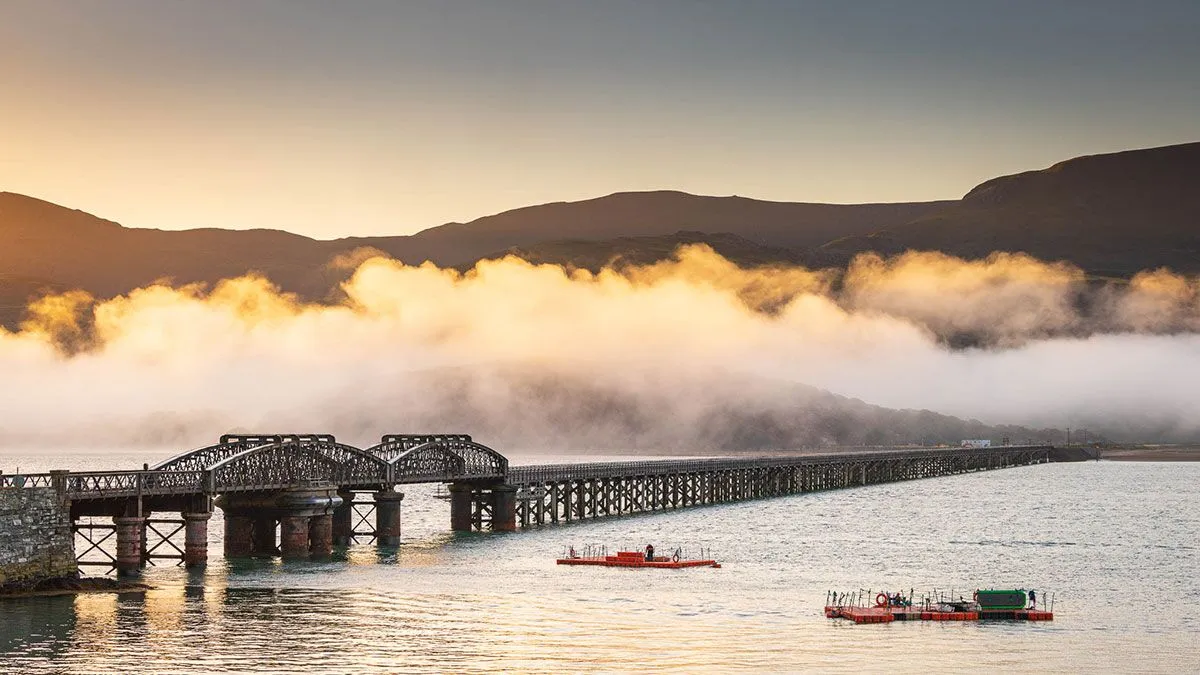
Modern timber bridges aren’t just new—they’re part of a much longer story. In places like Barmouth, Gwynedd, the value of timber in infrastructure is written into the landscape. Barmouth Bridge, the UK’s longest timber viaduct, was recently restored using a combination of Douglas fir and greenheart hardwoods. The restoration didn’t just preserve a beloved structure—it reaffirmed timber’s place in coastal, heavy-use contexts.
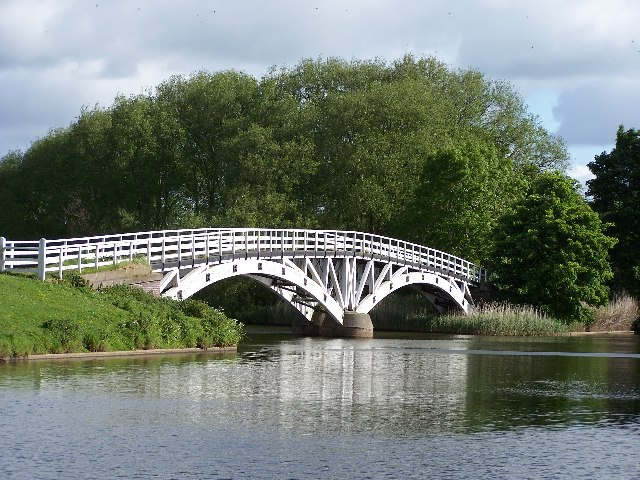
Over in Cheshire, the Dutton Horse Bridge provides another reminder. Built in 1919 using a laminated greenheart timber arch, it remains a functioning, listed structure more than a century later. These heritage bridges are proof that, when chosen and maintained well, timber can offer extraordinary longevity.
The hardwood opportunity
Sarum Hardwood Structures has carved out a distinctive niche in this space. Specialising in large-span bridges crafted from hardwoods like oak and sweet chestnut, the company is known for pushing the envelope both technically and aesthetically. Their curved glulam spans and truss systems show that timber can be as elegant as it is efficient.
Importantly, these bridges also perform. Hardwoods offer increased durability and reduced maintenance over time—an attractive proposition for clients looking to balance upfront costs with long-term value. Whether installed in rural estates or public parks, these bridges offer a quiet confidence that stands the test of time.
Looking ahead
Interest in timber bridges is growing—and not just for their visual appeal. As the UK construction sector works to lower its carbon footprint, engineered timber is emerging as a practical and scalable solution. Timber bridges, in particular, offer an accessible entry point: they can be locally sourced, rapidly installed, and adapted to suit diverse landscapes.
Jubilee River Footbridge. Source: pitchup.com
They also invite us to think differently about infrastructure. Instead of viewing bridges as purely functional spans, timber invites a more integrated approach—one that considers environmental impact, aesthetic value, and community use in equal measure.
To provide the best experiences, we use technologies like cookies to store and/or access device information. Consenting to these technologies will allow us to process data such as browsing behavior or unique IDs on this site. Not consenting or withdrawing consent, may adversely affect certain features and functions.
Functional
Always active
The technical storage or access is strictly necessary for the legitimate purpose of enabling the use of a specific service explicitly requested by the subscriber or user, or for the sole purpose of carrying out the transmission of a communication over an electronic communications network.
Preferences
The technical storage or access is necessary for the legitimate purpose of storing preferences that are not requested by the subscriber or user.
Statistics
The technical storage or access that is used exclusively for statistical purposes.The technical storage or access that is used exclusively for anonymous statistical purposes. Without a subpoena, voluntary compliance on the part of your Internet Service Provider, or additional records from a third party, information stored or retrieved for this purpose alone cannot usually be used to identify you.
Marketing
The technical storage or access is required to create user profiles to send advertising, or to track the user on a website or across several websites for similar marketing purposes.