A key contributor to this effort is Woodknowledge Wales (WKW), whose deep commitment to building a sustainable, low-carbon future has shaped both the content and direction of this Yearbook. Led by Sarah Lawton, an editor and communicator working to connect the timber industry with the wider climate, land-use and design agenda, the WKW team has played a central role in curating the insights, case studies, and technical contributions you'll find in these pages.
Seb Laan Lomas explains how new fire research and real-world data from 17 timber schools show how a proven, low-impact design approach can deliver safe, healthy, insurable buildings—fit for people and planet.
New fire research, led by Architype Architects, and carried out with UCL, the University of Edinburgh, and IGNIS, explores the conservatism of current practice, and clarifies the benefits of a physics-based approach when creating high-performance, high-health, low- impact schools for the future.
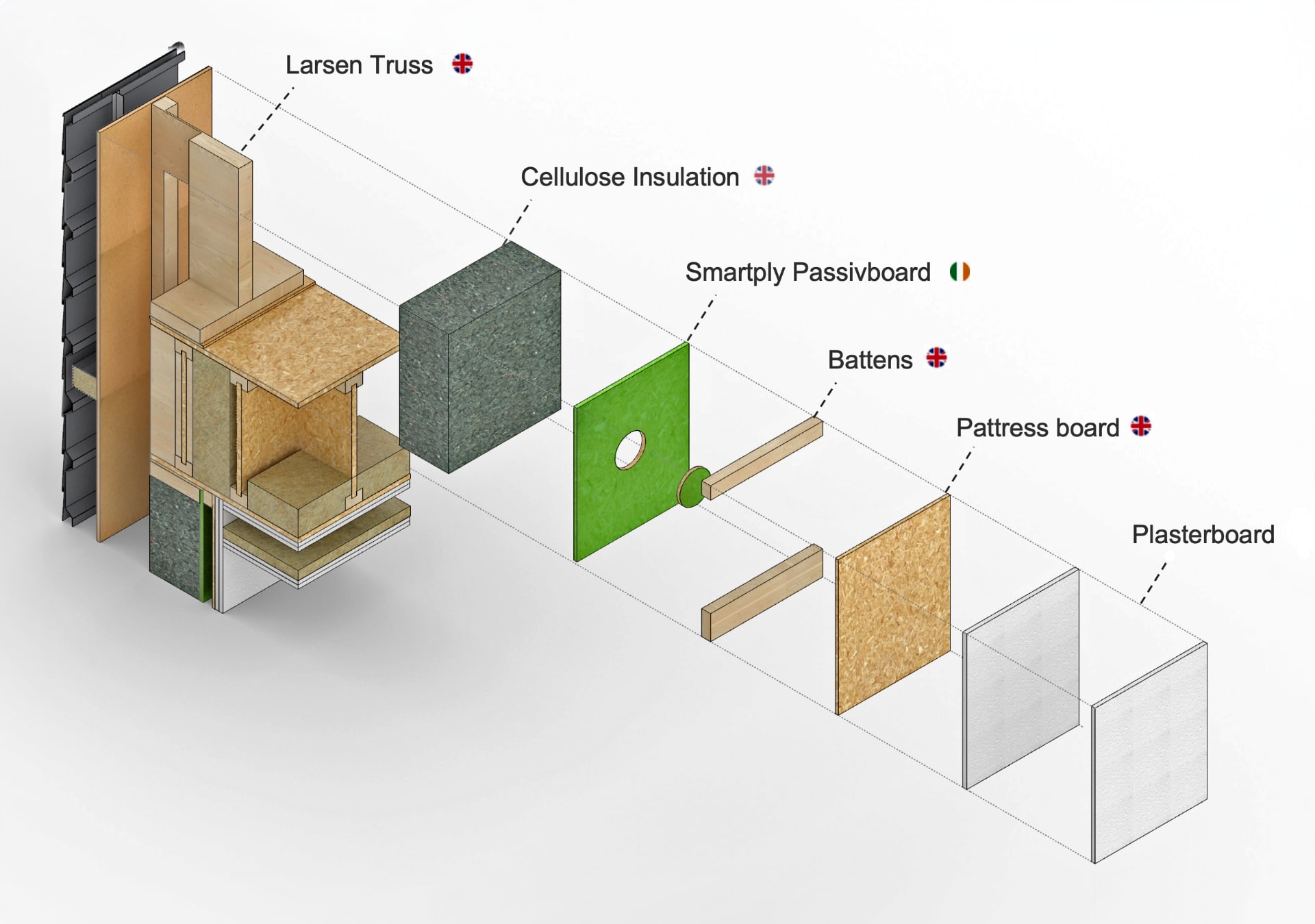
Many of the components used in the analysed build-up can be UK-sourced, or have the potential to be. Source: Safe Schools for the Future report
The benefits of a physics-based approach
This research, funded by the Forestry Commission under its Woods into Management Forestry Innovation Fund, demonstrates how timber frame construction, viewed through the lens of a simulated built case study, can be shown to have its structural integrity unaffected by internal fire scenarios. Analysis by Professor José L. Torero of UCL also demonstrates that the calculated fires in the case study’s primary school environments are significantly less onerous than furnace test conditions used for creating fire certificates. The analysis shows that no fires would develop to achieve post- flashover conditions, and that the simulations did not experience fires that would threaten the building’s integrity. This compounds aspects of conservativeness within standard practice and sets out a workflow for project teams that have experienced the severely limiting and challenging realities of fire certificates.
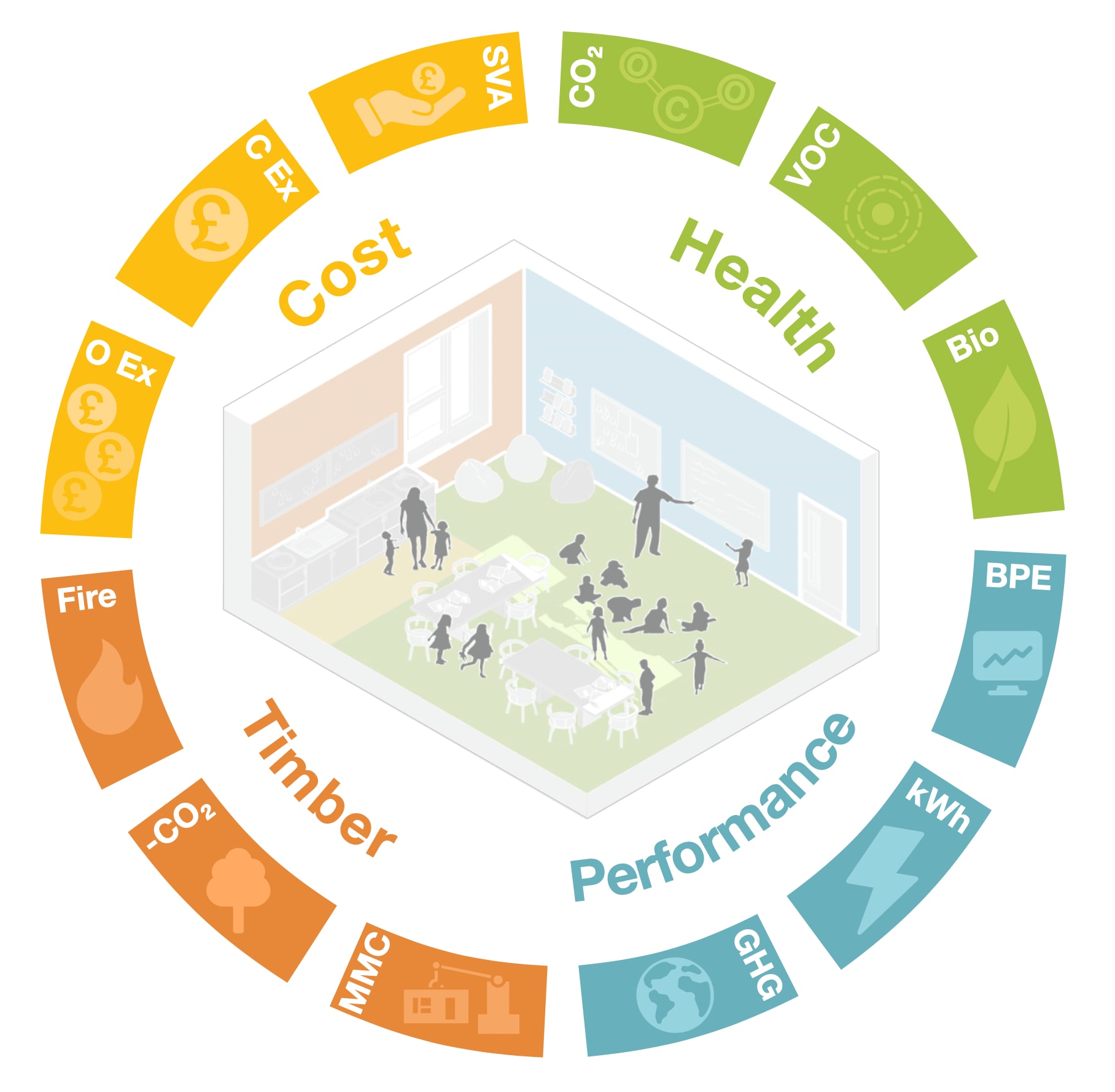
These forward-looking insights have been paired with monitored, in-use health and wellbeing, energy performance, and embodied carbon data of 17 completed primary schools across England, Scotland, and Wales. All of these buildings are of timber-frame construction, using a low-tech, high- performance assembly that is implementable at scale today and an ideal opportunity for meeting the Government’s ambition to increase the use of timber in construction to support the country’s decarbonisation.
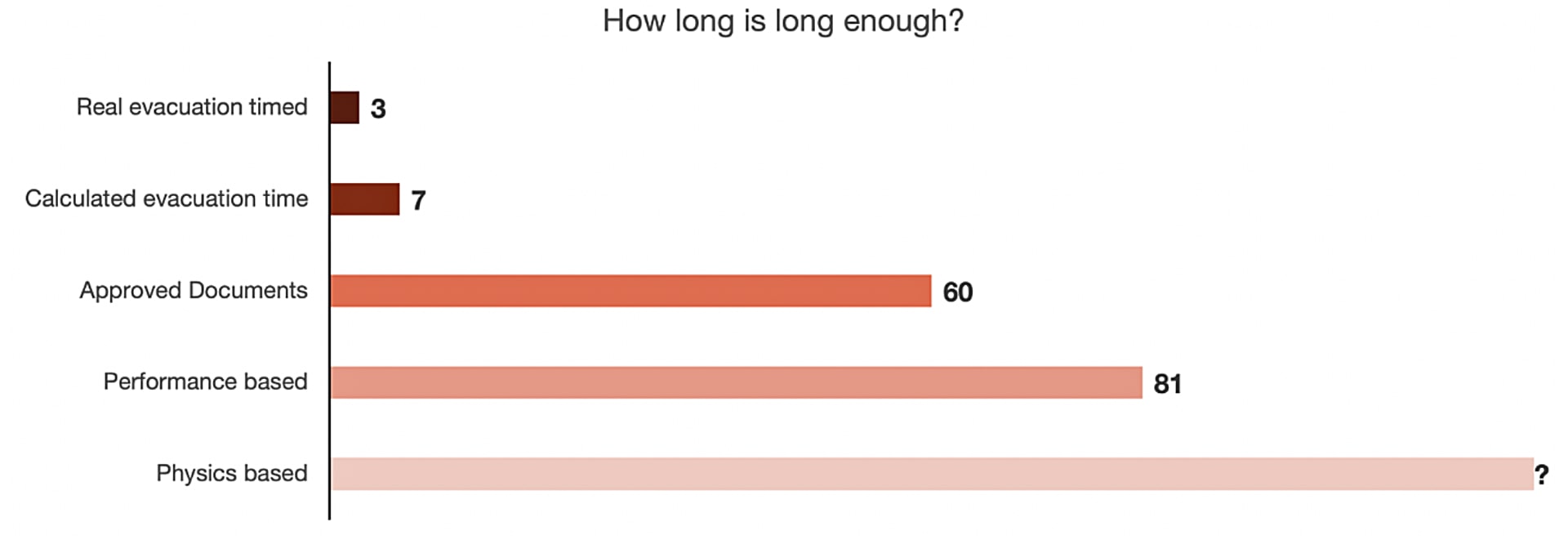
How long is long enough? Scenario-specific analysis showed the building’s structure indefinitely outlasting industry standard requirements. Source: Safe Schools for the Future report
A tried and tested design approach
The tried and tested architectural design approach demonstrated within the report also delivers healthier classrooms, high-emitting, harmful materials with bio-based materials, and enjoying the fresh air benefits of an efficiently and effectively ventilated space. Recent PhD research on these buildings has shown conventional classrooms to be 1.5 times as harmful due to the materials used, and poorer airtightness and ventilation.
This holistic approach is underpinned by industry-leading quality assurance driven by an independent certification—Passivhaus in these instances. This is viewed by the project’s insurance stakeholder, Phil Callow of Rosetta Risk Management, as an invaluable contribution to demonstrating the insurability of a building.
This new open-source publication shares construction details, workflows, lessons learned, design guidance, and the collected data from these 17 case study schools, with new health and wellbeing and fire research, to support project teams to scale up the use of home-grown timber for schools that are fit for people, place, and planet.
“Physics-based analysis reveals classroom fires can be far less severe than standard tests assume—illustrating a path to lower-carbon yet safe, scalable timber schools.”
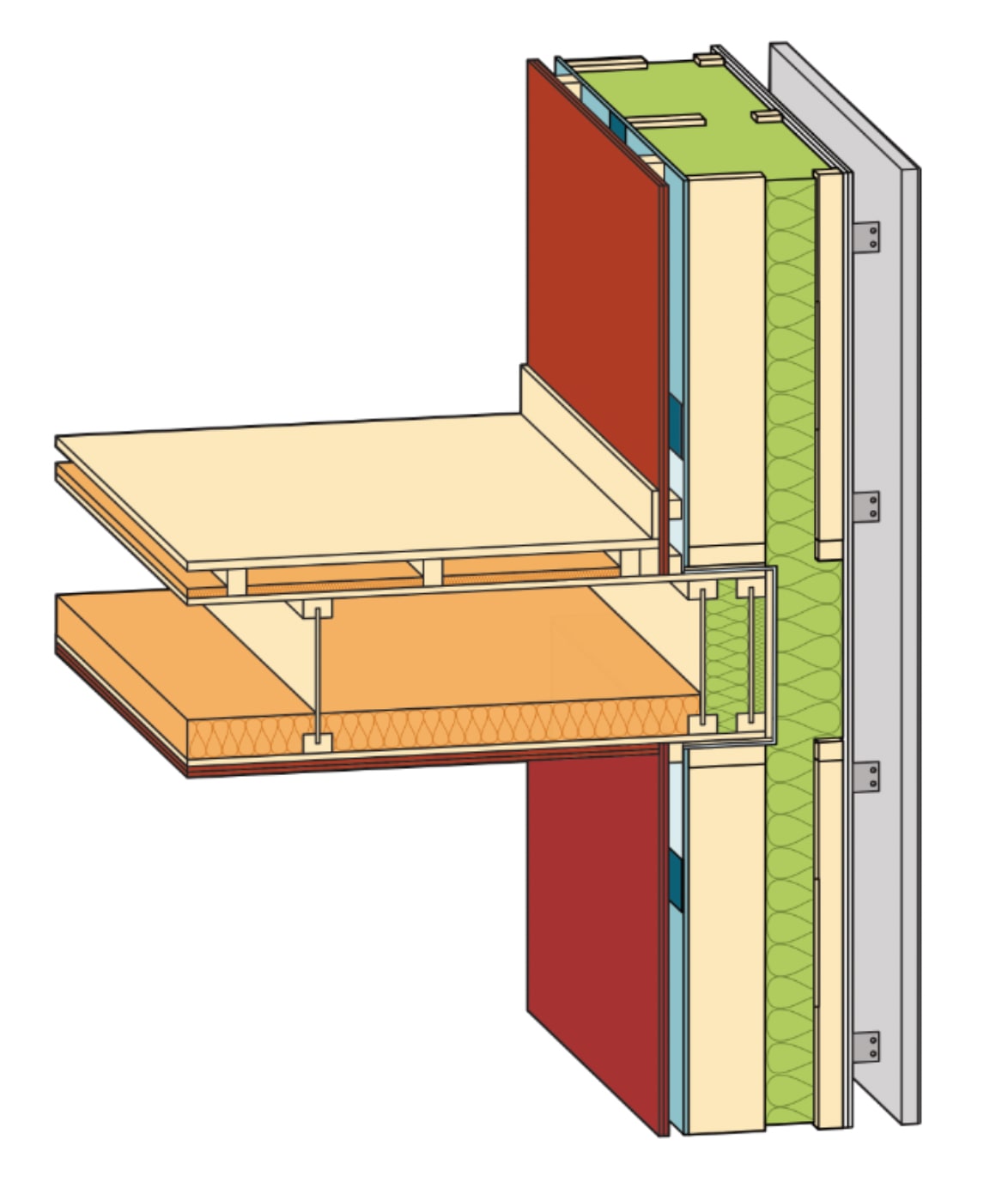
Based on Larsen truss details, C16 softwood from the UK’s forests can be used to deliver high performance schools
This report was launched at an event hosted by Woodknowledge Wales on Tuesday 2 September.
To provide the best experiences, we use technologies like cookies to store and/or access device information. Consenting to these technologies will allow us to process data such as browsing behavior or unique IDs on this site. Not consenting or withdrawing consent, may adversely affect certain features and functions.
Functional
Always active
The technical storage or access is strictly necessary for the legitimate purpose of enabling the use of a specific service explicitly requested by the subscriber or user, or for the sole purpose of carrying out the transmission of a communication over an electronic communications network.
Preferences
The technical storage or access is necessary for the legitimate purpose of storing preferences that are not requested by the subscriber or user.
Statistics
The technical storage or access that is used exclusively for statistical purposes.The technical storage or access that is used exclusively for anonymous statistical purposes. Without a subpoena, voluntary compliance on the part of your Internet Service Provider, or additional records from a third party, information stored or retrieved for this purpose alone cannot usually be used to identify you.
Marketing
The technical storage or access is required to create user profiles to send advertising, or to track the user on a website or across several websites for similar marketing purposes.