A key contributor to this effort is Woodknowledge Wales (WKW), whose deep commitment to building a sustainable, low-carbon future has shaped both the content and direction of this Yearbook. Led by Sarah Lawton, an editor and communicator working to connect the timber industry with the wider climate, land-use and design agenda, the WKW team has played a central role in curating the insights, case studies, and technical contributions you'll find in these pages.
Dave Hopkins examines what the Timber in Construction Roadmap means for domestic supply and why growth in UK processing capacity will depend on predictable demand, robust assurance and alignment across the forest-to-construction supply chain.
The Timber in Construction Roadmap provides a clear policy signal: timber is expected to play a larger role in housing, public buildings and industrialised construction systems.
Expansion is framed around competence, safety, quality assurance and measurable performance. Timber is positioned not as a discretionary environmental alternative, but as a regulated construction material operating within established evidential frameworks.
For domestic supply, this distinction is significant. Growth will follow only where clients, insurers, lenders and regulators are confident that timber systems are deliverable at scale and supported by robust product assurance.
The roadmap establishes direction. Whether that direction translates into sustained UK supply growth will depend on delivery, consistency and confidence across the supply chain.
Strengthening the forest-to-construction pipeline
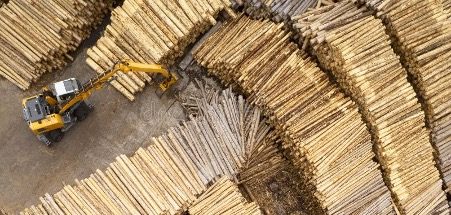
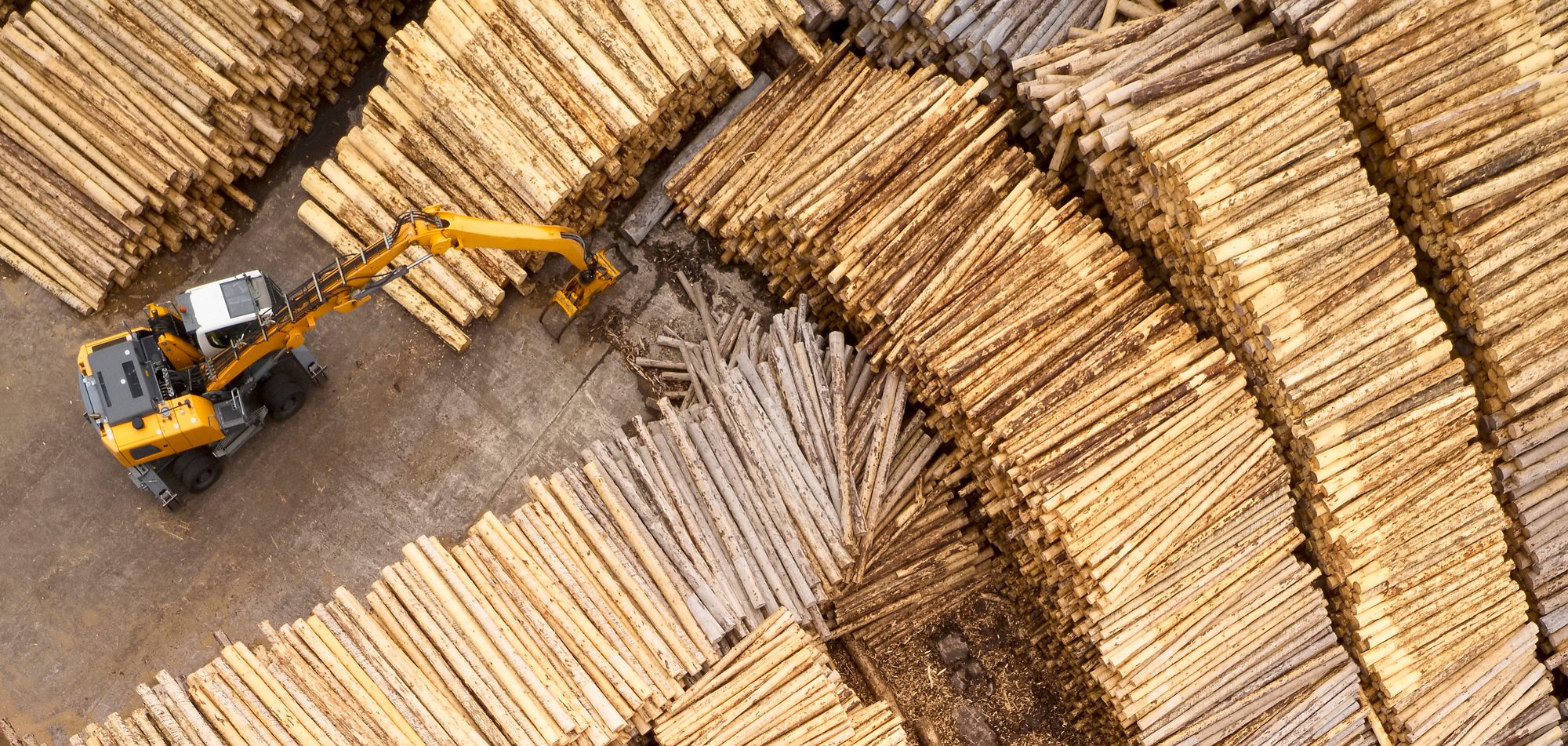
The UK remains reliant on imported timber, particularly for structural grades and engineered wood products. Imports will continue to play an important role in meeting demand. However, the roadmap sharpens attention on domestic productive capacity.
This extends beyond tree planting targets. It encompasses the full forest-to-construction supply chain:
Harvesting predictability
Sawmilling investment
Grading and certification capability
Kiln drying infrastructure
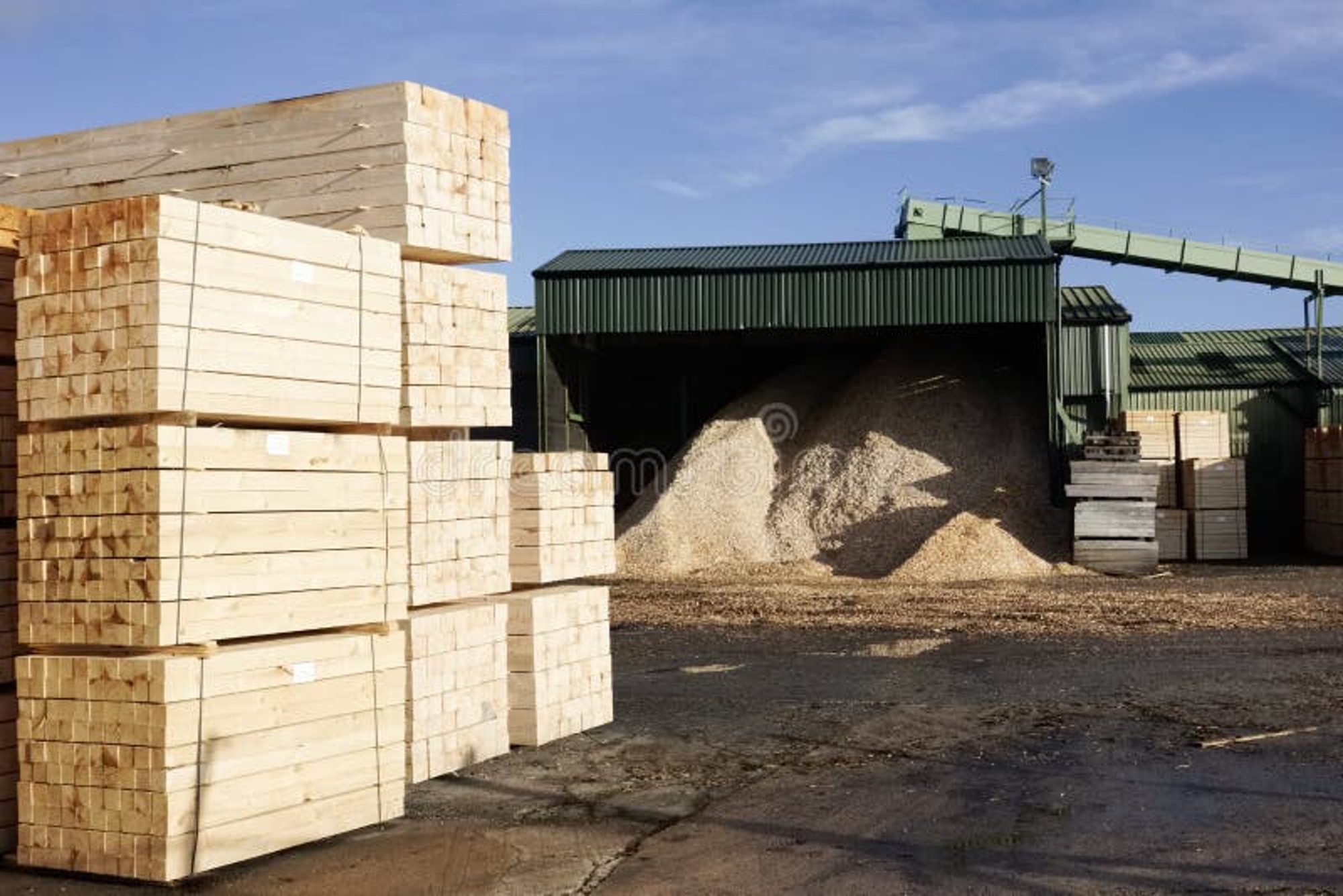
Engineered wood and panel manufacturing
Capital investment in processing depends on confidence in future demand. Stronger public sector signals around timber use, alongside increasing emphasis on whole-life carbon assessment in planning and procurement discussions, indicate a shift in how materials are evaluated.
Processors will look for sustained and consistent procurement behaviour before committing to major expansion. Without alignment between forestry policy, processing investment and construction demand, increased specification risks reinforcing import reliance rather than strengthening UK industry.
The roadmap positions timber within a broader industrial strategy context, linking resource management with construction delivery.
Assurance, standards and market confidence
As timber use expands in mid-rise housing and public buildings, assurance becomes central.
Structural grading consistency, third-party certification, fire performance evidence, durability classification and transparent carbon data will increasingly influence specification decisions. Domestic producers that can demonstrate reliable quality and traceability strengthen their competitive position.
In a regulated and risk-aware environment, performance evidence and supply reliability carry weight alongside price. Investment in modern grading technology, digital traceability and harmonised certification supports both resilience and credibility.
Confidence in timber construction is built on demonstrable performance. Domestic supply capacity will expand most effectively where that confidence is sustained.
Retaining value through engineered capacity
A strategic issue for the UK sector is how much value is retained from domestic timber resource.
A proportion of UK-grown material is exported for processing before returning as higher-value engineered products. The roadmap’s recognition of industrialised timber construction and offsite manufacture highlights the opportunity to increase domestic processing depth.
Expanding engineered wood production, panel manufacture and precision component capability would shorten supply chains and anchor more value within the UK economy – particularly in rural and semi-rural regions where forestry and processing remain significant employers.
However, engineered capacity must develop in parallel with predictable project pipelines. Scaling production ahead of demonstrable demand would introduce commercial risk. Investment decisions will be shaped by the clarity and consistency of market signals.
Resilience, carbon and disciplined growth
Recent global supply volatility has exposed the vulnerability of extended international supply chains. Timber markets have experienced price fluctuation and disruption linked to geopolitical events and transport constraints.
A balanced mix of domestic and imported supply enhances resilience. For major housebuilders and offsite manufacturers operating on tight programme schedules, reliability is often as critical as cost.
Whole-life carbon assessment is also influencing procurement discussions with increasing regularity. Industry guidance and local authority initiatives indicate a clear direction towards more formalised reporting. Domestic supply can benefit where traceability, transport distances and verified Environmental Product Declarations are clearly documented. However, carbon advantage must be evidenced using consistent methodologies.
The roadmap sets direction. Implementation will depend on alignment between tree planting policy, harvesting forecasts, processing investment and procurement behaviour.
For domestic suppliers, growth is most likely to occur through disciplined scaling—investment aligned with clear demand signals and underpinned by measurable performance.
The UK has the resource base and technical competence to strengthen its timber supply chain. Converting policy momentum into industrial delivery will require coordination across forest management, processing and construction.
Confidence will be built through consistent performance.
To provide the best experiences, we use technologies like cookies to store and/or access device information. Consenting to these technologies will allow us to process data such as browsing behavior or unique IDs on this site. Not consenting or withdrawing consent, may adversely affect certain features and functions.
Functional
Always active
The technical storage or access is strictly necessary for the legitimate purpose of enabling the use of a specific service explicitly requested by the subscriber or user, or for the sole purpose of carrying out the transmission of a communication over an electronic communications network.
Preferences
The technical storage or access is necessary for the legitimate purpose of storing preferences that are not requested by the subscriber or user.
Statistics
The technical storage or access that is used exclusively for statistical purposes.The technical storage or access that is used exclusively for anonymous statistical purposes. Without a subpoena, voluntary compliance on the part of your Internet Service Provider, or additional records from a third party, information stored or retrieved for this purpose alone cannot usually be used to identify you.
Marketing
The technical storage or access is required to create user profiles to send advertising, or to track the user on a website or across several websites for similar marketing purposes.