A key contributor to this effort is Woodknowledge Wales (WKW), whose deep commitment to building a sustainable, low-carbon future has shaped both the content and direction of this Yearbook. Led by Sarah Lawton, an editor and communicator working to connect the timber industry with the wider climate, land-use and design agenda, the WKW team has played a central role in curating the insights, case studies, and technical contributions you'll find in these pages.
Independent fire testing underpins the certification of modern timber fire doorsets. Ian Hazlewood examines how evidence-based testing is helping extend the certified scope of traditional doorsets while supporting fire safety in heritage and conservation projects.
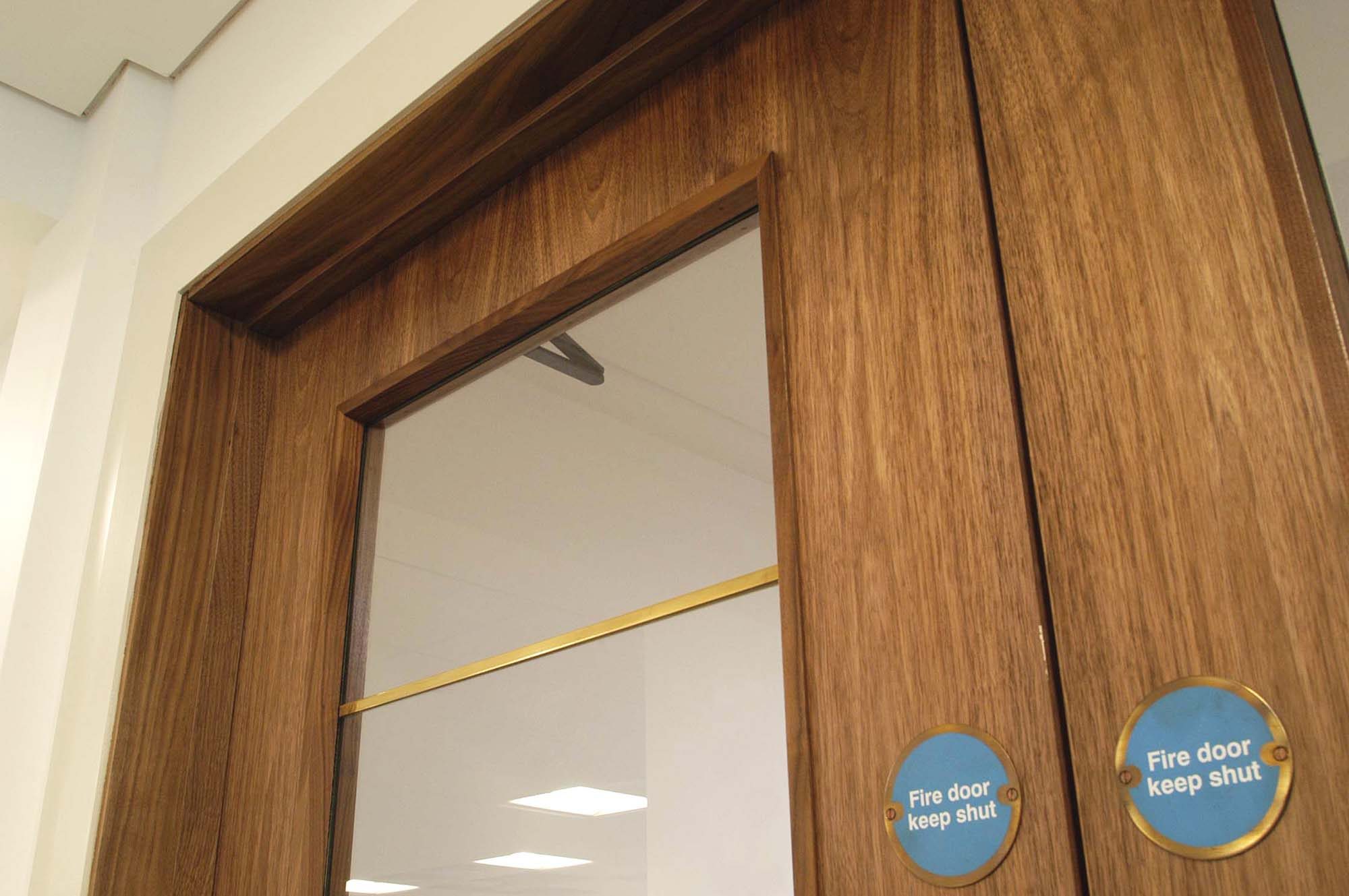
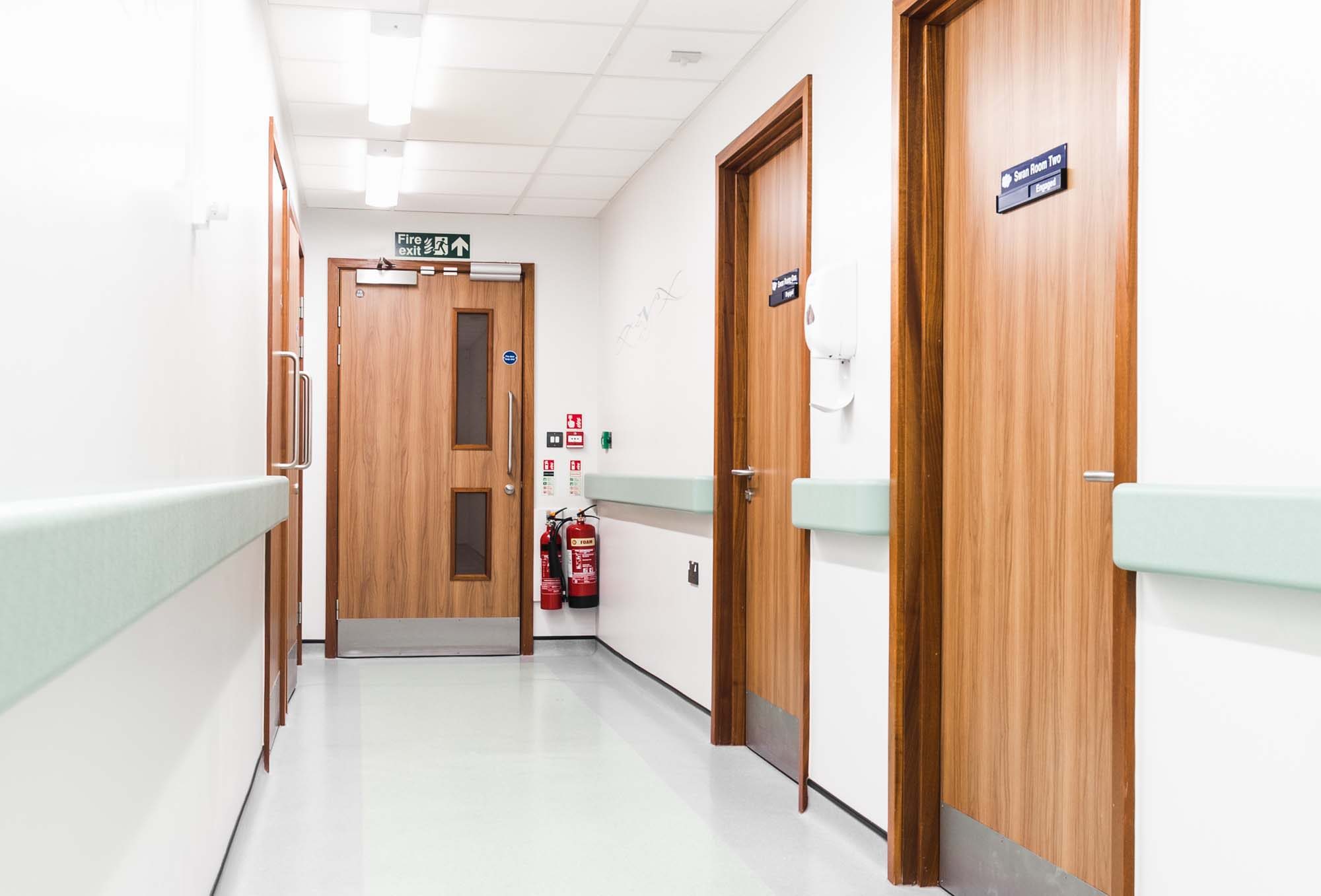
Independent fire testing remains central to the development and certification of timber fire doorsets. As fire safety expectations continue to evolve, manufacturers are increasingly challenged to accommodate larger glazed apertures, increased leaf dimensions, traditional detailing and modern hardware while maintaining compliance with fire and smoke performance requirements. Achieving this balance requires careful product development, robust test evidence and a detailed understanding of the interaction between all components within a doorset assembly.
The need for effective fire protection within heritage and listed buildings has become increasingly significant in recent years. Building owners, conservation professionals and fire safety specialists face the challenge of improving life safety while preserving the architectural and historical character of existing structures. Compliance with the Regulatory Reform (Fire Safety) Order 2005 and Approved Document B remains essential, while interventions within listed buildings must also satisfy the requirements of Historic England and local conservation authorities. [1-2]
Unlike new-build projects, where fire safety measures can be incorporated into the building fabric from the outset, heritage buildings often contain doors, frames and associated joinery elements that contribute to the historic significance of the property. Consequently, there is a growing requirement for certified fire doorsets capable of delivering contemporary fire and smoke performance while maintaining traditional design characteristics.
Extending certified scope
To explore this challenge, a recent product development programme sought to extend the certified scope of a traditional timber fire doorset. The objective was not simply to achieve a successful fire resistance test, but to generate robust evidence capable of supporting an expanded field of application for heritage-style doorsets.
Third-Party Product and Process Certification (TPPPC) plays a critical role in ensuring the integrity of fire door certification. As part of Hazlin of Ludlow’s recent heritage doorset testing programme, manufacturing was independently sampled through the BM TRADA Q-Mark Fire Door Manufacturer Scheme to verify that the tested specimen remained representative of the certified product, supporting the validity of both the test evidence and the resulting certification.
The development programme focused on several key design parameters commonly encountered within heritage and conservation projects. These included increased leaf heights, large glazed apertures, traditional moulding profiles, flat panel and raised and fielded panel constructions, and the integration of modern hardware such as RFID locking systems and door viewer spyholes. The intention was to evaluate how these features could be incorporated within a tested and certified doorset specification without compromising fire or smoke performance.
Testing smoke performance
With the introduction of BS 8214:2026, smoke containment has become an increasingly important consideration within fire door design [3]. Smoke performance is now regarded as a distinct and measurable characteristic that requires independent verification rather than being considered solely a by-product of fire resistance performance. As part of the development programme, separate double-leaf testing was undertaken. The completed doorset achieved an air leakage result of 0.9 m³/h, comfortably below the 3.0 m³/h performance threshold, demonstrating a high level of smoke control.
Subsequent fire resistance testing demonstrated fire resistance beyond the required test duration. Whilst the certified fire resistance period remains the primary performance criterion, additional overrun can provide valuable engineering evidence when determining the extent of certification and the range of design variations that may be supported through the resulting field of application.
Availability of test evidence
The successful completion of the test programme has enabled the certified scope of the doorset to be expanded, providing greater flexibility when specifying traditional timber fire doorsets in heritage environments. Of particular importance is the availability of test evidence to support larger configurations, traditional detailing and the integration of modern hardware within a certified assembly. This can reduce reliance on project-specific engineering assessments and provide greater certainty for specifiers, contractors and building owners.
The project also reflects a broader industry trend towards evidence-based certification, where increasingly complex performance requirements must be supported by comprehensive fire and smoke testing. As demand grows for compliant fire safety solutions within existing and historic buildings, the availability of robust test data becomes increasingly important in supporting both product certification and specification decisions.
The programme illustrates the growing role of evidence-based testing in expanding the certified application of traditional timber fire doorsets. As specification requirements continue to evolve, robust fire and smoke test evidence is likely to play an increasingly important role in supporting certification and informed specification decisions.
Reference
Regulatory Reform (Fire Safety) Order 2005.
Approved Document B (Fire Safety), England (latest edition).
BS 8214:2026 Timber-based fire door assemblies — Code of practice.
To provide the best experiences, we use technologies like cookies to store and/or access device information. Consenting to these technologies will allow us to process data such as browsing behavior or unique IDs on this site. Not consenting or withdrawing consent, may adversely affect certain features and functions.
Functional
Always active
The technical storage or access is strictly necessary for the legitimate purpose of enabling the use of a specific service explicitly requested by the subscriber or user, or for the sole purpose of carrying out the transmission of a communication over an electronic communications network.
Preferences
The technical storage or access is necessary for the legitimate purpose of storing preferences that are not requested by the subscriber or user.
Statistics
The technical storage or access that is used exclusively for statistical purposes.The technical storage or access that is used exclusively for anonymous statistical purposes. Without a subpoena, voluntary compliance on the part of your Internet Service Provider, or additional records from a third party, information stored or retrieved for this purpose alone cannot usually be used to identify you.
Marketing
The technical storage or access is required to create user profiles to send advertising, or to track the user on a website or across several websites for similar marketing purposes.