A key contributor to this effort is Woodknowledge Wales (WKW), whose deep commitment to building a sustainable, low-carbon future has shaped both the content and direction of this Yearbook. Led by Sarah Lawton, an editor and communicator working to connect the timber industry with the wider climate, land-use and design agenda, the WKW team has played a central role in curating the insights, case studies, and technical contributions you'll find in these pages.
As timber construction becomes more widely adopted, confidence increasingly depends on demonstrable performance. Simon Griffiths explores how evidence and supply-chain collaboration contribute to assurance across the building lifecycle.
The relationship between timber construction and risk is often framed as a debate about materials. In practice, however, the challenge is not whether timber can be used safely and effectively, but how risks are identified, managed and evidenced throughout the lifecycle of a building.
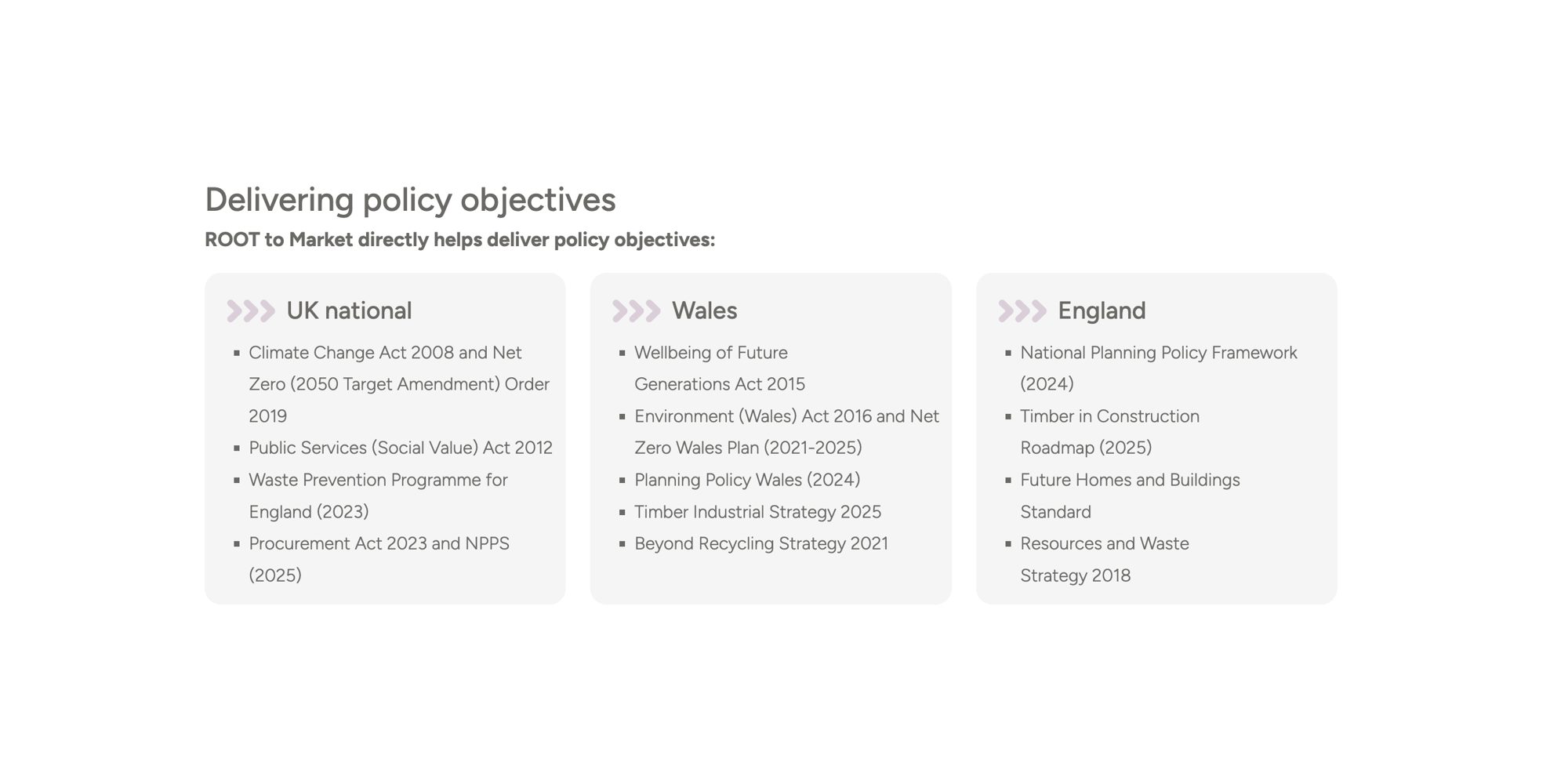
As interest in timber systems grows across the UK construction sector, questions from clients, insurers, regulators and building owners increasingly focus on assurance. The introduction of the Building Safety Act and the growing emphasis on the Golden Thread of information have reinforced expectations around accountability, competence and traceability.[1,2] Alongside building safety reform, procurement reform across the UK is raising expectations about how public value, supply-chain capability and delivery evidence are considered throughout the commercial lifecycle. In Wales, the Social Partnership and Public Procurement (Wales) Act builds on this framework by placing additional emphasis on socially responsible procurement.[3,4]
Confidence is no longer created through specification alone. It depends on the ability to demonstrate performance and maintain evidence throughout design, manufacture, construction and occupation. This shift presents an important opportunity for the timber sector. Rather than responding to perceptions with advocacy, the industry can increasingly respond with measurable assurance.
Risk perception and public confidence
Public confidence in construction materials is often shaped by perception as much as technical evidence. Historic building failures, media coverage and isolated incidents can influence attitudes long after lessons have been learned and standards have evolved.
Fire safety remains one of the most visible examples.
Questions about timber buildings are frequently framed around whether timber is inherently safe or unsafe. Yet fire performance is determined by a combination of design decisions, specification, detailing, construction quality, maintenance and management. Material selection forms part of that process but does not determine outcomes in isolation.
The same principle applies to many of the issues that influence confidence in the built environment. Durability, quality, whole-life carbon performance and operational efficiency all depend on a series of informed decisions made throughout a project’s development and delivery.
Confidence therefore cannot be treated as a final-stage exercise. It must be established from the outset and supported by evidence throughout the building lifecycle.
This distinction between perceived risk and assessed and evidenced risk is becoming increasingly important. Stakeholders are not simply seeking reassurance that buildings will perform as intended. They are seeking evidence that performance has been considered, documented and verified.
The whole supply chain as a safety system
Building safety reforms have highlighted the importance of understanding how decisions made throughout the supply chain contribute to final outcomes.
Historically, procurement models have often fragmented responsibility across multiple organisations and contractual relationships. Information can become diluted as projects move between design, manufacture, construction and operation. Critical knowledge may not always reach those responsible for later stages of delivery.
The consequences extend beyond fire safety. They can affect quality, programme certainty, cost predictability, durability and environmental performance.
For timber construction, this challenge is particularly relevant. Design decisions influence manufacturing. Manufacturing influences installation. Installation influences performance. The quality of information exchanged between each stage can be as important as the products themselves.
Viewed through this lens, the supply chain can be understood as a system of assurance.
Designers, manufacturers, suppliers, contractors and clients each contribute knowledge, expertise and evidence that support building performance. Confidence is strengthened when these relationships are coordinated and transparent rather than fragmented and transactional.
This principle sits at the heart of growing efforts to improve collaboration across the forest-to-construction supply chain. Stronger connections between organisations help reduce uncertainty, improve accountability and ensure that critical information remains available throughout project delivery.
Delivering assurance through procurement
If confidence depends on evidence, then procurement becomes one of the most powerful tools available to clients and commissioners.
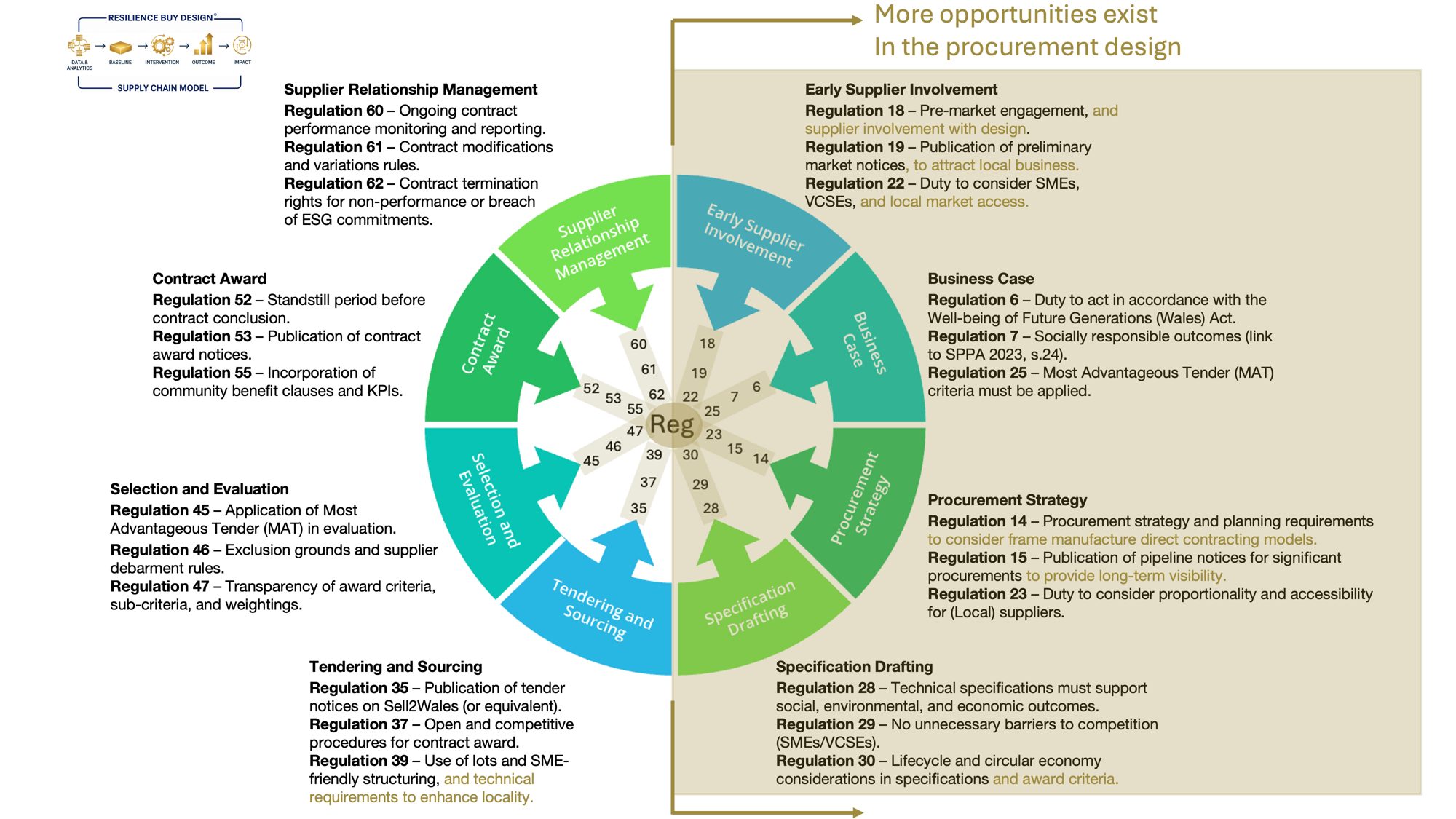
The latest values-based procurement model (see Fig. 1) treats this as a continuous chain rather than a collection of separate assurances.[5] Public purpose must inform the understanding of market capability; that understanding must shape the specification and award decision; winning commitments must become enforceable contract duties; and delivery must be verified against agreed evidence and consequences.
Procurement is often viewed primarily as a mechanism for controlling cost and programme. Increasingly, however, it is being recognised as a means of influencing quality, safety, environmental performance and long-term value.
Values-based procurement uses the whole commercial lifecycle to secure the best balance of whole-life value and public outcomes.[5] It does not displace economy, competition or equal treatment, nor does it justify favouring a supplier simply because it is locally based. Instead, it translates legitimate policy objectives into relevant, proportionate and measurable requirements that suppliers can compete to deliver. It recognises that performance is influenced by decisions made throughout the supply chain and that expertise often exists within the organisations responsible for delivering products and services.
One of the most significant opportunities lies in fair and well-documented preliminary market engagement.[3,4] This allows clients to test technical feasibility, capacity, lead times, certification routes and evidence requirements before solutions are fixed, while enabling specialist suppliers to contribute expertise that improves design efficiency, buildability, risk management and performance.
For timber construction, this approach offers particular advantages. Manufacturers can contribute practical insights into design efficiency, material selection, production methods and performance requirements. Contractors can help identify buildability considerations and potential risks. Suppliers can provide evidence relating to testing, certification and product performance.
The result is often a clearer understanding of how project outcomes will be achieved and how performance will be verified.
A value objective becomes credible only when four elements align: the specification establishes the minimum requirement; the award criteria distinguish stronger tenders; the contract converts the winning proposal into an enforceable duty; and KPIs and assurance demonstrate whether it has been delivered. [5] Without that alignment, value can disappear between tender submission and contract performance. Performance indicators, proportionate certification or equivalent evidence, testing regimes, provenance records, inspection data and quality management processes can all contribute to assurance. The relevant question is not merely whether documentation exists, but whether the evidence is contract-specific, traceable and capable of verifying delivery.
This approach aligns closely with the principles underpinning the Golden Thread.[2] Information is not collected simply for compliance purposes. It becomes part of a wider system for demonstrating that decisions have been made appropriately and that intended outcomes are being delivered.
Strengthening UK supply-chain capability does not require favouring geographically local suppliers. Instead, procurement should reward contract-related outcomes such as resilience, apprenticeships, reduced transport impacts and demonstrable community benefit.
Assurance also requires consequences. Each claimed value should be traceable from the intended outcome to the supplier’s promise, the contractual duty, the verification method and the response to success, underperformance or misstatement. If that chain cannot be demonstrated, the requirement is not yet procurement-ready.
From compliance to confidence
The timber sector has made significant progress in developing standards, technical guidance, competence frameworks and shared evidence resources, although important gaps remain, particularly in relation to engineered mass timber, fire safety and durability.[6] However, confidence is not built solely through the existence of information. It is built through the effective use of information.
The challenge is increasingly one of visibility.
Can clients understand how decisions were made?
Can contractors demonstrate that systems have been installed correctly?
Can building owners access reliable information about the performance of their assets?
Can insurers and regulators trace evidence throughout the project lifecycle?
These questions sit at the intersection of building safety, quality assurance and procurement.
They also highlight the importance of moving beyond compliance towards demonstrable confidence. Compliance establishes minimum requirements. Assurance provides a transparent basis for determining whether performance objectives have been considered, translated into obligations, monitored and delivered—and for responding when they have not. Assurance also extends beyond technical performance. It can include responsible sourcing, biodiversity, circularity, fair work, skills, prompt payment, SME accessibility, supply-chain resilience and community or cultural outcomes—provided these are relevant, proportionate and verifiable.
The role of ROOT to Market
The ROOT to Market initiative has emerged from this broader conversation about assurance, transparency and supply-chain collaboration framed within the Woodknowledge Wales mission to accelerate the use of regenerative materials in construction.[7]
Developed for UK-wide markets by Woodknowledge Wales, the initiative seeks to strengthen connections between clients, designers, manufacturers, suppliers and contractors across the timber supply chain. Its objective is not simply to facilitate procurement, but to improve the visibility and quality of information that supports decision-making. ROOT to Market is intended to strengthen connections between commissioners and the organisations able to deliver timber, biogenic and recycled-material solutions. Its role should be understood within the wider procurement lifecycle: improving market visibility, enabling earlier engagement, supporting accessible routes to market and strengthening the quality of evidence available to clients before and during competition.
At the time of writing, ROOT to Market is seeking pilot projects to demonstrate how earlier engagement and stronger supply-chain relationships can support project delivery. The initiative reflects a growing recognition that building performance depends on more than technical specifications alone.
Clients increasingly seek confidence that buildings will achieve intended outcomes. Suppliers require greater visibility of future demand to support investment decisions. Designers and contractors benefit from earlier access to specialist expertise. Regulators and insurers expect greater transparency regarding how risks are identified and managed.
ROOT to Market aims to support these objectives by creating stronger links between those commissioning buildings and those responsible for delivering them.
In doing so, it reflects a wider industry transition towards evidence-based delivery, where trust is created through transparency, collaboration and measurable performance.
Building confidence through evidence
The future of timber construction will not be determined by perception alone. It will depend on the industry’s ability to demonstrate performance through evidence, competence and transparent delivery.
Fire safety provides a clear example of this principle, but it is not unique. The same expectations increasingly apply to quality, durability, whole-life carbon and operational performance.
As regulatory expectations continue to evolve, confidence will increasingly be built through systems that connect design intent, procurement decisions, supply-chain capability and building performance.
Initiatives such as ROOT to Market point towards a model in which assurance is embedded throughout the commercial and delivery lifecycle rather than assessed at its end. Public value is defined before the market is approached, tested before requirements are fixed, evaluated against credible evidence, converted into contractual duties and verified throughout performance. In that environment, trust becomes the result of a transparent system of evidence, accountability and consequence across the supply chain.[5]
Explore the ROOT to Market initiative and opportunities for pilot projects.
Download Simon Griffiths’ Values-Based Procurement guide and supporting resources.
References
[1] UK Government. Building Safety Act 2022, (2022).
[2] Health and Safety Executive. Keeping Information About a Higher-Risk Building: The Golden Thread, (2023).
[3] UK Government. Procurement Act 2023, (2023).
[4] Welsh Government. Procurement Reform in Wales, (2025).
[5] Griffiths S. Values-Based Procurement: Turning Wales’s New Procurement Regime into Measurable Economic, Social, Environmental and Cultural Outcomes, Woodknowledge Wales, (2026).
[6] UK Government. Timber in Construction Roadmap 2025, Department for Environment, Food & Rural Affairs, (2025).
To provide the best experiences, we use technologies like cookies to store and/or access device information. Consenting to these technologies will allow us to process data such as browsing behavior or unique IDs on this site. Not consenting or withdrawing consent, may adversely affect certain features and functions.
Functional
Always active
The technical storage or access is strictly necessary for the legitimate purpose of enabling the use of a specific service explicitly requested by the subscriber or user, or for the sole purpose of carrying out the transmission of a communication over an electronic communications network.
Preferences
The technical storage or access is necessary for the legitimate purpose of storing preferences that are not requested by the subscriber or user.
Statistics
The technical storage or access that is used exclusively for statistical purposes.The technical storage or access that is used exclusively for anonymous statistical purposes. Without a subpoena, voluntary compliance on the part of your Internet Service Provider, or additional records from a third party, information stored or retrieved for this purpose alone cannot usually be used to identify you.
Marketing
The technical storage or access is required to create user profiles to send advertising, or to track the user on a website or across several websites for similar marketing purposes.