A key contributor to this effort is Woodknowledge Wales (WKW), whose deep commitment to building a sustainable, low-carbon future has shaped both the content and direction of this Yearbook. Led by Sarah Lawton, an editor and communicator working to connect the timber industry with the wider climate, land-use and design agenda, the WKW team has played a central role in curating the insights, case studies, and technical contributions you'll find in these pages.
Trish Andrews
Association for Environment Conscious Building (AECB)
Over the past five years, Trish Andrews and her team have developed e-learning courses on retrofit and low energy buildings to upskill the construction sector and support the shift towards energy efficiency, reduced demand, and healthier buildings.
The challenge for the UK construction industry is to collectively redefine and change our mindset of ‘business as usual’. We are in a climate and energy emergency, and we must all take a stand on evoking change. We already know many of the existing ways to mitigate and adapt for climate change specifically for buildings. Developing long-lasting energy efficiency for new and existing homes and to retrofit is key, as 80-85% of our existing buildings will still be around by 2050.
The recent report on Retrofitting Homes for Net Zero1 by the House of Commons Energy Security and Net Zero committee, found that there is a need for a rapid transformation of the construction industry and a retrofit skills plan.
We all have agency
A lack of concerted political will on behalf of the past and current UK Government is the major hindrance. Having stop–start initiatives and short-term incentives deters investment and support for rapid change within the industry.
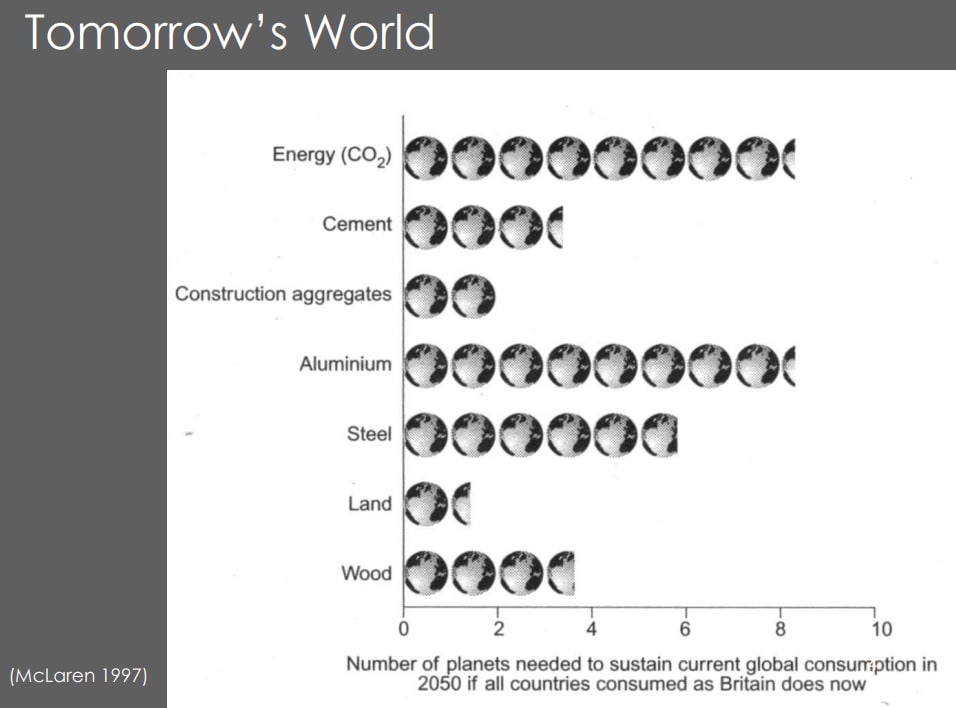
Tomorrow’s World. Source: McLaren 1997
However, despite this we all have a role and an agency in ensuring that we move away from the destructive practices widely used in construction towards more regenerative methods, and this includes retrofit front and centre. From the ground up every homeowner, community, local authority, construction professional and business, can take hold of the reins and focus on implementing real low-carbon rationales for themselves within their homes, projects and business practices.
This agency includes addressing:
Sufficiency – asking if it is really needed, if there are any strategic alternatives, or can we retrofit instead?
Simplicity – designing as simply as possible and to allow for reuse
Circular economy – exploring circular design approaches including materiality
Efficiency – only using what is necessary to deliver energy efficient solutions
By employing these criteria, it can allow us to collectively improve our lives, projects and buildings while also reaching low carbon targets.
The training and net zero training roadmap
I believe that low carbon building skills are essential in moving the UK construction sector and our economies towards a zero-carbon future. Through collaboration and partnerships with academic institutions, training bodies and other networks, we can be part of the acceleration towards upskilling the construction industry with the competencies needed for faster transition.
Partnerships are important for scaling up training. One of the ambitions of the AECB is to be seen as a well-respected contributor, facilitator and partner in delivering best practice construction skills to massively increase the uptake of delivering
“The low energy retrofit of buildings is one of the most underappreciated opportunities for the UK to help tackle climate change.”
My professional journey
I qualified as an Architect in 1999, but my passion and moral compass led me on the road to sustainable building long beforehand. The mid 1980’s was a decade that started with a new oil crisis and ended with the international community reaching an agreement for combating the environmental emergency. As a result, the term ‘sustainable development’ became the pivotal phrase that influenced my degree trajectory.
My final degree project was an upcycling community centre which involved retrofitting a disused industrial building. The term ‘retrofit’ wasn’t a clearly defined concept at that time and my tutors thought that to repurpose an existing building, let alone reuse construction materials, was not in fact, ‘architecture’. So, upon completing my degree, I wondered whether architecture really was the profession for me.
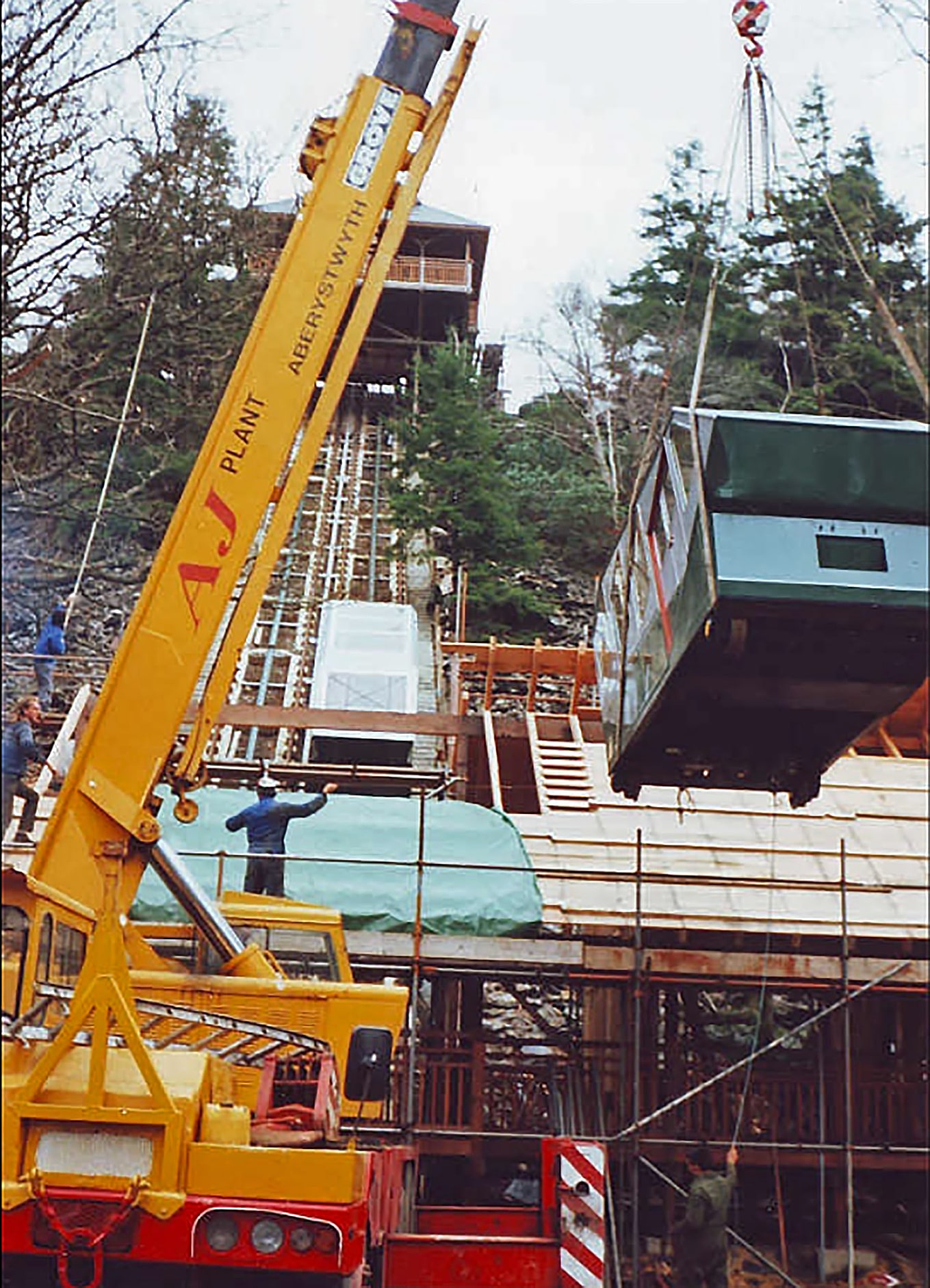
That all changed in 1990 when, during my year out, I began working at the Centre for Alternative Technology (CAT) an environmental visitor centre, in mid Wales. I worked with a team designing and building two timber framed cliff railway stations for a water balanced cliff railway. I had the immense pleasure to work alongside two great sustainable architects—the late David Lea and Patrick Borer. Both were experienced in low-energy construction and had an interest in the radical reinterpretation of using traditional and natural materials. The experience was transformational and ignited my passion for gaining hands-on building experience and vastly increased my knowledge of the use of sustainable building materials and their impacts. I became determined to design sustainable building projects moving forward.
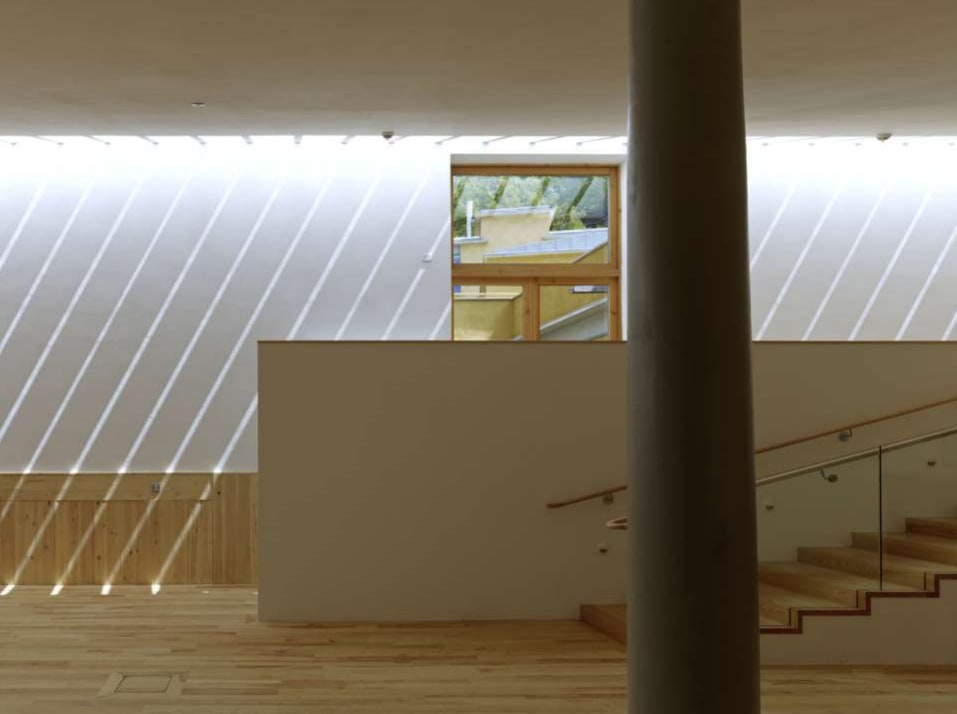
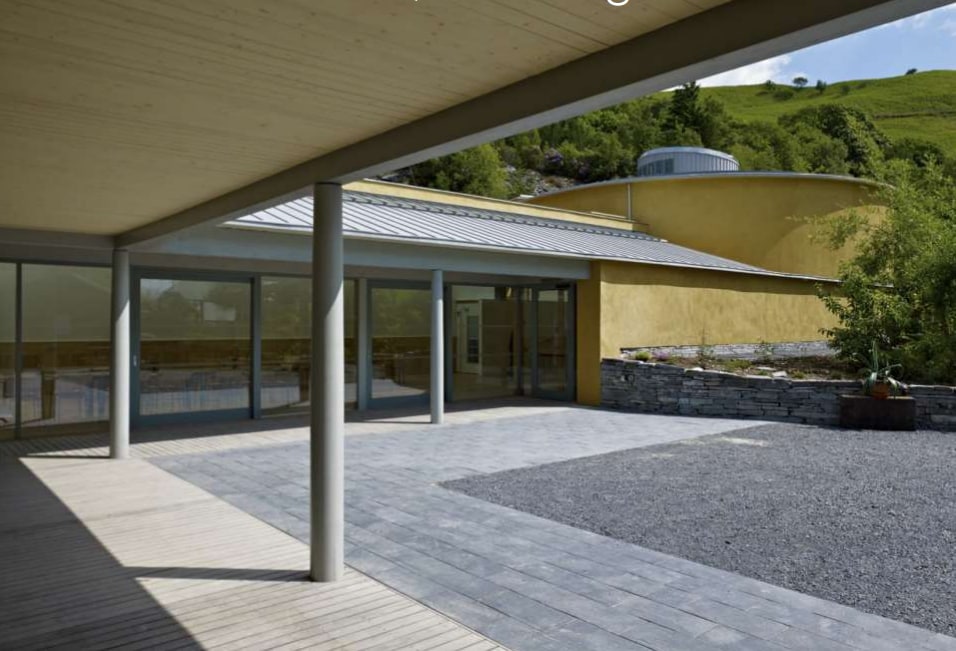
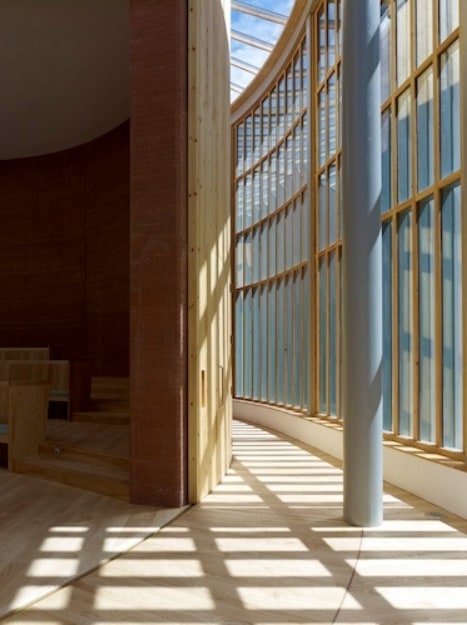
I was fortunate enough later, still under their guidance, to work on the Wales Institute for Sustainable Education (WISE) 2010. A RIBA national award winner in 2011. It was the one of the most sustainable buildings, as well as the largest glulam timber framed hempcrete nondomestic building, at that time.
The WISE building houses the Graduate School for the Environment (GSE) and there I helped to develop and run the UK’s first wholly sustainably focussed Part II Masters in Sustainable Architecture in the UK. We taught hands-on building and material practicals and made sure every student’s final design included a sizeable retrofit element combined with a very detailed technical analysis on how the building should perform. This included the rigorous testing of all its potential impacts.
The Wales Institute for Sustainable Education (WISE 2010). A RIBA national award winner in 2011. Photo: Tim Soar
The training roadmap and the road to timber in Wales
The imperative to create affordable and accessible e-learning training solutions on retrofit, rather than new build, led me to join the AECB in 2020. Here, I have developed – and continuously try to improve on – a range of training programmes under the overarching banner of the AECB CarbonLiteTM Training Centre. The e-learning training material is designed to be scalable across the UK with uptake easily accessible from the householder to construction professionals who want to address the urgent need to improve the performance of UK housing stock in the face of the energy and cost of living crisis and climate change impacts.
A recent opportunity to be involved in the wonderful Tai Ar Y Cyd project7 has been inspiring. This project aims to standardise sustainable timber-based affordable homes across Wales. It sets the AECB new build standard8 as a baseline target. The project has potential to change the way we use timber in low energy social housing across Wales.
Ultimately, the most rewarding aspect of my current role is being involved in a business that is working cooperatively towards change and knowing that every course participant and partner we work with, gains the best practice knowledge and skills to then allow them to use their own agency to change business as usual scenario within the construction industry.
References
UK Parliament (2023) Energy efficiency of existing homes: Sixth Report of Session 2022–23. House of Commons Environmental Audit Committee. Available at: www.committees.parliament.uk/publications/48054/ documents/251274/default
Association for Environment Conscious Building (n.d.) CarbonLite Retrofit Foundation course. Available at: www.aecb.net/product/carbonlite-retrofit-foundation-course
Department for Business, Energy & Industrial Strategy (2021) Heat and buildings strategy. UK Government. Available at: www.gov.uk/government/publications/heat- and-buildings-strategy
Association for Environment Conscious Building (n.d.) The AECB CarbonLite standards. Available at: www.aecb.net/the-aecb-carbonlite-standards
Passive House Institute (n.d.) PHPP: Passive House Planning Package. Available at: www.passivehouse. com/04_phpp/04_phpp.htm
Association for Environment Conscious Building (n.d.) AECB PHribbon package (includes first year’s subscription). Available at: www.aecb.net/phribbon-carbon- calculation
Tai ar y Cyd (n.d.) Tai ar y Cyd – Homes Together. Available at: www.taiarycyd.cymru
Association for Environment Conscious Building (n.d.) AECB CarbonLite New Build Standard. Available at: www.aecb.net/aecb-carbonlite-new-build-standard
To provide the best experiences, we use technologies like cookies to store and/or access device information. Consenting to these technologies will allow us to process data such as browsing behavior or unique IDs on this site. Not consenting or withdrawing consent, may adversely affect certain features and functions.
Functional
Always active
The technical storage or access is strictly necessary for the legitimate purpose of enabling the use of a specific service explicitly requested by the subscriber or user, or for the sole purpose of carrying out the transmission of a communication over an electronic communications network.
Preferences
The technical storage or access is necessary for the legitimate purpose of storing preferences that are not requested by the subscriber or user.
Statistics
The technical storage or access that is used exclusively for statistical purposes.The technical storage or access that is used exclusively for anonymous statistical purposes. Without a subpoena, voluntary compliance on the part of your Internet Service Provider, or additional records from a third party, information stored or retrieved for this purpose alone cannot usually be used to identify you.
Marketing
The technical storage or access is required to create user profiles to send advertising, or to track the user on a website or across several websites for similar marketing purposes.