A key contributor to this effort is Woodknowledge Wales (WKW), whose deep commitment to building a sustainable, low-carbon future has shaped both the content and direction of this Yearbook. Led by Sarah Lawton, an editor and communicator working to connect the timber industry with the wider climate, land-use and design agenda, the WKW team has played a central role in curating the insights, case studies, and technical contributions you'll find in these pages.
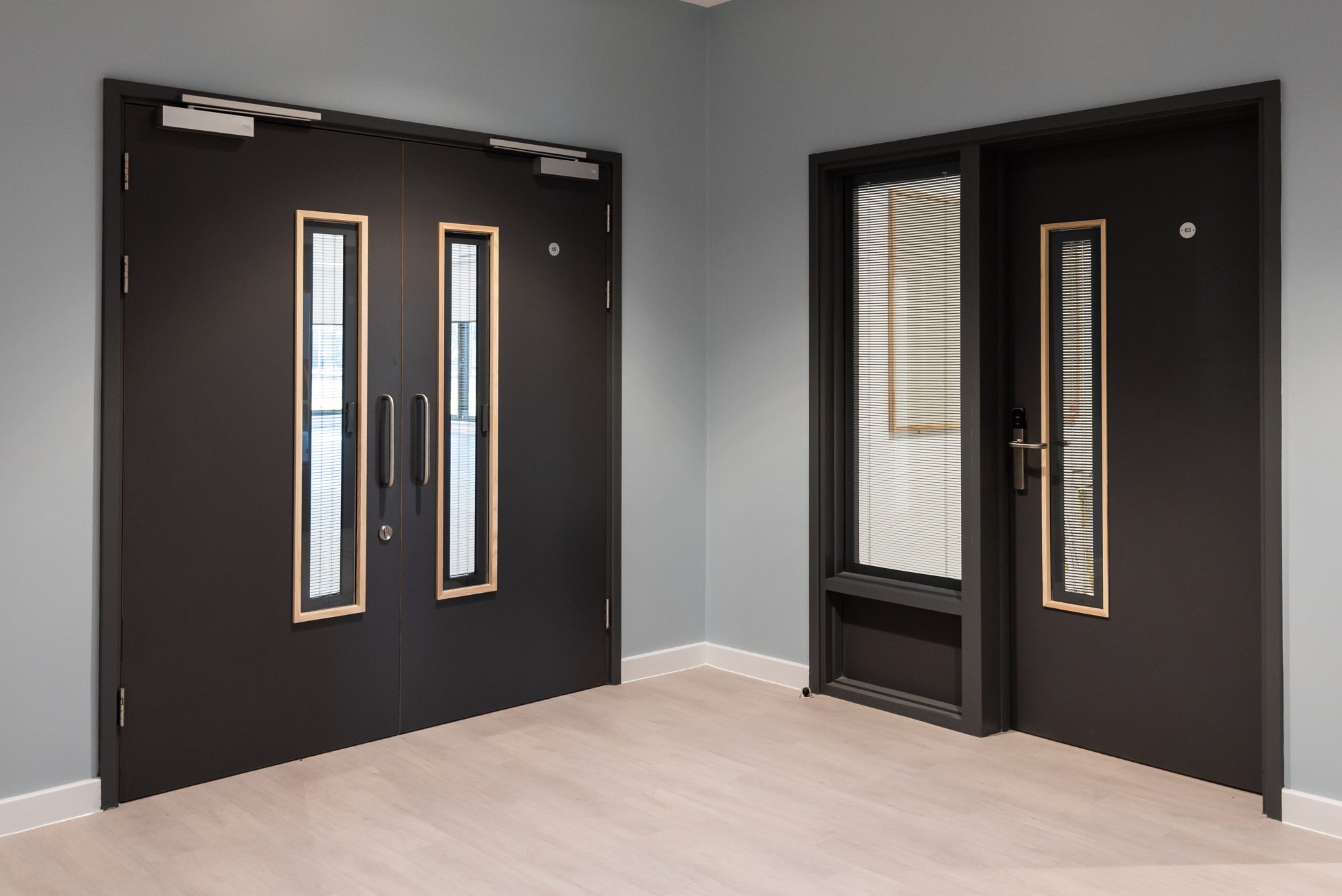
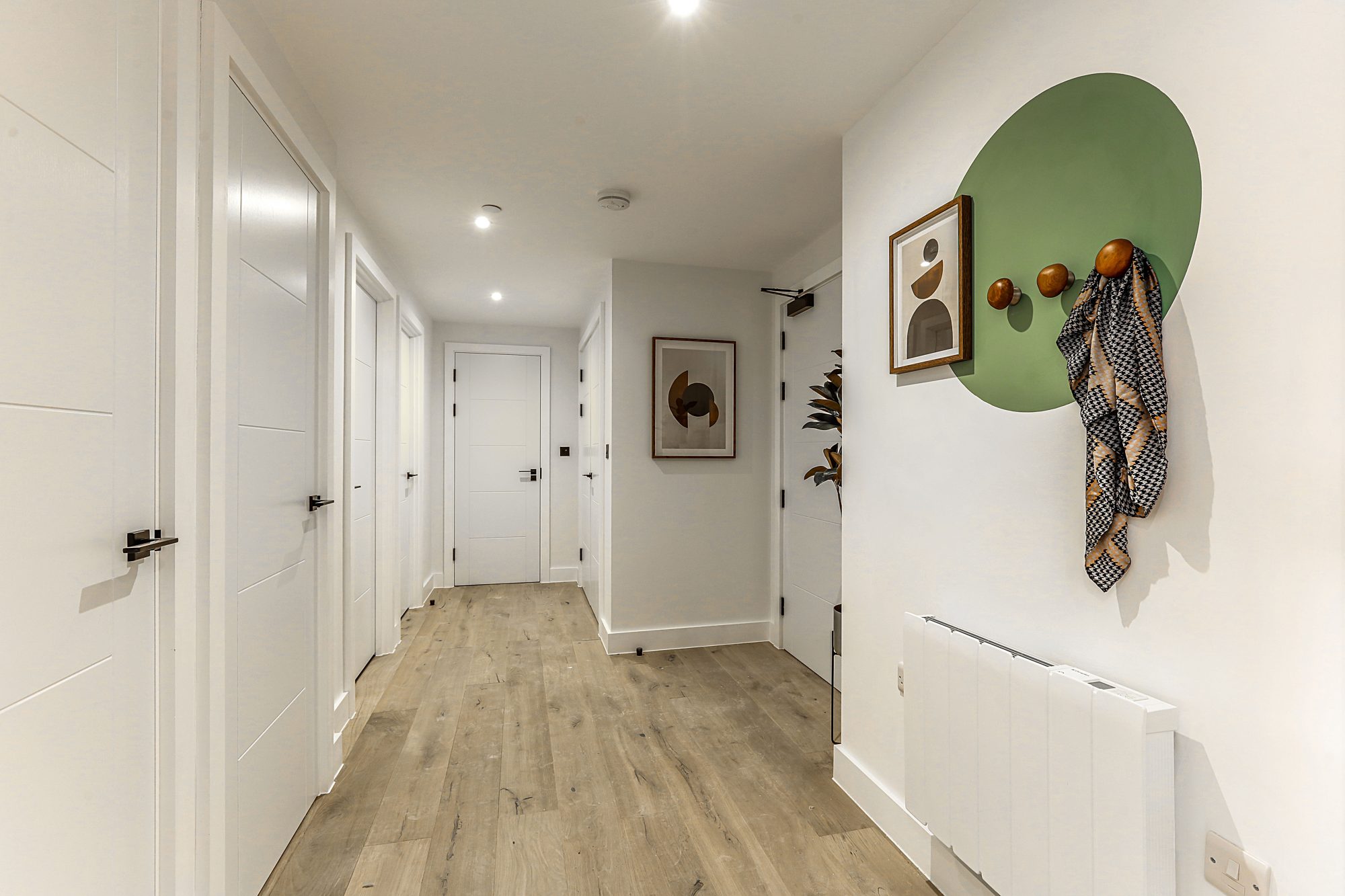
As building safety regulation continues to evolve, certified doorsets are increasingly being specified to support traceability, documented compliance and long-term fire safety performance. Ainsley Evershed explores how doorsets can support evidence-led compliance throughout the building lifecycle.
The Building Safety Act has fundamentally changed how construction and manufacturing are approached across the UK. Following Grenfell and the subsequent regulatory reforms, it is no longer enough to rely on best practice alone. Those involved in the design, specification, construction and management of buildings are now expected to demonstrate compliance through clear evidence, traceability and ongoing accountability.
For those specifying, manufacturing or installing fire doors, this marks a significant shift in both responsibility and expectation. Fire doors are among the most closely scrutinised elements of a building’s passive fire protection strategy, and increasing emphasis is now being placed on how their performance is evidenced throughout the building lifecycle.
As regulatory reform continues to evolve through 2026, certified doorsets are playing an increasingly important role in supporting consistent performance, documented compliance and long-term building safety strategies.
A greater focus on accountability
One of the most significant changes introduced through the Building Safety Act framework is the increased focus on accountability throughout a building’s lifecycle.
Duty holders are now expected to demonstrate that reasonable steps have been taken to manage fire and structural safety risks, while maintaining accurate records that support ongoing compliance. The regulatory environment has also continued to tighten in 2026, with ongoing reforms to the Building Safety Regulator following recommendations arising from the Grenfell Tower Inquiry.
At the same time, Gateway approval processes for higher-risk buildings continue to place increased scrutiny on documentation quality, specification coordination and traceable product evidence. While recent improvements have reduced approval backlogs, the consistent message from the regulator remains clear: well-prepared, clearly evidenced submissions are more likely to progress efficiently through the approval process.
This shift has increased industry focus on products and systems that can provide clearer evidence of performance and reduce uncertainty during specification, installation and ongoing maintenance.
Fire doors as complete systems
The publication of BS 8214:2026 represents one of the most significant updates to fire door guidance in recent years.
The revised standard places greater emphasis on fire doors as complete systems rather than separate components assembled on site. It also aligns more closely with the wider objectives of the Building Safety Act by reinforcing the importance of evidence-led compliance, traceability and documented performance.
Importantly, the updated guidance expands beyond timber fire doors to include steel, aluminium and composite systems, reflecting the increasing range of doorset solutions used within modern construction projects.
Greater emphasis is now placed on complete system compatibility, documented test evidence, smoke control performance, installation quality, hardware specification and tighter control over product substitutions. The standard also aligns more closely with EN 1634 fire resistance and smoke control testing, reinforcing the importance of ensuring the installed configuration matches tested evidence.
This reflects a wider industry shift away from assumed compliance and towards demonstrable system performance.
The Golden Thread and the importance of traceability
The concept of the “Golden Thread” remains central to the Building Safety Act framework. Safety-critical information must now remain accessible, accurate and maintainable throughout the life of a building.
For fire doors, this includes documentation relating to certification, test evidence, installation records, inspection history and ongoing maintenance.
Certified doorsets support this approach by providing clear, traceable documentation for the complete assembly, including the door leaf, frame, glazing, seals and hardware. Because the components are tested and supplied as a complete system, project teams can more easily demonstrate compatibility and maintain consistent records throughout the building lifecycle.
Increasingly, digital identification systems such as QR codes and third-party certification labels are also being used to improve traceability. These systems can provide instant access to certification data, installation guidance and maintenance records using standard mobile devices, helping support inspection and compliance obligations over time.
Doorset vs door assembly: why the difference matters
The distinction between a doorset and a door assembly has become increasingly important within the current regulatory environment.
A door assembly is typically constructed on site using separately sourced components such as the frame, door leaf and hardware. While individual components may carry certification, the final installed assembly may not have been tested in the exact configuration used on site.
A doorset, by comparison, is supplied as a complete system designed, tested and certified to work together as a single unit.
In fast-moving construction environments, maintaining consistency between specification, procurement and installation can be challenging. Product substitutions, mixed-source components and installation inconsistencies can all affect fire door performance if they fall outside tested evidence or certification scope.
Factory-prepared doorsets help reduce some of these risks by simplifying compatibility and installation requirements while supporting a more consistent evidence trail from design through to occupation.
Wider industry pressures in 2026
Alongside increasing regulatory scrutiny, developers and contractors are also facing growing commercial pressures.
The Building Safety Levy, due to come into effect in October 2026, will introduce additional costs for many residential developments as part of wider efforts to fund the remediation of unsafe buildings across the UK.
Combined with Gateway approval requirements and increasing documentation expectations, the financial and operational impact of delays, failed inspections or remedial works is becoming increasingly significant. This is contributing to a wider industry move towards products and systems that can provide clearer evidence, simplified documentation and greater installation consistency from the outset.
At the same time, new legal requirements surrounding Personal Emergency Evacuation Plans (PEEPs) for certain high-rise residential buildings reinforce the growing expectation that fire safety strategies must account for occupant needs throughout the building lifecycle.
Designing for long-term compliance
The direction of travel across the industry is clear. Fire door compliance is no longer assessed solely at specification stage or practical completion. Increasingly, it must be evidenced, maintained and traceable throughout the life of the building.
For architects, contractors and manufacturers, the challenge is no longer simply selecting compliant products. It is ensuring those products are correctly specified, properly installed and capable of demonstrating performance long after handover.
As BS 8214:2026 and wider Building Safety Act reforms continue to reshape the sector, certified doorsets are becoming an increasingly important part of supporting consistency, accountability and long-term compliance across modern construction projects.
To provide the best experiences, we use technologies like cookies to store and/or access device information. Consenting to these technologies will allow us to process data such as browsing behavior or unique IDs on this site. Not consenting or withdrawing consent, may adversely affect certain features and functions.
Functional
Always active
The technical storage or access is strictly necessary for the legitimate purpose of enabling the use of a specific service explicitly requested by the subscriber or user, or for the sole purpose of carrying out the transmission of a communication over an electronic communications network.
Preferences
The technical storage or access is necessary for the legitimate purpose of storing preferences that are not requested by the subscriber or user.
Statistics
The technical storage or access that is used exclusively for statistical purposes.The technical storage or access that is used exclusively for anonymous statistical purposes. Without a subpoena, voluntary compliance on the part of your Internet Service Provider, or additional records from a third party, information stored or retrieved for this purpose alone cannot usually be used to identify you.
Marketing
The technical storage or access is required to create user profiles to send advertising, or to track the user on a website or across several websites for similar marketing purposes.