A key contributor to this effort is Woodknowledge Wales (WKW), whose deep commitment to building a sustainable, low-carbon future has shaped both the content and direction of this Yearbook. Led by Sarah Lawton, an editor and communicator working to connect the timber industry with the wider climate, land-use and design agenda, the WKW team has played a central role in curating the insights, case studies, and technical contributions you'll find in these pages.
The UK’s timber construction sector is entering a new phase—where manufacturing capability, carbon data, and design excellence align. Anna Lisa McSweeney highlights why a new national centre, new metrics, and new partnerships are driving mass timber forward.
In 2025, the UK marked a turning point for sustainable construction with the launch of the Mass Timber Centre of Excellence at the BE-ST Campus in Hamilton, Scotland.1 Backed by a £1.5 million investment from the Scottish Government and Scottish Funding Council, and developed in partnership with Edinburgh Napier University, the Centre aims to build national capacity for the design, prototyping and manufacture of mass timber building systems.
The facility houses the UK’s largest CNC machine for timber processing, alongside a high-powered extraction system and structural testing—delivering the infrastructure needed to accelerate production of homegrown glulam, CLT, NLT and hybrid timber systems.1 It is also now spearheading critical research into fire safety in mass timber buildings, thanks to a further £190k grant from Built by Nature.
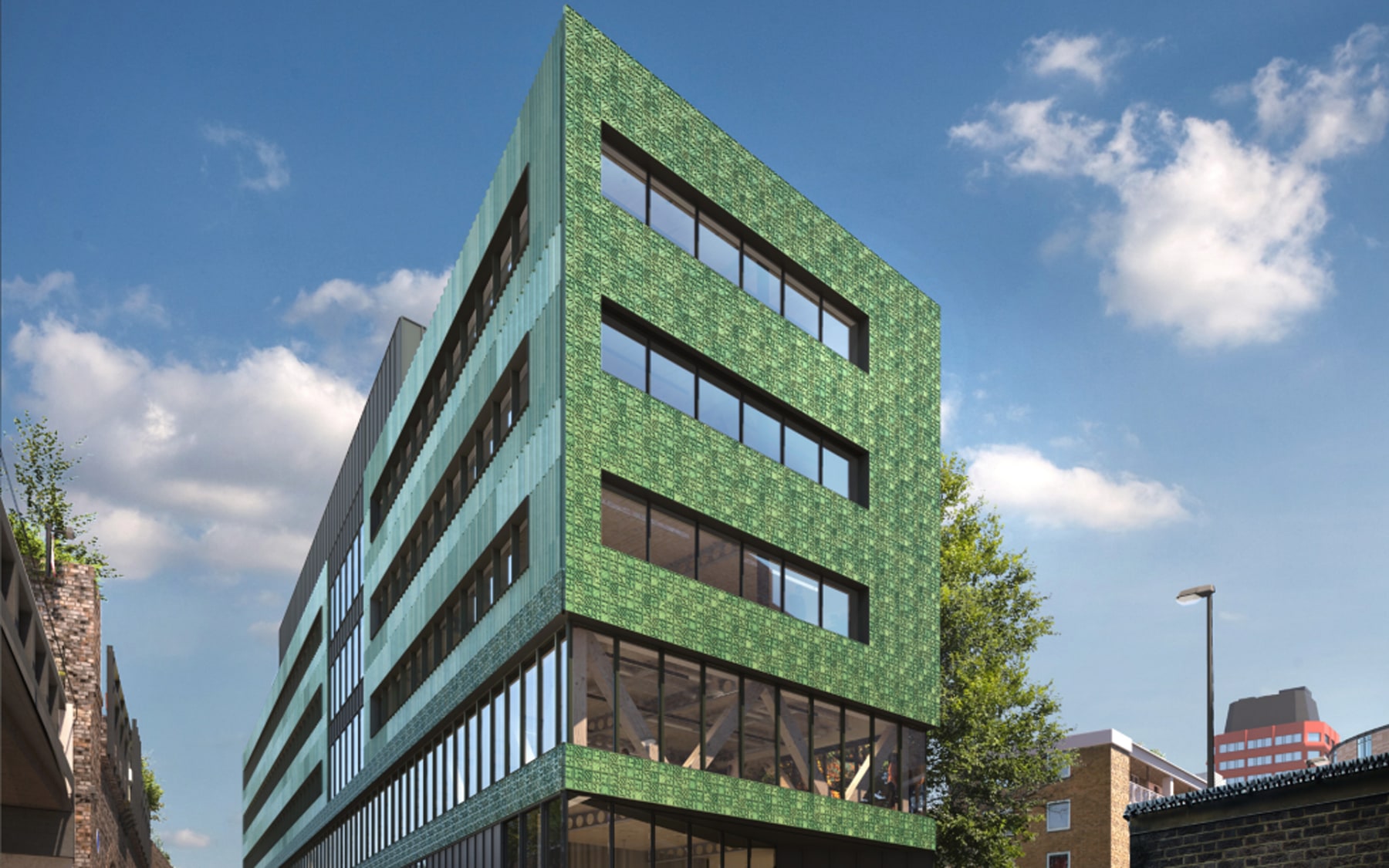
New Wave House, Brent, London. Photo: Ståle Eriksen
More than an equipment upgrade, the Centre represents a strategic shift. It places manufacturing at the heart of a whole-system approach to construction—linking research, fabrication, regulation and training. As Sam Hart, Associate Director at BEST, explains in an article for Scottish Construction Now (16 May 2025).
“The launch of the Centre is a testament to years of collaborative innovation, helping to validate mass timber as a high-value construction method,”
The launch comes at a time when mass timber is gaining credibility across the UK’s development pipeline—not just as a material innovation, but as a performance-led solution to the climate, housing and productivity crises.
A whole life perspective: measuring what matters
Running parallel to the Centre’s manufacturing ambition is a growing focus on how we measure and evaluate timber building performance. Leading that conversation is the 2024 Measuring Mass Timber study, led by dRMM in collaboration with Edinburgh Napier University, the Quality of Life Foundation, and supported by Built by Nature.
The study examined five completed UK mass timber buildings, selected as part of the Measuring Mass Timber study, spanning uses from transport to worship, education and workplace. Each project was assessed using a bespoke framework that evaluated not only embodied carbon, but also spatial quality, adaptability, and user experience.
Key findings included:
Whole life carbon emissions were on average 47% lower than comparable LETI Band E benchmarks.
Biogenic carbon storage across the five buildings was estimated to offset the equivalent of more than 50,000 car journeys between London and Glasgow.
Post-occupancy feedback suggested enhanced occupant wellbeing, reduced stress, improved air quality and stronger user connection to nature.
Design details such as exposed surfaces, connection design, moisture strategy and adaptability strongly influenced long-term performance and value.
Critically, the report calls for industry-wide improvements in data collection, lifecycle tracking, and consistent carbon methodologies. Without these, it argues, timber’s environmental and social value risks being under-reported and undervalued in policy and procurement decisions.
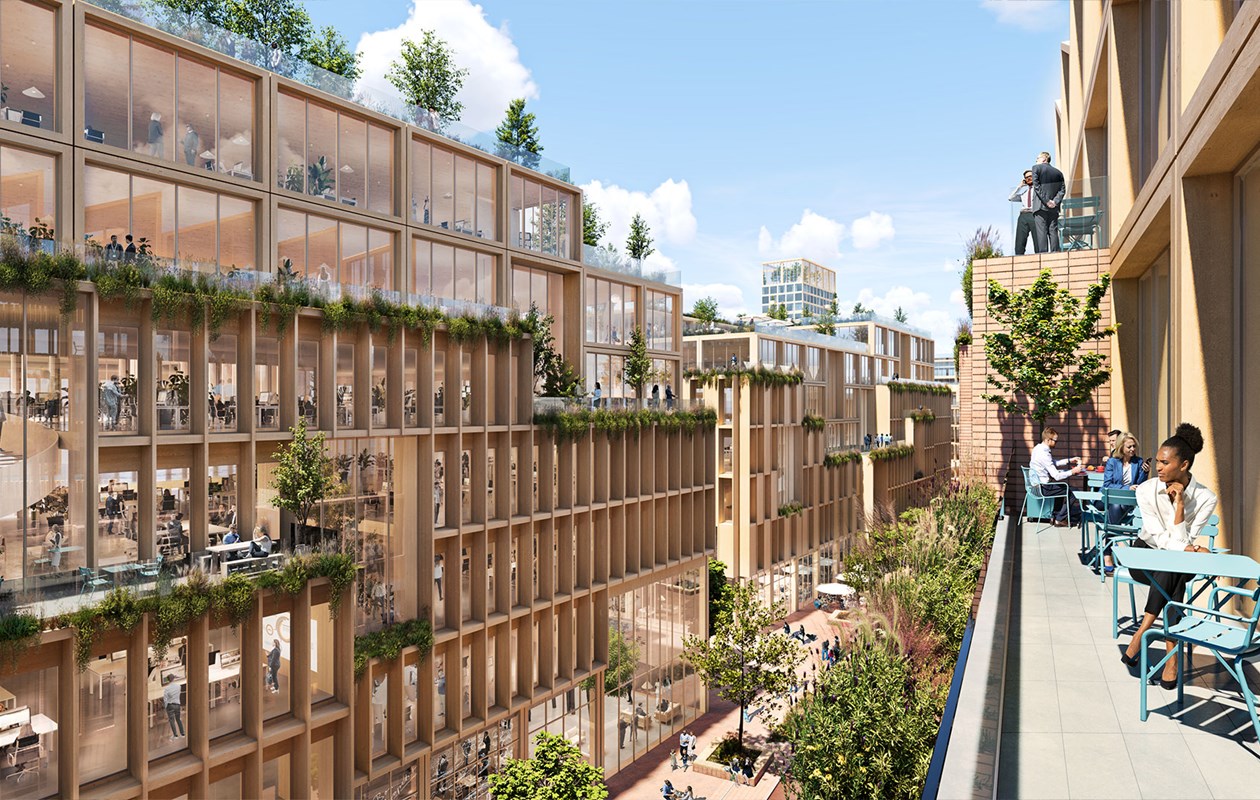
Stockholm Wood City is a planned wooden construction project located in the Stockholm neighborhood Sickla
Built by Nature: from demonstration to transformation
As the funder of both the Measuring Mass Timber project and a project within BE-ST’s national centre, Built by Nature plays a central role in aligning innovation with systemic change.
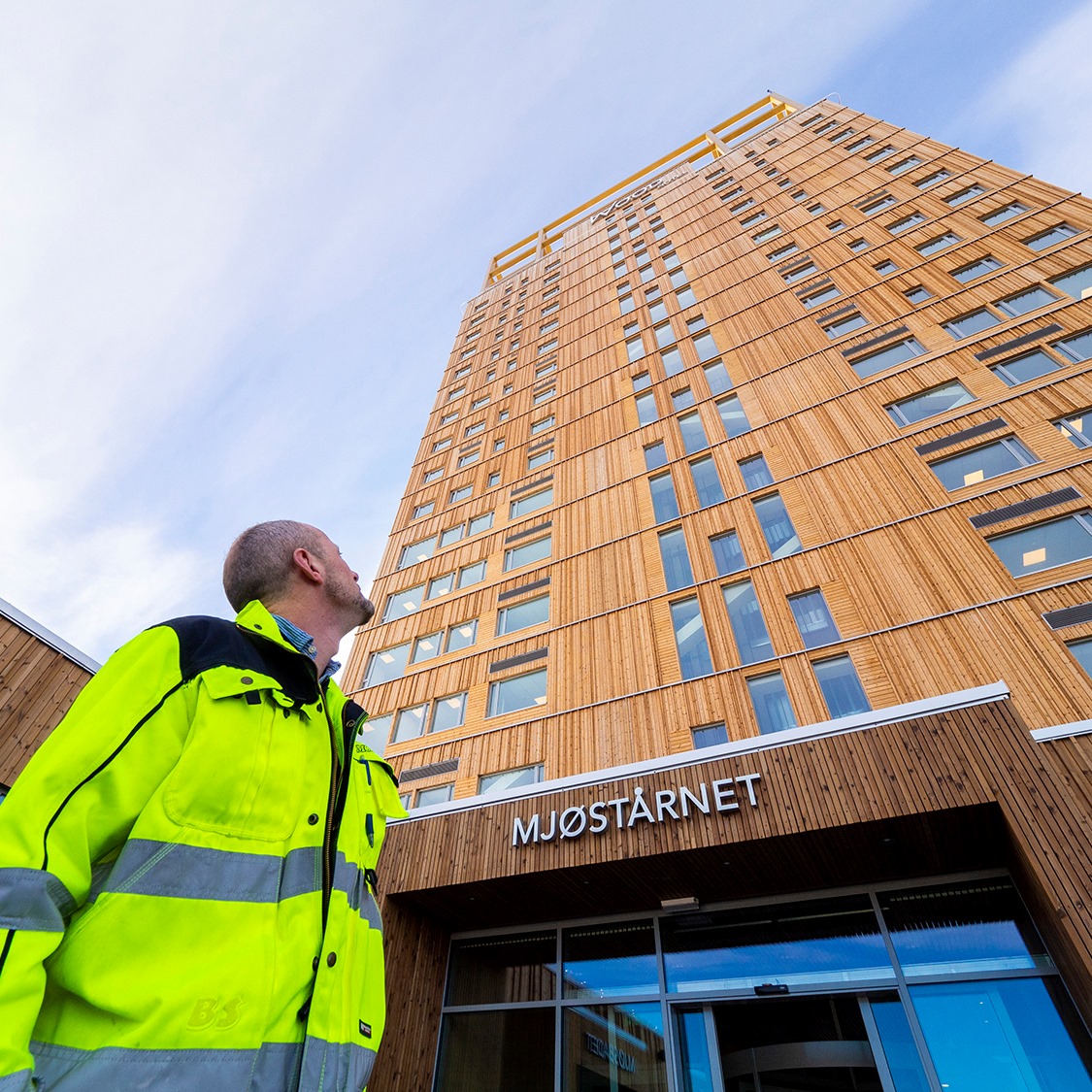
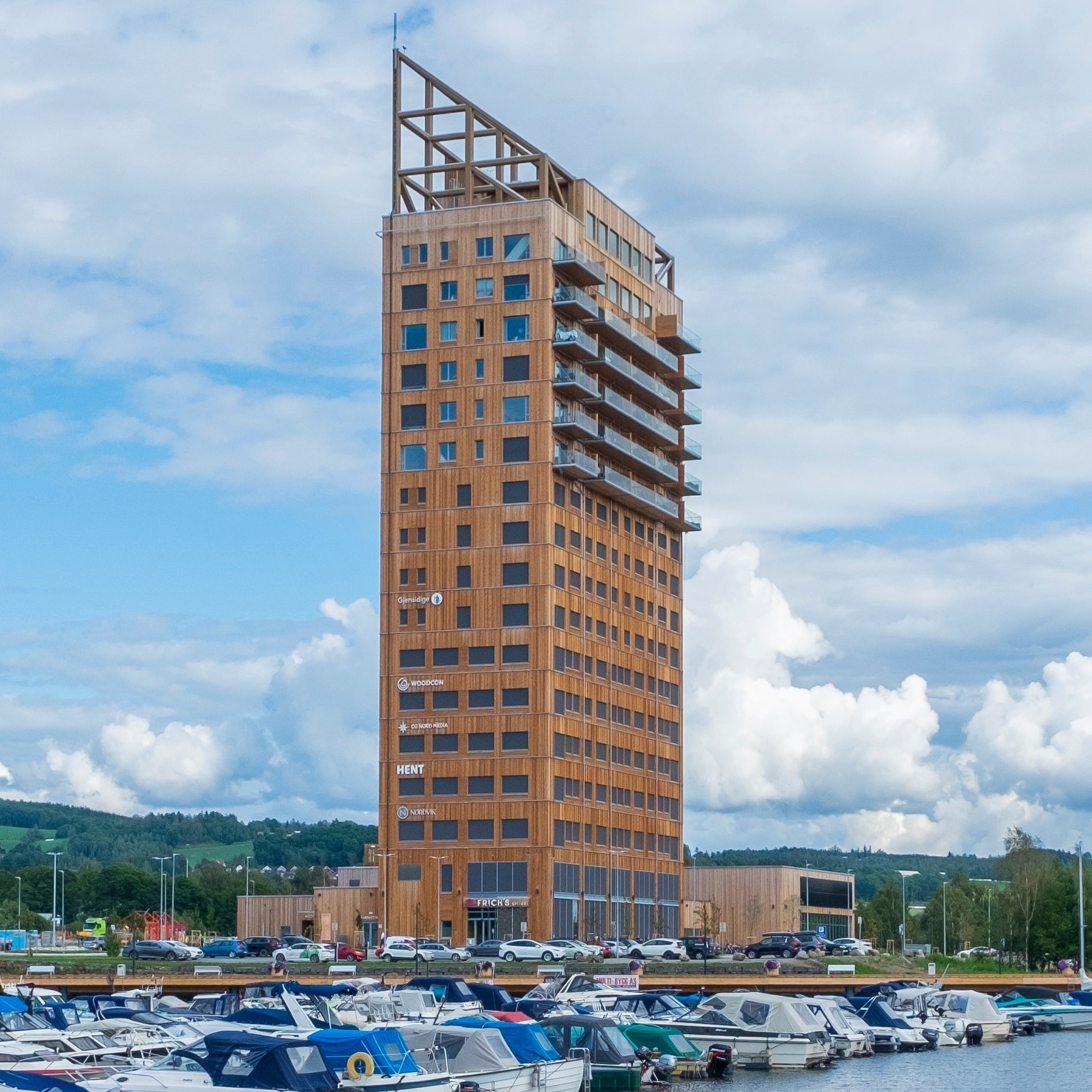
Mjøstårnet in Norway is the world’s tallest wooden building, standing at 280 feet tall
Through our Fund, we have supported a suite of research which is changing the way the sector uses timber, including:
The New Model Building initiative5 , which combines design, engineering and insurance to create replicable, insurable mass timber housing systems.
The development of the Mass Timber Insurance Playbook6 , providing a framework to help underwriters evaluate timber- specific fire and moisture risks.
The Commercial Timber Guidebook, which provides industry consensus on addressing challenges – such as fire safety, durability, and insurability – that have to date hindered the broader adoption of mass timber.
Together, these actions signal a coordinated shift: from timber as an “alternative” material to timber as a credible foundation for 21st-century construction.
Evidence, collaboration and capability: strengthening the mass timber knowledge base
The growing momentum behind mass timber in the UK is not being driven by a single actor or agenda, but by a collective effort to gather evidence, test systems, and develop capabilities across the value chain.
Initiatives like the Measuring Mass Timber study offer a rare example of rigorous post-occupancy research focused specifically on mass timber buildings. Evaluating both carbon performance and occupant wellbeing, the study provides an accessible model for how to assess whole-life value in timber architecture.
In parallel, institutions such as BE-ST, through the new Mass Timber Centre of Excellence, are helping to address practical and logistical challenges—offering manufacturers and designers a shared space for testing, prototyping and training. With support from the Scottish Government and the Scottish Funding Council, this centre aims to close the gap between innovation and implementation by anchoring R&D within an active, industry-facing campus.
Meanwhile, funding from organisations such as Built by Nature has supported projects that help bridge the knowledge gaps that still exist around insurability, biogenic carbon accounting, and lifecycle methodologies5-6. These projects—along with emerging digital tools and open-source publications—signal a shift toward shared learning and transparency.
Rather than positioning mass timber as a single solution, these collaborative efforts reflect a more nuanced and systems-based approach. They support the wider integration of timber into UK construction by making information, performance data and technical guidance more available to developers, insurers, clients and design teams alike.
“We’re moving beyond prototypes—towards a mass timber sector defined by evidence, not exception.”
While technical performance is essential, systemic enablers— like funding, insurance, and standardisation—are equally critical. Here we are seeing evidence that Built by Nature has played a catalytic role. We have heard from developers that they are using the guidebooks and tools are being used onsite to help different actors in the value chain collaborate and spot issues before they emerge. It is therefore unsurprising that the Mass Timber Insurance Playbook has been downloaded once every two hours since it was launched and was independently reprinted in the United States.
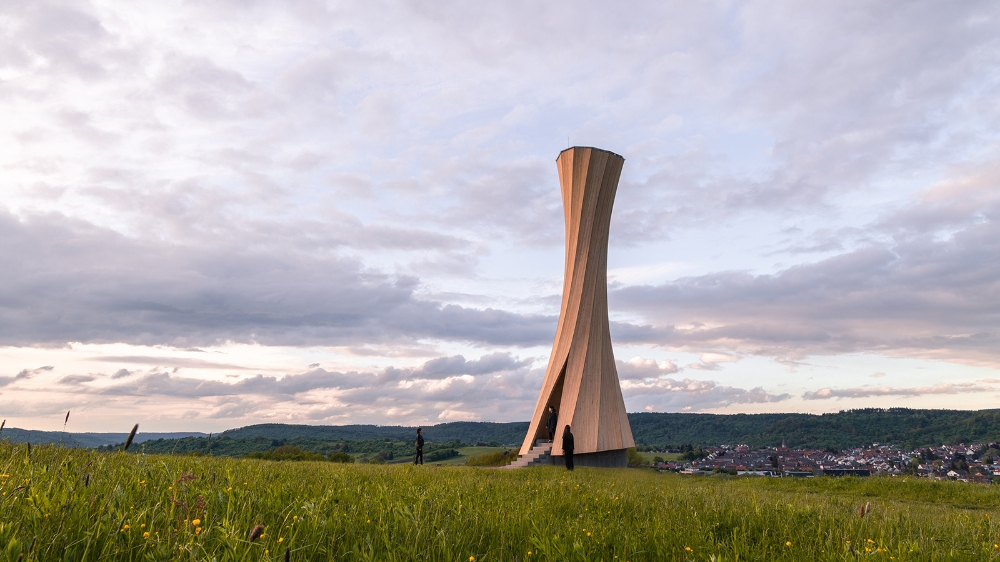
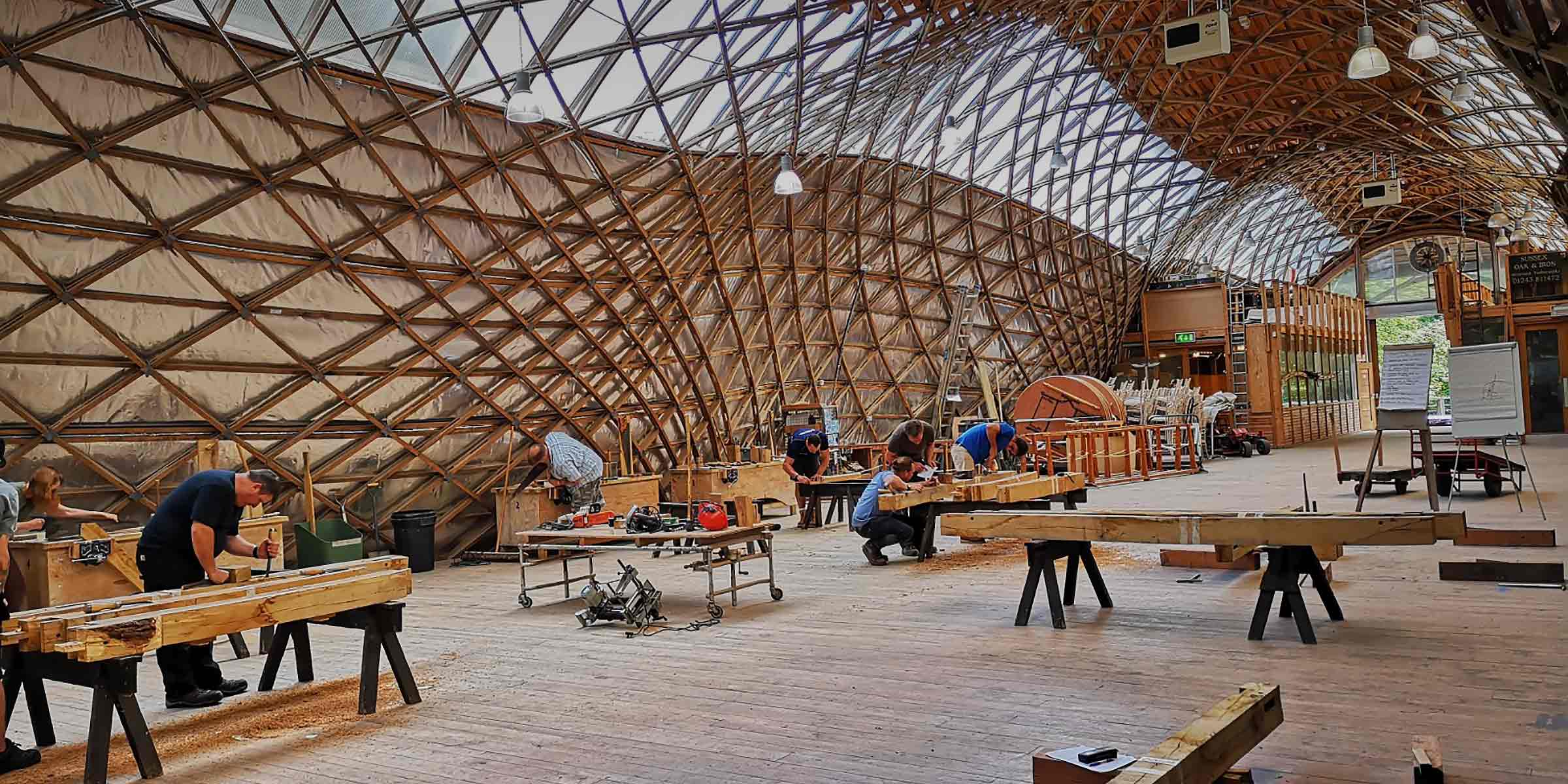
Gridshell structure
A new phase for UK timber
With its combination of manufacturing capability, evidence- led design evaluation, and mission-aligned partnerships, the UK is entering a new phase in the evolution of mass timber construction.
The BE-ST Mass Timber Centre of Excellence offers not just new tools—but new possibilities. The Measuring Mass Timber report gives us a language and framework to assess those possibilities through the lens of real performance. Meanwhile Built by Nature, Woodknowledge Wales and others are helping unlock systemic obstacles—whether around insurance, policy or procurement.
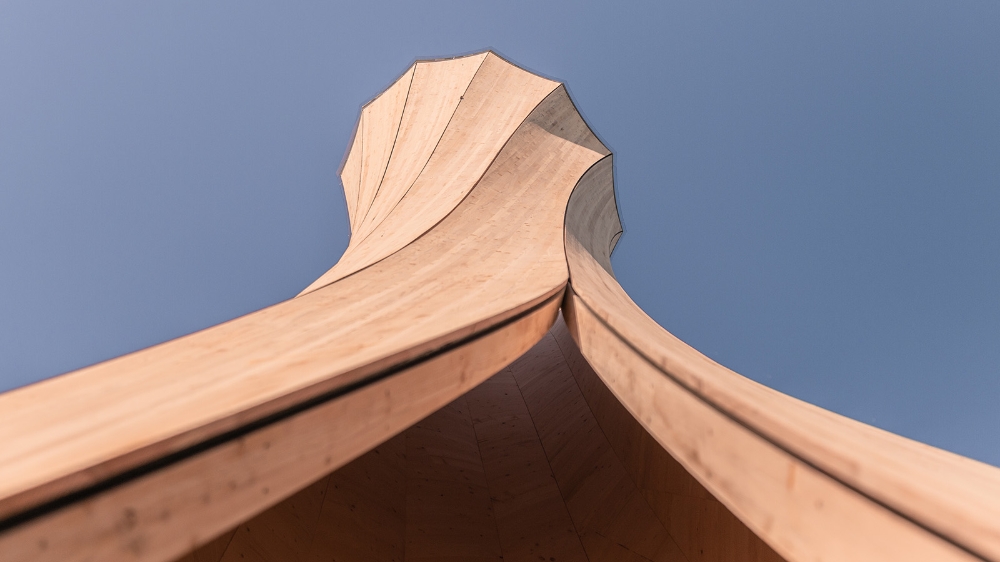
The Urbach Tower consists of 12 curved components made from cross-laminated timber. Photo: ICD/ITKE, University of Stuttgart
Together, we are shifting the UK’s timber conversation from novelty to necessity. From embodied savings to quality of life. From case studies to codes.
Mass timber in the UK has momentum. The next step is to deliver that momentum with precision, accountability and care.
References
BE-ST. Mass Timber Centre of Excellence Launches at BE-ST Campus. BE-ST News, 15 May 2025. Available at: www.be-st. build/news/mass-timber-centre- of-excellence-launches-at-be-st- campus [Accessed 17 July 2025].
Built by Nature. BE-ST Receives Funding from Built by Nature Towards Mass Timber Research and Policy Roadmap in Response to UK Government Request. Built by Nature News, 30 January 2025. www.builtbn.org/news/ be-st-receives-funding-from-built- by-nature-towards-mass-timber- research-and-policy-roadmap-in- response-to-uk-government-request [Accessed 22 July 2025]
Hart, S. “It’s time to rethink what Scottish timber can do.” Scottish Construction Now, 16 May 2025. Available at: www.scottishconstructionnow.com/articles/ sam-hart-its-time-to-rethink-what-scottish-timber-can-do [Accessed 17 July 2025].
dRMM, Edinburgh Napier University, Quality of Life Foundation. Measuring Mass Timber: Evaluating the Whole Life Value of Mass Timber Buildings. Built by Nature, 2024. Available at: www.builtbn.org/solutions/measuring-mass-timber [Accessed 17 July 2025]. Full report.
Waugh Thistleton Architects, UCL Department of Civil, Environmental & Geomatic Engineering & Buro Happold. New Model Building: Guide, Details, and Evidence, . Built by Nature, 2023. Available at: www. builtbn.org/knowledge/resources/new-model-building- guide-details-and-evidence [Accessed 23 July 2025].
ASBP (Alliance for Sustainable Building Products). Mass Timber Insurance Playbook. Built by Nature, 2023. Available at: www.builtbn.org/knowledge/ resources/mass-timber-insurance-playbook [Accessed 23 July 2025].
Elliott Wood, Waugh Thistleton Architects, OFR Consultants & Lignum Risk Partners. Commercial Timber Guidebook. Built by Nature, 2024. Available at: www.builtbn.org/knowledge/resources/commercial- timber-guidebook [Accessed 23 July 2025].
To provide the best experiences, we use technologies like cookies to store and/or access device information. Consenting to these technologies will allow us to process data such as browsing behavior or unique IDs on this site. Not consenting or withdrawing consent, may adversely affect certain features and functions.
Functional
Always active
The technical storage or access is strictly necessary for the legitimate purpose of enabling the use of a specific service explicitly requested by the subscriber or user, or for the sole purpose of carrying out the transmission of a communication over an electronic communications network.
Preferences
The technical storage or access is necessary for the legitimate purpose of storing preferences that are not requested by the subscriber or user.
Statistics
The technical storage or access that is used exclusively for statistical purposes.The technical storage or access that is used exclusively for anonymous statistical purposes. Without a subpoena, voluntary compliance on the part of your Internet Service Provider, or additional records from a third party, information stored or retrieved for this purpose alone cannot usually be used to identify you.
Marketing
The technical storage or access is required to create user profiles to send advertising, or to track the user on a website or across several websites for similar marketing purposes.