A key contributor to this effort is Woodknowledge Wales (WKW), whose deep commitment to building a sustainable, low-carbon future has shaped both the content and direction of this Yearbook. Led by Sarah Lawton, an editor and communicator working to connect the timber industry with the wider climate, land-use and design agenda, the WKW team has played a central role in curating the insights, case studies, and technical contributions you'll find in these pages.
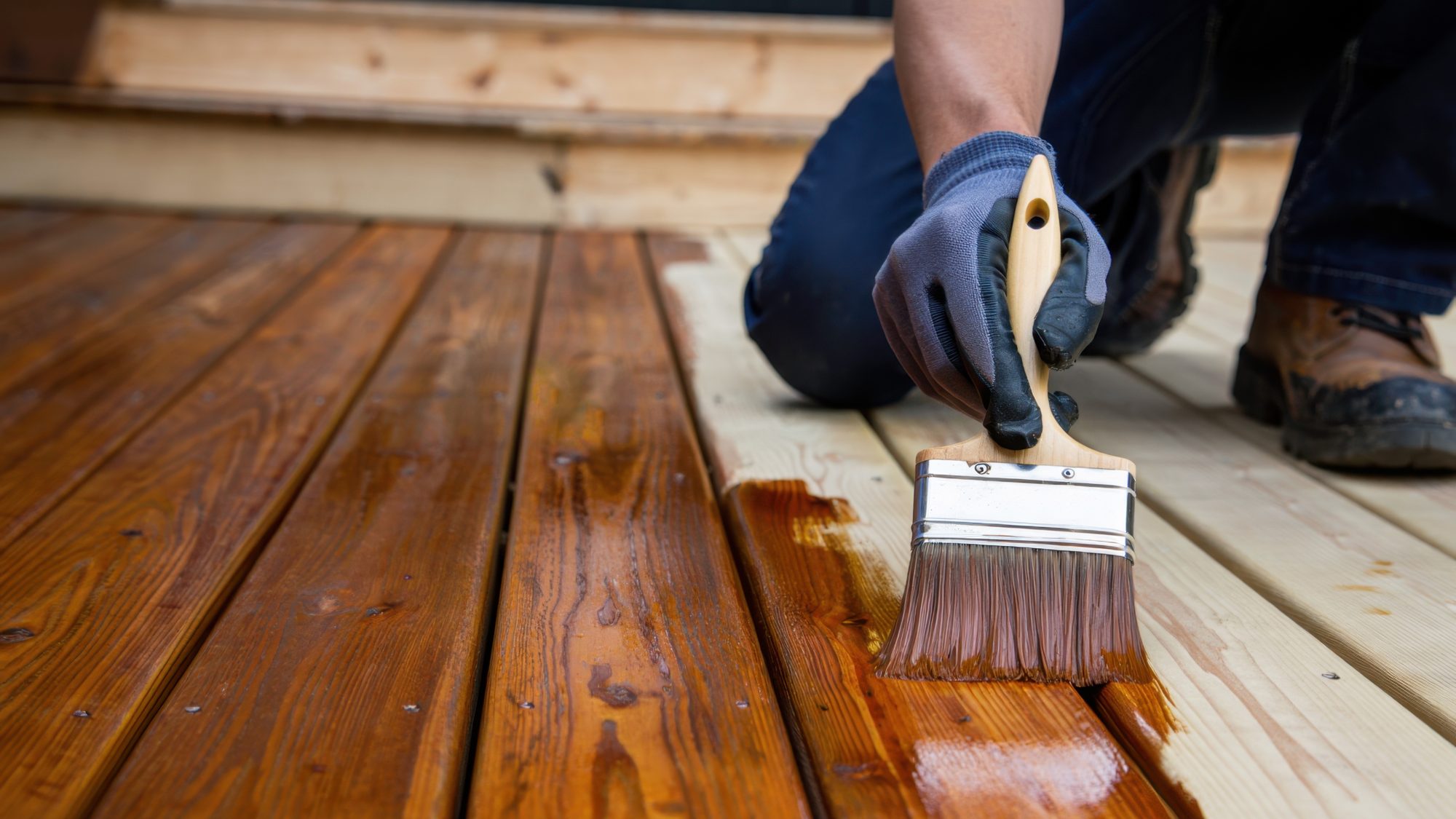
Helen Hewitt examines how coatings, treatments and specification are helping to extend timber service life, highlighting the growing importance of evidence, certification and maintenance in supporting confidence across the construction supply chain.
As timber use expands across the built environment, expectations around performance are becoming more defined, particularly for windows, stairs and household features such as garden buildings.
Specifiers, clients and regulators are increasingly focused on how timber products perform over time. This includes service life, maintenance requirements and how performance is evidenced in practice.
Durability and longevity therefore underpin warranty frameworks, compliance and confidence in timber products. It is no longer treated as an additional consideration, but as part of overall system performance.
However, despite advances in manufacturing, coatings and preservative treatments, awareness and understanding of timber products’ durability is not always consistent across the supply chain.
A gap between performance and perception
Modern timber products can achieve long service lives when correctly specified, installed and maintained. Standards such as BS 8417 provide guidance on preservative treatment, while BS EN 927 sets out performance requirements for coatings used on external timber.[1,2]
Despite this, misconceptions remain with many decision-makers do not yet recognise how modern timber products perform when correctly designed and maintained. The BWF’s latest Championing Timber in the Home report found that only 12% of homeowners believe timber performs best in terms of lifespan and only 14% view it as energy efficient despite well-established performance characteristics.[3]
These findings suggest that perceptions are not always aligned with current evidence or product performance. This effectively creates a disconnect between timber’s technical capability and its specification and opportunities for growth.
Improving understanding of durability is therefore an important step in supporting wider and more consistent specification.
From products to systems
Durability is determined by a combination of factors including timber species, design detailing, coatings, preservative treatments, installation and ongoing maintenance. For this reason, performance is increasingly assessed at a system level rather than through individual products.
Using Class guidance, as set out in BS EN 335, supports this approach by aligning exposure conditions with appropriate levels of protection.[4] This provides a clearer basis for specification.
There is also growing emphasis on documented performance. This includes test data, certification and alignment with recognised standards. Recent British Woodworking Federation research found that product-specific Environmental Product Declarations (EPDs) were regarded as the most valuable environmental credential for window and door specification. This reinforces that throughout the industry, specifiers are seeking verified, product-level evidence over broad performance claims.[5,6]
The role of factory-applied coatings and treatments
Factory-applied coatings and treatments are widely used to improve manufacturing consistency, quality control and long-term durability. These innovative solutions are particularly important for joinery products such as windows and doors, where performance depends on the interaction between materials, coatings and design.
Application in controlled conditions supports more uniform coverage and allows processes to be monitored and recorded. This can improve repeatability, support certification and warranty frameworks.
Durability, compliance and certification
As timber products are used in a wider range of applications, durability is increasingly part of a broader focus on assurance as well as product performance.
This reinforces the importance of tested and certified systems. Recognised standards, third-party certification and robust quality assurance processes give specifiers and the wider supply chain confidence that products meet defined performance criteria, and that claims around service life, safety, sustainability and maintenance are supported by evidence.
Participation in recognised industry quality schemes and professional bodies can also support confidence across the supply chain. For example, British Woodworking Federation members commit to standards covering workmanship, company stewardship and environmental disciplines.
A consistent approach to durability
For the timber sector, this reinforces the importance of clear specification, appropriate product selection and effective maintenance. As timber use continues to grow, a consistent approach to durability will be important in supporting confidence across the supply chain.
This should include:
Use of recognised standards and test methods.
Alignment between specification and exposure conditions.
Clear documentation of performance and maintenance requirements.
Use of certification and quality assurance schemes.
High-quality timber windows, doors and stairs are already capable of delivering long service lives. Making supporting evidence—including certification, test data and real-world performance—more accessible will help specifiers, clients and homeowners make informed decisions based on proven durability and whole-life performance.
References
[1] BS 8417. Preservation of wood – Code of practice.
[2] BS EN 927. Paints and varnishes – Coating materials and coating systems for exterior wood.
[3] British Woodworking Federation. Championing Timber in the Home.
[4] BS EN 335. Durability of wood and wood-based products – Use classes.
[5] British Woodworking Federation. Technical guidance and industry resources.
[6] Wood Protection Association. Guidance on wood preservation and treatment.
Images: please use updaed headshot in folder and stock imagery.
To provide the best experiences, we use technologies like cookies to store and/or access device information. Consenting to these technologies will allow us to process data such as browsing behavior or unique IDs on this site. Not consenting or withdrawing consent, may adversely affect certain features and functions.
Functional
Always active
The technical storage or access is strictly necessary for the legitimate purpose of enabling the use of a specific service explicitly requested by the subscriber or user, or for the sole purpose of carrying out the transmission of a communication over an electronic communications network.
Preferences
The technical storage or access is necessary for the legitimate purpose of storing preferences that are not requested by the subscriber or user.
Statistics
The technical storage or access that is used exclusively for statistical purposes.The technical storage or access that is used exclusively for anonymous statistical purposes. Without a subpoena, voluntary compliance on the part of your Internet Service Provider, or additional records from a third party, information stored or retrieved for this purpose alone cannot usually be used to identify you.
Marketing
The technical storage or access is required to create user profiles to send advertising, or to track the user on a website or across several websites for similar marketing purposes.