A key contributor to this effort is Woodknowledge Wales (WKW), whose deep commitment to building a sustainable, low-carbon future has shaped both the content and direction of this Yearbook. Led by Sarah Lawton, an editor and communicator working to connect the timber industry with the wider climate, land-use and design agenda, the WKW team has played a central role in curating the insights, case studies, and technical contributions you'll find in these pages.
Woodlands are becoming spaces for healing, not just recreation. Wellbeing programmes are helping people reconnect, recover, and rebuild. Ian Baker explores why woodland settings work—and what’s needed next.
“Intuitively we know that time spent in the woods is good for us, it is one of the reasons so many are drawn to woodlands for leisure and recreation.”
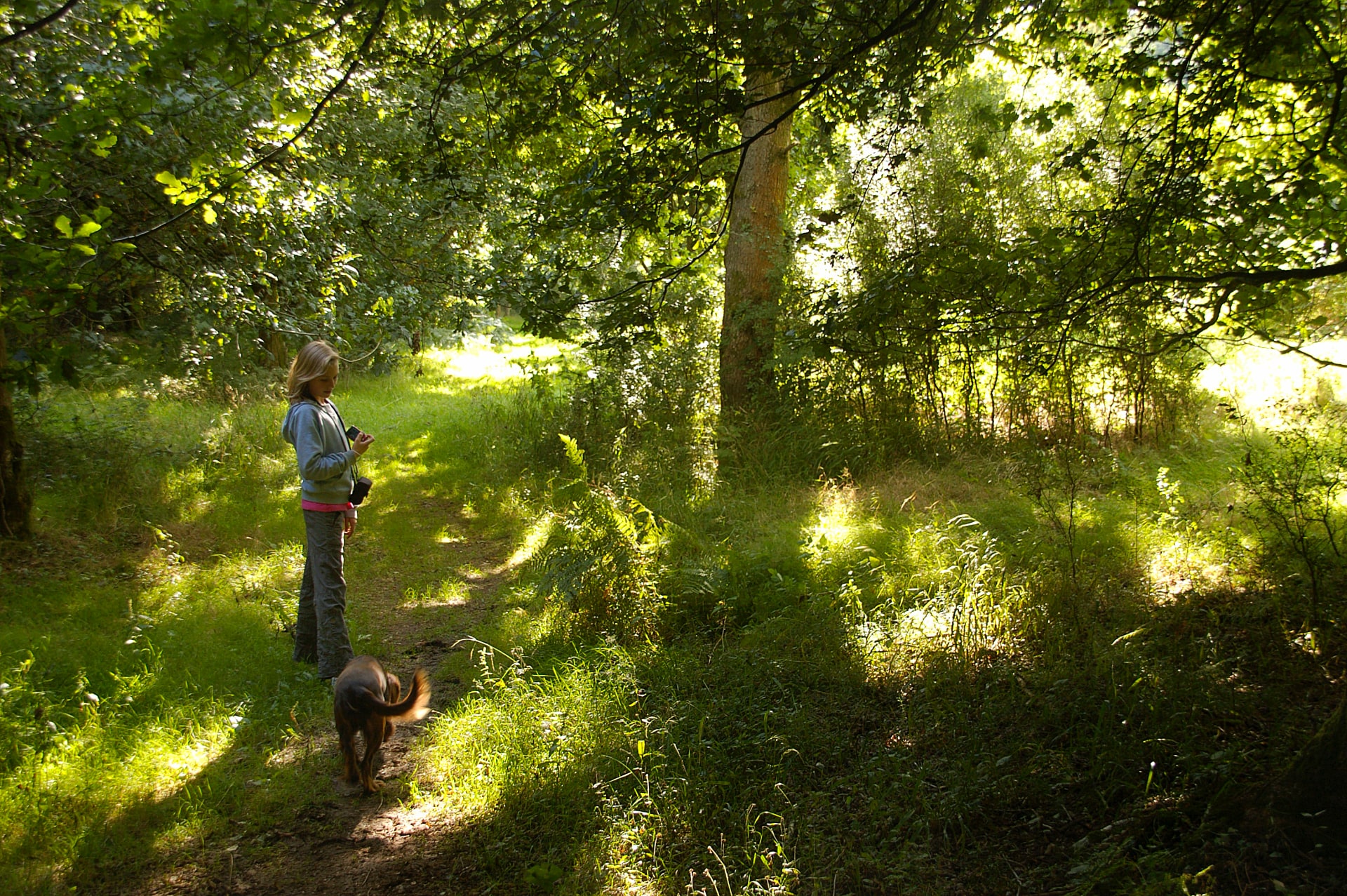
Across Wales, something is stirring in the woods. It is the growing realisation that time spent in nature doesn’t just feel good but can be directed to the greater benefit of people with specific needs and conditions. Intuitively we know that time spent in the woods is good for us, it is one of the reasons so many are drawn to woodlands for leisure and recreation.
Something is however developing in the woods, and it is founded on the fact that woods don’t just feel good, but they do us good as well. Over the past two to three decades there has been a significant growth in woodland wellbeing activity in Wales, delivered by several practitioners, but led in large part by Coed Lleol/Small Woods. This article draws on the Coed Lleol/Small Woods experience.
This strand of woodland wellbeing work started with Small Woods in the 1990s in Shropshire and Herefordshire with small scale projects that started to test the idea that woodland settings could provide a significant therapeutic bonus over the alternatives. Buoyed by the successes of those early initiatives, the organisation started to develop more ambitious programmes which by the early 2010s were working on an all-Wales basis, targeted on the areas of greatest socio-economic need.
Readers will be most interested however in what works and why. In summary, it is about matching the activity to the needs of the client group and then constructing a participant-centred programme that takes them on a ‘journey’ (using the jargon of the sector) within which they can show progression. to understand each individual’s needs and ensure that each is on a personalised path of progression.
Case study – Build a Bench
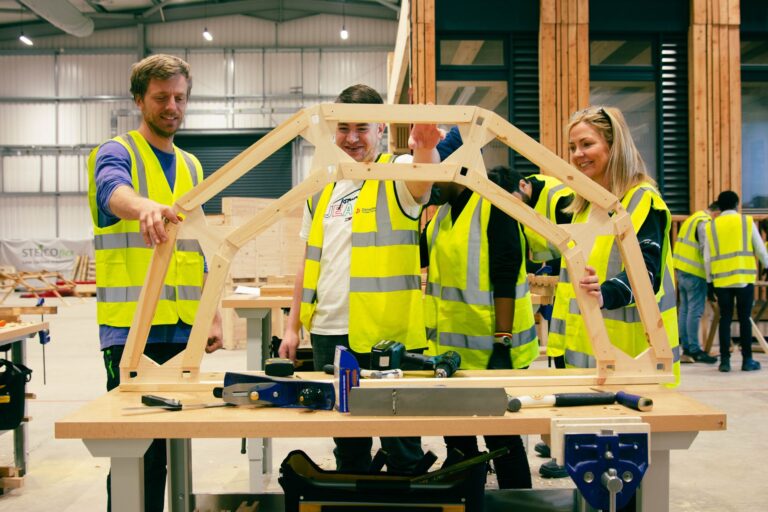
An example is the Build a Bench programme that now operates at sites in England and Wales. Build a Bench is a 12-week programme, operating one day a week with groups of six to ten participants. Participants are generally not able to work, they will not be eligible for Jobseeker’s Allowance (JSA), due to health or related reasons, mostly mental health. Before the beginning of the programme participants are pre-assessed for their suitability for the programme; it’s not everyone’s cup of tea, particularly in the winter months.
The first session is generally very quiet, as the participants are often shy, unused to social situations, and have been at home for a long time, both isolated and anxious. During their first sessions they are taught basic skills, such as the use of a spoke shave, and simple construction techniques and in the first few weeks progress from making a spatula to a milking stool. But Week six is where the magic starts to happen. At this point, they are challenged as a group to work together to design and build their own bench and, most importantly, to decide to whom they will give the bench.
Having witnessed these sessions, this is when pennies drop, lightbulbs switch on, and these formerly quiet and isolated people engage, collaborate, and start to build. The energy that comes from that session then fires them through the final six weeks, with some giving far more time than the programme intended to produce their final pieces.
Two sets of very different skills are required to undertake this work. Firstly, a skilled and empathetic tutor to lead the sessions and to work alongside the group as they progress through the programme. Secondly, and just as important, is the engagement and progression worker who works with participants before, during and after. The person in role aims to understand each individual’s needs and ensure that each is on a personalised path of progression.
The programme has demonstrated its benefits in working with some of the hardest to reach individuals who are furthest from the labour market, getting them back on their feet, and in some cases getting them back to work. This is a huge step for them. In most cases participants move forward significantly, onto other groups or activities that are appropriate to their capabilities at that point.
A growing sector
Woodland wellbeing activities are becoming more diverse and more bespoke. Spanning woodland crafts, ‘bushcraft’, heritage crafts, green wood construction, coppice and woodland management, mindfulness, forest bathing, exercise and physical rehabilitation and foraging.
The characteristic that distinguishes these activities when they are carried out within a woodland wellbeing context is that they are shaped around the needs of the client group. It isn’t a case of one size fits all, but that woodland wellbeing design starts with the needs of the participants and then fits the design of the activities around them.
Who, how, and what
The breadth of groups that benefit from woodland wellbeing is also growing, with educationally disengaged children, military veterans and domestic abuse survivors among the groups for whom specific programmes have been devised. Examples include:
Young people who are “not in education, employment or Training (NEETs) – specific activities to support re-engagement in education.
Mental health and employment disengaged – confidence-building and encouraging socialisation amongst those who have suffered episodes and crises in their lives which have led to disengagement and mental health issues. Programmes that move people towards greater self-sufficiency and eventually employment.
Military veterans – including those suffering from PTSD. Providing activities and environments which support veterans to gain skills in a new “new band of brothers or sisters”. Programmes include the families of veterans, who often face particular issues.
Domestic abuse survivors – creating a closed safe space, with planned appropriate activities, informed by participant preferences.
Amongst many other groups
Why it works
Experience tells us that there are a few reasons why it works and that are the ingredients for success. These include:
Fitting the activity to the participant group. What works with military veterans will not necessarily work with NEETs and vice versa. In many cases, it is the combination of appropriately designed woodland location, carefully managed, but casual socialisation and developing confidence through manual skills. This combination is a powerful engagement tool and the case studies (including the one cited here) demonstrate this.
Skilled facilitators – there is a developing body of evidence and established practice which is increasingly informing woodland wellbeing. Ensuring that facilitators (both the tutors and those working on engagement) are well versed and skilled in these practices is key.
Mindfulness – slowing down in a woodland setting enables participants to be more mindful and to quieten the buzzing in their heads that modern life produces.
Appropriate locations – woodland wellbeing activity needs to be delivered in the right environment. The location should be welcoming, feel safe, be private and have a minimum level of facilities, e.g., shelter and compost toilet.
Proving it works
With a developing area, such as woodland wellbeing, there is a need to ensure evidence is collected and proofs gained wherever possible. With the Coed Lleol / Small Woods work, the main evidence collection has been done using the Warwick Edinburgh Mental Wellbeing Scale. The scale uses a two-week recall, self-report, and wellbeing indication using a five-point scale on fourteen set well-being indicators. Wider research across the UK using this method has found that the average well-being score for adults is 51 points (out of a possible 70 points). A point-score change of three or above is considered a ‘meaningful change’ in wellbeing. The Participants complete a Warwick-Edinburgh Mental Well-being Scale (WEMWBS) test before starting the programme and then complete the same test once the programme had finished. In the most recent large-scale test, the two-year average for mental wellbeing improvement was experienced by 74% of over 400 participants.
Looking further afield, the Japanese state forest service has researched the benefits of forest bathing and demonstrated that the volatile organic chemicals emitted by trees (terpenes, etc.) provide health benefits, stimulating, for example white blood cell formation.
What next
Having invested a great deal in demonstrating the concrete benefits delivered by woodland wellbeing, it should be possible for the practices to be ‘mainstreamed’. For this to work, the following needs to happen:
Bring research and researchers together, so that the body of evidence and practice is put on a sound footing.
Stabilise funding.
Create more woodland hubs, where woodland wellbeing activities can be delivered close to where people live;
Better define effective systems and what needs to be in place for those systems to operate in a sustainable way.
Engage NHS and other health bodies.
The vicissitudes of funding mean that these programmes have waxed and waned over the years but, happily, the programmes continue to this day. Currently, they are increasingly patchy, as funding is not so readily available as it was from European programmes. It is hoped that the health sector reforms will create more space for this sort of work.
To provide the best experiences, we use technologies like cookies to store and/or access device information. Consenting to these technologies will allow us to process data such as browsing behavior or unique IDs on this site. Not consenting or withdrawing consent, may adversely affect certain features and functions.
Functional
Always active
The technical storage or access is strictly necessary for the legitimate purpose of enabling the use of a specific service explicitly requested by the subscriber or user, or for the sole purpose of carrying out the transmission of a communication over an electronic communications network.
Preferences
The technical storage or access is necessary for the legitimate purpose of storing preferences that are not requested by the subscriber or user.
Statistics
The technical storage or access that is used exclusively for statistical purposes.The technical storage or access that is used exclusively for anonymous statistical purposes. Without a subpoena, voluntary compliance on the part of your Internet Service Provider, or additional records from a third party, information stored or retrieved for this purpose alone cannot usually be used to identify you.
Marketing
The technical storage or access is required to create user profiles to send advertising, or to track the user on a website or across several websites for similar marketing purposes.